
Founder led sales pre-seed is a risk test, not a sales tactic. Run the 30-prospect test to validate demand before you hire.
At pre-seed, founder led sales is a way to test demand before you spend money scaling it. Before hiring sales, talk to real prospects, test your message, and look for patterns.
The 30-prospect test gives you a simple two-week framework: find 30 qualified prospects, send personal outreach, track the responses, and use what you learn to improve your ICP and sales process.
Founder-led sales pre-seed is a risk test, not a scaling tactic. Talk to 30 ideal prospects, track every response, and look for repeated pain points, objections, and buying signals before hiring someone to scale the process.
Key Takeaways
- 30 qualified prospects can reveal useful patterns without creating a huge sales project.
- Zero replies are still useful data if you use them to improve your ICP or message.
- Founder-led sales helps you learn who buys, why they buy, and what gets in the way.
- A sales hire should help repeat a working process, not discover whether demand exists.
Why Founder-Led Sales Matters at Pre-Seed
At pre-seed, you have a hypothesis about your customer, problem, and offer. You may not have a repeatable sales motion yet.
That is normal.
The founder should use early sales conversations to turn those assumptions into evidence.
Techstars makes a similar point in its guidance on early sales hiring: early customers help founders understand what buyers value, which objections repeat, and what messaging works before those conversations are handed to a salesperson.
YC-backed companies show the same idea from another angle. For example, one YC founding sales role describes working directly with founders to build the ICP, messaging, qualification, and first sales playbook.
The important part is learning first, then scaling what you learn.
The 30-Prospect Test
The test has four simple steps:
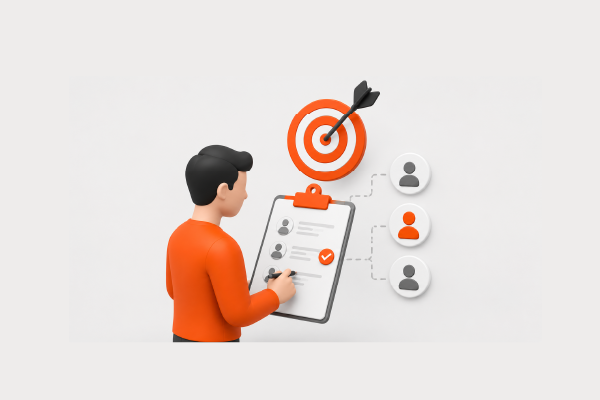
- Find 30 ideal prospects
- Send each a personal message
- Track every response
- Look for patterns
It is time-boxed to about two weeks, so you can learn without turning founder-led sales into a permanent manual process.
1. Find 30 Ideal Prospects
Choose 30 people or companies that closely match your current ICP.
Do not start with 300.
If you cannot identify 30 people who clearly fit the problem, your ICP may still be too broad.
Tinova’s 30-Prospect Test framework uses this approach to test whether the problem, buyer, and message hold up in actual conversations.
2. Write a Personal Message
Skip the generic template.
Mention the prospect’s context, the problem you believe they may be dealing with, and ask a simple question.
The goal is a conversation, not a pitch.
3. Track Every Response
Record:
- Replies
- No response
- Questions
- Objections
- Calls booked
- Reasons people decline
Do not only track the response rate. The words people use can tell you more than the percentage.
4. Learn From the Pattern
Your results can point you toward the next test.
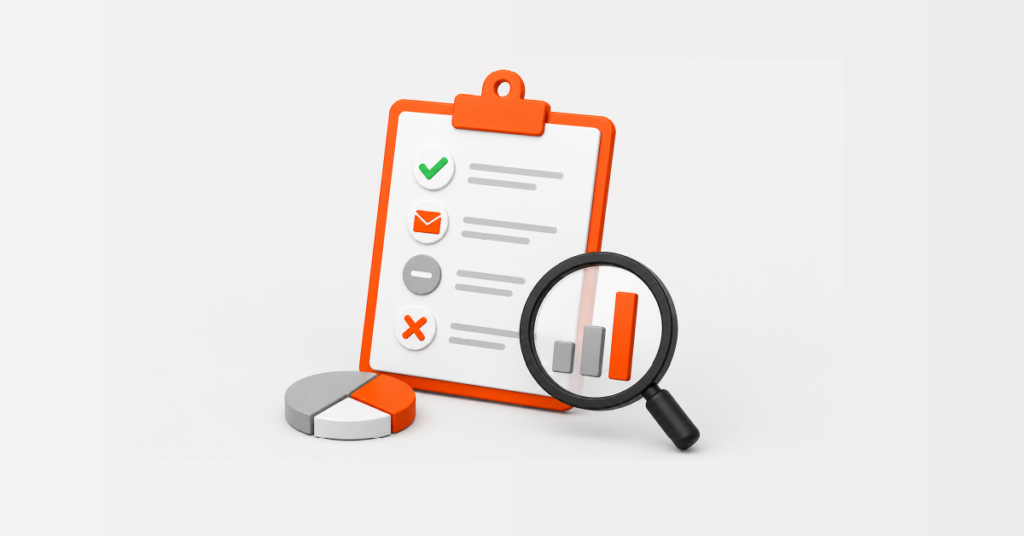
| Test Result | What It May Tell You | Next Step |
| Few replies | ICP or message may be off | Rewrite and retest |
| Replies but no calls | Problem may not feel urgent | Explore the pain |
| Calls with similar objections | A clear pattern is emerging | Refine the offer |
| Multiple prospects show the same buying need | Stronger demand signal | Test pilots or paid conversion |
The goal is not to hit a magic response rate. The goal is to learn what the market is telling you.

What the Test Actually Answers
The 30-prospect test helps answer four questions:
Can I reach the right buyer?
Does this problem matter to them?
Does my message start a conversation?
Do the same patterns appear across conversations?
Those answers are more useful than a large list of assumptions in a pitch deck.
Tinova’s Hustler + Hacker framework makes a similar point: early customer proof can include direct conversations, repeated pain points, qualified prospects, and buying signals.
What Investors Want to Hear
You do not need to tell an investor:
“We spoke to 30 people and everyone loved the idea.”
That does not tell them much.
A stronger update is:
“We spoke with 30 prospects. Twelve described the same problem, eight took a second conversation, and three agreed to test the product. The same two objections came up repeatedly, so we changed our offer around them.”
That gives investors evidence, learning, and a next step.
It is also why a large signup count should not replace customer conversations. Tinova’s 1,000 Signups Is Not Traction explains why activation, repeat usage, payment, and referrals can tell you more than the size of a signup list.
A 30-Prospect Test Does Not Mean 30 Customers
This distinction matters.
The test is not about getting your first 30 customers.
It is about talking to 30 qualified prospects and learning whether your assumptions survive contact with buyers.
You might get:
- 0 customers
- 2 customers
- 5 pilots
- 10 discovery calls
- 30 different objections
All of those outcomes give you information.
The result tells you what to test next.
The Counterpoint: Founder-Led Sales Can Take Too Much Time
Founder-led sales is useful, but it can become a distraction if every week turns into manual outreach with no clear learning goal.
That is why the test should stay time-boxed.
Thirty prospects. Two weeks. Review the evidence.
If the same problem, buyer, message, and objections keep appearing, document what is working.
If they do not, fix the weak point before adding a salesperson.
When Should You Move Beyond Founder-Led Sales?
Do not use funding as the trigger.
Look for signs that the process is becoming repeatable:
- The same buyer profile keeps appearing.
- The same problem creates interest.
- Similar objections come up.
- Your message works across multiple conversations.
- You can explain why deals are won or lost.
- Another person could follow the process without needing the founder to explain every decision.
At that point, a sales hire can help repeat the motion instead of discovering it from scratch.
A Tinova Insight
Tinova’s current editorial work comes from GAP Analysis calls, where the team says it has diagnosed 200 businesses. Its sales resources consistently focus on testing the buyer, offer, and message before investing heavily in a channel or team.
That creates a useful rule for founders:
Before asking, “How do I scale sales?” ask, “What have I actually proved?”
If 30 conversations reveal the same pain and buying pattern, you have evidence to build on.
If 30 conversations produce completely different answers, hiring more people will not solve the underlying uncertainty.
Run the Test Before You Hire
You do not need a large CRM or a complicated sales system.
Start with:
30 qualified prospects.
One personal message.
Two weeks.
One simple tracking sheet.
Then review what happened.
The point of founder-led sales at pre-seed is not to prove that you can be a salesperson forever.
It is to learn enough from customers that the next person you hire has a process worth repeating.
Key Takeaways
- Founder-led sales pre-seed is primarily a learning process.
- Start with 30 qualified prospects, not hundreds of contacts.
- Track conversations and objections, not just reply rates.
- Use the results to improve your ICP, message, and offer.
- Do not confuse signups or interest with buying evidence.
- Hire sales when you have a process that another person can understand and repeat.
FAQs
What is founder-led sales for pre-seed startups?
Founder-led sales means the founder handles early customer conversations to test demand, understand buyers, improve messaging, and learn what makes customers buy.
What is the 30-prospect test?
It is a two-week exercise where a founder identifies 30 qualified prospects, sends personal outreach, tracks the responses, and looks for repeated patterns.
Do I need to get 30 customers?
No. The test is about 30 prospects, not 30 customers. The goal is to learn whether your ICP, problem, and message are producing useful signals.
What if nobody replies?
Treat that as data. Check whether you contacted the right people, whether the problem is important to them, and whether your message gives them a reason to respond. Then change one variable and test again.
Should founders do sales before hiring?
For many early-stage startups, founder-led conversations help build the customer understanding needed before a sales process is handed to someone else. The right timing depends on whether the process is becoming repeatable.
When should I hire my first salesperson?
Consider hiring when you can explain the buyer, problem, message, objections, qualification process, and reasons deals are won or lost, and another person can follow that process.