Looking for AEO tools for SaaS? Learn how to check ChatGPT, Claude, and Perplexity visibility, track results, and build the pages worth citing.
Your SaaS Can Rank on Google and Still Be Missing From AI Answers
The search journey is changing. G2’s 2026 research reports that 51% of B2B buyers now start software research with AI instead of Google. Read the G2 research.
That creates a simple problem: when buyers ask AI which tools they should consider, does your SaaS appear?
You do not need an expensive AEO platform to find out.
Start with a manual audit, record what appears, then build the pages that give buyers and AI systems a clear reason to include you.
In Short
- Run buyer-style prompts in ChatGPT, Claude, and Perplexity.
- Log your results for two weeks so you have a baseline.
- Build three useful assets: comparison, original data, and definition pages.
- Pay for monitoring only after you have content worth monitoring.
Why AEO Visibility Is a GTM Task
AEO is not just about getting a brand mention.
Your buyers may use AI to compare vendors, understand a category, find alternatives, or solve a specific problem before they ever visit your site.
Google’s current guidance makes the broader point clear: AI search features still rely on strong SEO foundations, crawlable pages, useful content, clear structure, and original information. See Google’s guidance on AI search.
So the job is not to “hack” an AI answer. It is to become a useful source worth including.
Why Pre-Seed SaaS Companies Feel This More
A young SaaS company may have a good product but few mentions, reviews, case studies, or strong category pages.
That means an AI system may have less information to work with when comparing you with established vendors.
Before buying another visibility tool, answer a more basic question:
What can an AI system actually learn about your company from the web today?
Start With a Free AEO Audit
Before paying for software, spend one hour running buyer questions in fresh chats.
Try:
- “What are the best [category] tools for a [company type]?”
- “What tools solve [specific problem]?”
- “Compare [your product] with [competitor].”
- “Who are the leading vendors in [category]?”
- “What should I look for when buying [category] software?”
- “Which [category] tools work best with [platform]?”
- “[Problem statement]. Which tools handle this well?”
- “I have a $X budget and need [capability]. Which tool fits best?”
Record the brands mentioned, their order, the reason given, and whether your company appears.
One result is not enough to draw a conclusion. Repeating the test across multiple prompts and AI tools gives you a much better baseline.
How to Track AEO Visibility
A spreadsheet is enough.
Use these columns:
| Prompt | Date | AI tool | Your brand | Competitors | Notes |
| Category query | Oct 5 | ChatGPT | No | A, B, C | Competitor A ranked first |
Run the same prompts again after two weeks.
The goal is not a perfect score. It is knowing whether your visibility is improving.
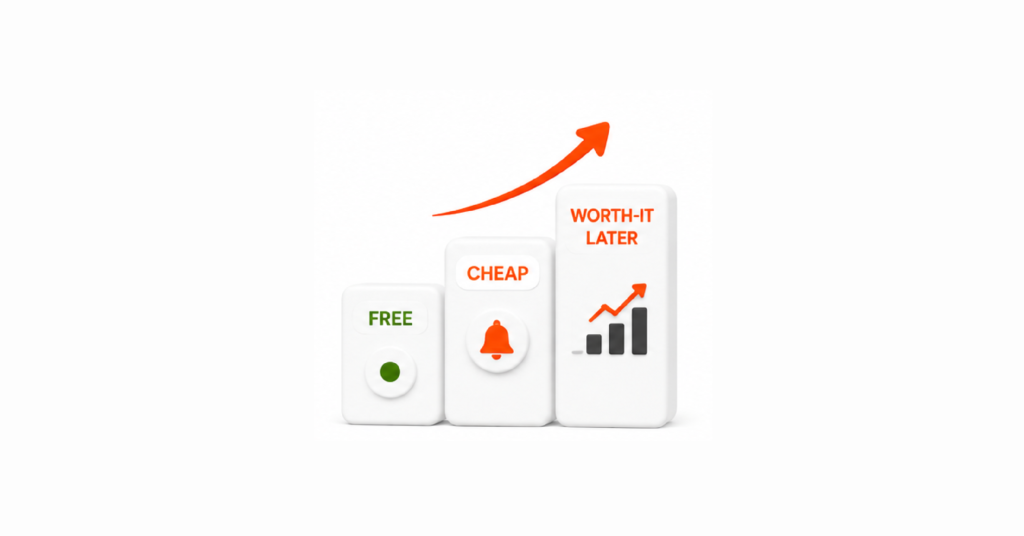
The AEO Tools Stack: Free to Paid
| Stage | Tool or method | Best use |
| Free | ChatGPT, Claude, Perplexity + spreadsheet | Build your baseline |
| Low cost | LLM brand-mention tracker | Monitor known prompts |
| Later | Full GEO platform | Larger content libraries and broader monitoring |
Do not buy a platform because it gives you a dashboard.
Buy it when the dashboard saves work you are already doing manually.
The 3 Pages Worth Building First
1. Comparison Page
Create useful comparisons such as:
Your Product vs Competitor A
Keep the comparison factual. Explain who each option fits, key differences, pricing where public, integrations, and trade-offs.
2. Original-Data Page
Publish research you actually collected.
That could be a customer survey, benchmark, product usage pattern, or another data point unique to your business.
Your own evidence gives the page information that generic summaries cannot provide.
3. Definition Page
Answer a category question clearly:
What is [category]?
Explain what it does, who needs it, how it works, what to evaluate, and where it fits.
One strong definition page can be more useful than a pile of thin posts.
Third-Party Sources Still Matter
Do not build your whole presence on your own website.
Maintain accurate profiles on relevant review and community sites such as G2, Capterra, GitHub, and industry directories where your buyers actually research software.
The rule is simple: build a genuine presence, not manufactured activity.
One Deep Page Beats Twenty Thin Ones
AEO tools can show you where your company appears. They cannot make weak content worth citing.
Google’s guidance for generative AI search recommends unique, useful, people-first content rather than producing large amounts of repetitive material. Read the official Google guidance.
So instead of publishing five shallow posts, build one page that answers the buyer’s question properly and supports the answer with examples, evidence, and clear explanations.
What to Skip at Pre-Seed
| Tool or service | Why skip it early | Start here instead |
| Enterprise GEO suite | Too much monitoring for too little content | Manual prompt audit |
| Expensive AEO agency | Hard to judge without a baseline | Build one strong page yourself |
| Generic rank tracker | Measures Google rankings, not AI mentions | Manual LLM checks |
No tool can replace a clear offer and useful content.
Tinova takes the same diagnosis-first approach across its work. Its Website Development service focuses on clear page structure, one primary action, proof, tracking, and the path from visitor to enquiry.
A Tinova Example
Tinova reports $10K in the first 48 hours for Tahira Collection after launch. The case study says the site was built around one audience, one primary action, buyer-led page structure, and proof placed where hesitation appeared.
See the Tinova project work.
The lesson for AEO is useful: clarity starts before content. When the buyer, offer, message, and page structure are clear, it becomes easier to create content that answers the right questions.
For more on that starting point, read Tinova’s guide to finding your High-Expectation Customer.
The Pre-Contact Visibility Audit
Give yourself one point for each “yes”:
- Does your SaaS appear for your main category query?
- Have you logged results for at least two weeks?
- Do you have a useful comparison page?
- Have you published original data?
- Do you have a clear category definition page?
- Are you represented on relevant review platforms?
- Can you name two AI tools that mention you?
- Have you compared your visibility with key competitors?
- Can a teammate repeat the audit without help?
- Have you built content based on buyer questions rather than keyword volume alone?
Below 6: You likely have a visibility problem, not a monitoring problem.
Do not add another dashboard yet. Build the missing assets first.
What to Do With $0
Run the eight prompts every two weeks.
Track the results.
Build one strong comparison page, one original-data asset, and one definition page.
Then repeat the audit.
That gives you evidence before you spend money on AEO software.
Y Combinator has long pushed founders toward solving a specific customer problem first. The same idea applies here: make the page useful to the buyer before trying to make it visible to the machine.
FAQ
What are the best AEO tools for SaaS?
Start with ChatGPT, Claude, Perplexity, and a spreadsheet. Move to a paid monitoring tool once you have enough content and prompts to justify ongoing tracking.
How do I check whether ChatGPT recommends my SaaS?
Use fresh chats and ask questions your buyers would actually ask. Run the same prompts across multiple sessions and compare the results.
Is AEO worth paying for at pre-seed?
Not automatically. Manual audits are enough to establish a baseline. Spend on monitoring when you have content, queries, and competitors worth tracking consistently.
Do I still need SEO in 2026?
Yes. Google says its AI search features still rely on core Search systems and SEO fundamentals. AEO should strengthen your search presence, not replace it.
Remember This
Do not start with the AEO tool. Start with the buyer’s question.
Find out what AI recommends today, see where your company is missing, then build the pages, evidence, and clarity that make your SaaS worth mentioning.
For a wider look at positioning, website, and demand, explore Tinova’s growth services or book a Free GAP Analysis.
Written by: Tinova Growth Team
Tinova is a marketing and growth agency for startups and owner-led businesses. Its official site reports 200 startups diagnosed, 77+ businesses scaled, 3 awards in 2026, and $10M+ in client funding pipeline built.
Updated: September 24, 2026
Review Focus: Repeatable revenue, retention, customer acquisition cost, business durability, product-market fit.