You’re sending cold emails and posting on LinkedIn, but replies rarely turn into sales conversations. With limited time and money, contacting more people can feel like progress even when it doesn’t bring you closer to customers.
For early-stage B2B founders, the better question is: which prospects have a reason to consider your solution, and where does interest stop moving forward?
Here’s how to build a simple lead-generation process you can test and improve.
What Makes a B2B Lead Worth Pursuing?
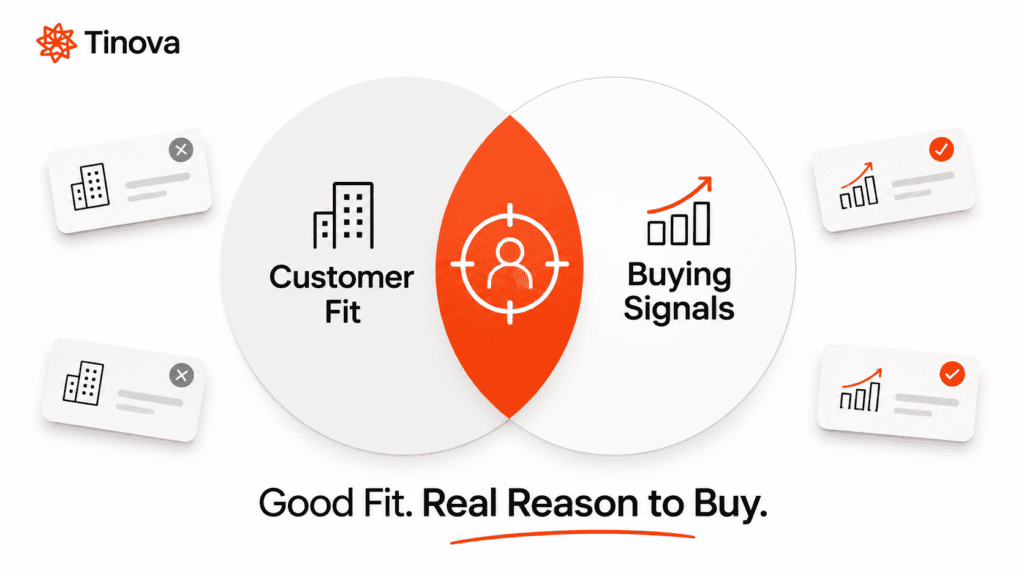
A contact is a name, email address, or LinkedIn profile. A lead is an identifiable potential customer who may be relevant to your offer or has shown interest. A qualified lead fits your target market, has a problem you can solve, and has a plausible path toward buying.
That distinction matters. A list of 1,000 contacts isn’t useful if few have the problem your product addresses. Prioritize relevance over list size.
How to Find Potential B2B Customers
Define Your Ideal Customer Profile
Specify an industry, company size, business problem, and relevant buyer. Rather than targeting “B2B companies,” you might focus on SaaS businesses with 10–50 employees struggling to retain customers.
An ICP tells you where to look. It doesn’t prove every matching company is ready to buy.
Find Decision-Makers and Buying Signals
Identify both the person experiencing the problem and the person who can approve a purchase. Look for relevant signals, such as hiring, expansion, or public discussion of the issue. Treat these as reasons to investigate, not proof of demand.
Build a 20-company prospect list. For each company, record:
- Company name and website
- Person experiencing the problem and relevant decision-maker
- One relevant buying signal
- Suitable contact channel
Approach the companies where you have a clear reason to start a conversation.
Which Lead Generation Channels Should You Choose?
Choose channels based on buyer behavior, available resources, and how quickly you can start relevant conversations.
| Channel | Best Starting Situation |
| Buyers are active and identifiable by role | |
| Cold email | You can research specific accounts and relevant contacts |
| SEO and content | Buyers search for solutions and you can invest for the longer term |
| Referrals and partnerships | Existing contacts or providers can introduce suitable prospects |
| Communities | Buyers openly discuss the problems you solve |
Start with one primary channel and, if manageable, one supporting channel. Evaluate qualified conversations, not just connections or replies. If results are weak, review targeting and messaging before abandoning the channel.
For more detail, see our guide on building a cold outreach system for a B2B startup.
How to Turn Prospect Research Into Relevant Outreach
An effective message connects a verified observation about the prospect with a problem worth discussing.
Instead of “We help businesses improve efficiency,” consider this hypothetical message:
“I noticed your company recently expanded into three markets. Keeping customer onboarding consistent across regions can be difficult. How are you handling that today?”
Keep the first message focused on one observation and one question. Don’t present an assumed challenge as a confirmed fact.
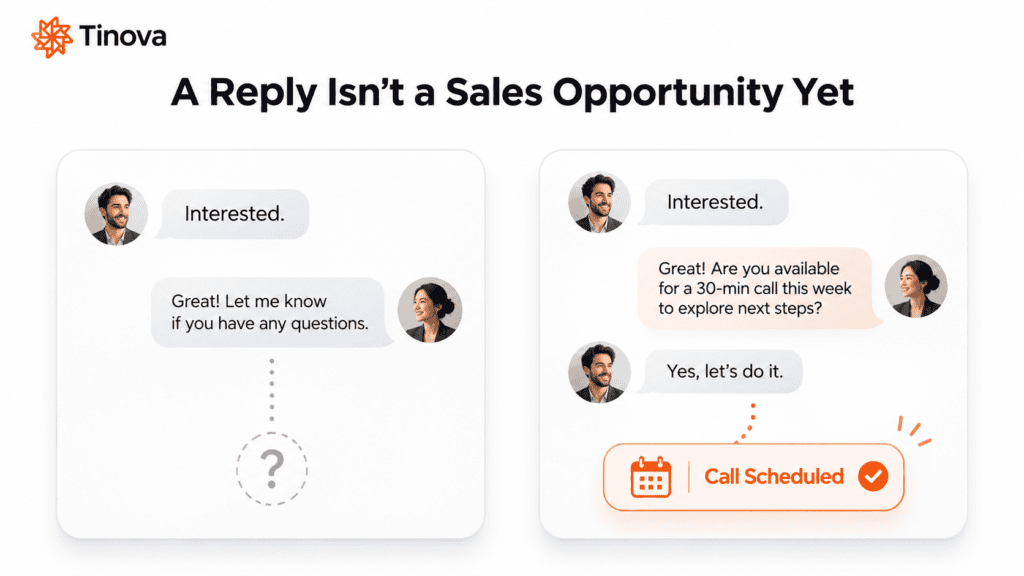
If a prospect replies, offer a reasonable next step, such as a short call to discuss the problem. For inbound interest, use a landing page that clearly explains who the offer is for, what visitors receive, and what happens after they submit a form.
How to Qualify and Nurture B2B Leads
Before pursuing a lead, check four things:
- Company fit: Does the business match your ICP?
- Problem: Can your solution address its needs?
- Urgency: Is there a reason to act now?
- Buying ability: Is there a route to approval and budget?
Your next step should match the prospect’s situation:
| Prospect Situation | What to Do Next |
| Not a priority right now | Share a relevant resource and agree when to reconnect |
| Exploring solutions | Ask about the problem’s impact and what they’ve tried |
| Requests pricing | Confirm scope, budget, and decision criteria |
| Reviewing a proposal | Agree on who decides and when you’ll follow up |
After each conversation, record the need, agreed action, responsible person, and date in a spreadsheet or CRM. A reply without a next step can easily become a stalled opportunity.
How to Measure Whether Lead Generation Works
Track the stages that lead toward revenue:
Leads → Qualified leads → Sales conversations → Paying customers
Your lead-to-customer conversion rate is:
(Customers acquired ÷ Leads generated) × 100
For example, if 20 leads produce one customer, the rate is 5%. This is an illustration, not an industry benchmark. Track results by channel over comparable time periods and allow for your sales cycle.
Also record time and money spent. A channel producing fewer leads may still be more valuable if those leads are qualified and the customer acquisition cost (CAC) is sustainable.
A Simple 30-Day Lead Generation Plan
| Week | Priority |
| 1 | Define your ICP, core problem, offer, and qualification criteria |
| 2 | Research 20 companies, identify buying signals, and start outreach |
| 3 | Qualify replies, hold relevant calls, and agree on follow-up actions |
| 4 | Review pipeline results and improve the stage losing the most prospects |
Use your weekly review to guide the next action:
- Few replies? Check targeting and message relevance.
- Replies but few qualified leads? Revisit your ICP.
- Qualified leads but few meetings? Review the invitation.
- Meetings but no sales? Investigate business value, objections, and decision-making.
These are clues, not certain diagnoses. Check what prospects actually said before changing channels or spending on automation.
Getting Leads but Struggling to Find the Right Buyers?
You don’t need a bigger contact list if the people you’re reaching aren’t likely to become customers. What matters is knowing whether you’re targeting the right businesses and moving suitable prospects toward a sale.
Book a free 30-minute GAP Analysis with Tinova. We’ll look at how you’re finding and qualifying leads, identify where potential customers are getting lost, and help you decide what to improve.
Written by Tinova Growth Team
The Tinova Growth Team shares practical guidance for early-stage B2B founders working through challenges in positioning, marketing, sales, and customer acquisition. Our articles focus on helping founders understand what’s holding their business back and what they can do next.