Won an award and nothing changed? Take the 10-point startup award test. Separate real leverage from paid vanity before you apply.
Startup awards matter when they create trust, useful introductions, or hiring credibility. They cannot replace customer demand, retention, or product-market fit.
A credible award amplifies work already done; a paid badge with little value can hurt your reputation. Use this 10-point test to decide whether an award is worth pursuing.
What Is the Real Value of Startup Awards?
The value of an award depends on who recognises it and what that recognition helps you do next.
A respected award may give a potential customer a reason to take a meeting, help you reach a partner, or strengthen your hiring story. But a trophy cannot fix an unclear offer, weak customer demand, or missing proof.
If you are preparing to raise capital, Tinova’s guide to what investors want to see before funding a startup explains why team capability, traction, market evidence, and business fundamentals matter more than recognition alone.
When Do Awards Become Vanity?
An award becomes vanity when winning is the goal and no clear business benefit follows.
Ask yourself three questions:
- Trust: Will the people you need to reach respect this awarding organisation?
- Introductions: Could the award help you start a useful conversation?
- Hiring: Would it matter to a candidate you want to attract?
If none of these applies, the award may add a badge to your website without helping the business.
Also check how winners are selected. Look for public criteria, identifiable judges, credible past winners, and a clear explanation of any fees.
A fee to enter does not automatically make an award worthless, but payment should not guarantee recognition presented as independent achievement.
Visual 2 — Middle (Credible Award vs Vanity Award)
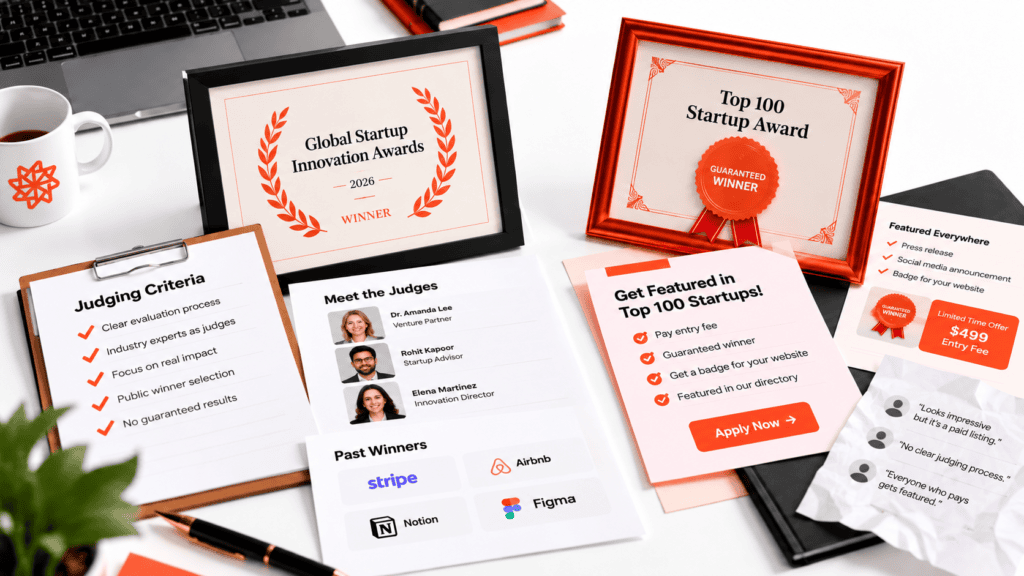
A PR On The Go expert roundup on startup awards discusses the difference between credible recognition and pay-to-play listings, including the reputational risks when paid promotion is presented as an earned award.
An Award Should Point Back to Real Work
The strongest recognition supports a result people can understand and verify.
For example, “We won an innovation award” tells people what happened. Explaining the product improvement, customer outcome, or business result behind the award gives them a reason to care.
This principle applies to founder recognition, too. Moving from doing every task to leading a team is a change in responsibility, not just a new title.
Tinova’s guide to the founder-to-CEO transition explores how a founder’s work and leadership develop as the company grows.
Tinova’s published figures offer a useful example of why context matters: its Results Library reports 200 startups diagnosed, 77 businesses scaled, three industry awards in 2026, and $10 million in qualified client pipeline built.
The pipeline figure is not revenue. Each measure describes a different part of the work, and the case studies provide further context.
The lesson is simple: recognition carries more weight when people can trace it back to evidence.
The 10-Point Startup Awards Test
Score one point for every statement that is true.
| # | Check | What It Measures |
| 1 | Your target audience recognises the awarding organisation. | Relevance |
| 2 | Winning could help you contact a specific prospect, partner, or investor. | Sales leverage |
| 3 | The process gives you access to useful judges or founders. | Connections |
| 4 | The award could strengthen your case when hiring. | Hiring value |
| 5 | Winners are selected through a clear, credible judging process. | Integrity |
| 6 | You have real results or work for the award to recognise. | Foundation |
| 7 | You know what you want to achieve after winning. | Purpose |
| 8 | The time and cost make sense for your current stage. | Economics |
| 9 | You can name a person or audience whose trust the award could strengthen. | Specificity |
| 10 | The award recognises work you have already done, rather than distracting you from it. | Focus |
How to Read Your Score
| Score | Meaning | What to Do Next |
| 8 to 10 | Strong potential for useful recognition. | Apply with a clear goal and follow-up plan. |
| 5 to 7 | The value is uncertain. | Review the weakest checks before committing. |
| 0 to 4 | The award may offer little business value. | Save the time and budget for work that strengthens customer proof or positioning. |
This is a practical decision tool, not a scientifically validated test.
Visual 3 — Middle (Turning Recognition Into Opportunity)
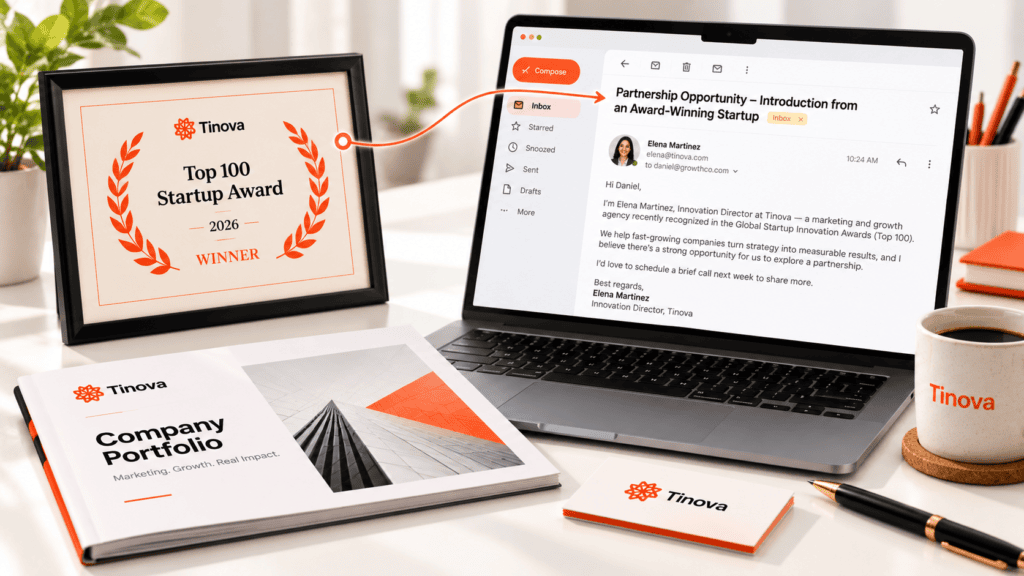
Scored Below 5? Start Here
Do not rush to apply. Use that time to speak with one customer, document one case study, or improve your positioning. An award with little evidence behind it has little to amplify. Revisit the test in 90 days.
Who Should Wait Before Applying?
If you are pre-seed with no customer evidence, limited product validation, and an unclear offer, an award may not be your next priority.
Build the foundation first: understand the customer, test the problem, and document what you learn. Recognition becomes more useful when it supports a clear business story rather than trying to replace one.
FAQs
Do startup awards help with fundraising?
They can support credibility when the awarding organisation is respected by relevant investors. However, awards do not replace customer validation, traction, market evidence, or a capable team.
Are startup awards worth paying for?
It depends on what the fee covers. Review the judging criteria, selection process, audience, and past winners. If payment guarantees the award, treat it as paid promotion rather than independent recognition.
Should I put startup awards in my pitch deck?
Include an award if it is credible, relevant, and supports your story. Keep stronger evidence, such as customer results, retention, traction, and team capability, at the centre of the deck.
What builds founder credibility beyond awards?
Clear positioning, verifiable results, customer evidence, strong execution, and trusted relationships. Awards can reinforce these signals, but they cannot create them.
The Rule to Remember
An award amplifies what already exists. It does not create it.
Before you apply, identify the specific door the award could open and how you will use that opportunity. If you cannot name a useful next step, your time may be better spent building the work you want recognised.
Written by: Tinova Growth Team
Tinova is a marketing and growth agency for startups and owner-led businesses. Its current site reports 200 startups diagnosed, 77+ businesses scaled, 3 awards in 2026, and $10M+ in client funding pipeline built.
Updated: October 7, 2026
Disclosure: Tinova provides diagnostic and strategic marketing services. This article offers practical guidance and does not guarantee a particular business outcome.