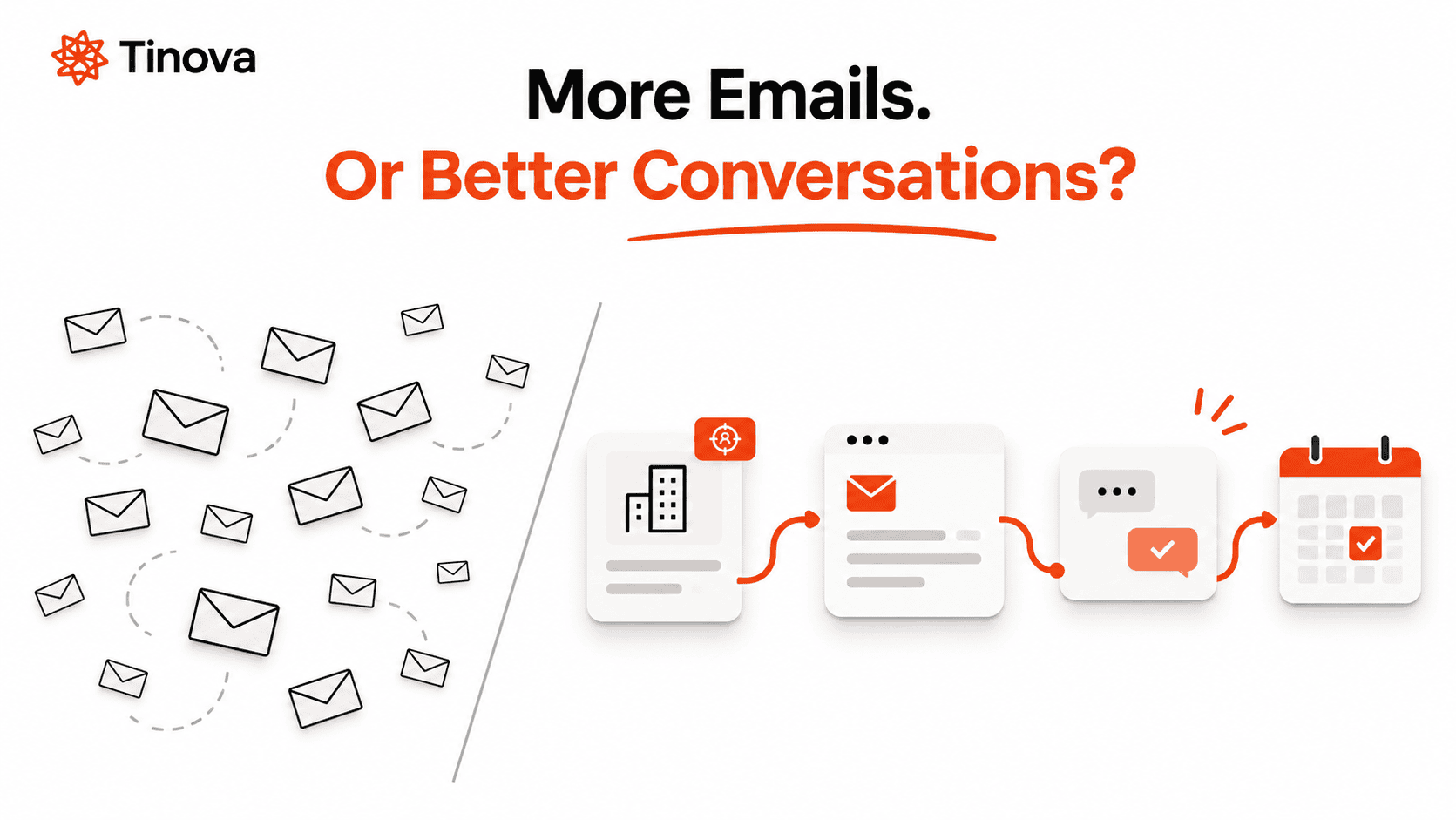
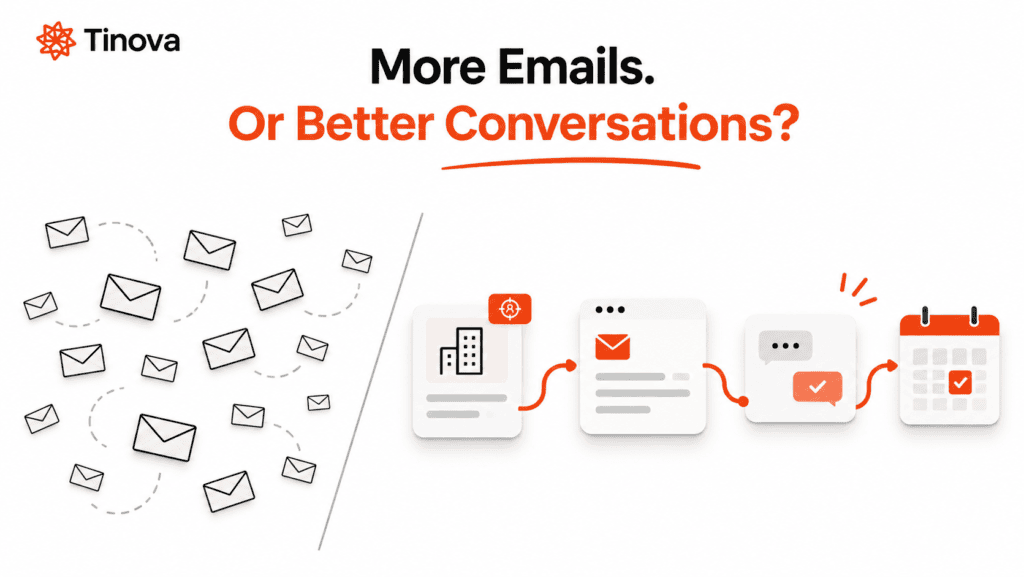
You’ve researched potential customers, sent cold emails, and followed up, but the conversations you hoped to start aren’t happening. Some prospects don’t respond, while others show interest without taking the next step.
For early-stage B2B founders, sending more messages isn’t always the solution. A cold outreach system helps you identify relevant buyers, start meaningful conversations, and understand what needs improvement when results fall short.
Here’s how to build one without a large sales team or expensive tools.
Step 1: Identify Who Is Most Likely to Need Your Solution
Define your ideal customer profile (ICP) by industry, company size, growth stage, buyer role, and the problem your product solves.
For example, a reporting software startup might target marketing agencies with 10–30 employees managing multiple client accounts.
But matching your ICP doesn’t mean a company needs your product today.
Look for relevant developments such as hiring, new clients, expansion, or operational challenges. These are reasons to investigate a potential problem, not proof that someone is ready to buy.
Step 2: Research Your First 50 B2B Prospects
Start with 50 relevant companies rather than collecting hundreds of contacts without understanding their needs.
Use LinkedIn, company websites, industry directories, and professional communities to identify suitable businesses and the people involved in purchasing decisions.
Keep a simple research record:
| Research Field | Example |
| Company | Marketing agency with 25 clients |
| Relevant buyer | Operations Director |
| Possible problem | Manual client reporting |
| Buying signal | Recent client expansion |
| What to investigate | Whether reporting workload has increased |
| Outreach angle | How the agency manages reporting as it grows |
Focus on companies where you can identify a relevant buyer and a reason to start a conversation.
Step 3: Choose the Right Cold Outreach Channel
Choose your channel based on how your potential customers communicate and how easily you can reach decision-makers.
| Channel | When to Use It |
| Cold email | You have a relevant contact and a specific reason to reach out |
| Your buyers are active in professional discussions | |
| Cold calling | Direct conversations suit your buyers and sales process |
You can combine channels without repeating the same pitch.
For example, research an Operations Director on LinkedIn, review the company’s recent announcements, and use that information to write a relevant email.
Start with a manageable approach before increasing outreach volume.
Step 4: Prepare Your Cold Email Setup
Before sending emails, verify your contact addresses and use a professional sending domain.
Configure SPF, DKIM, and DMARC authentication. These records help receiving servers authenticate your messages but don’t guarantee inbox placement.
Monitor bounce rates, remove invalid contacts, provide a clear way to opt out, and follow the outreach and privacy requirements applicable to you and your recipients.
A verified prospect list and correctly configured email account are more useful starting points than expensive automation.
Step 5: Write Cold Emails Around a Business Problem
Your message should explain why you’re contacting that particular prospect.
Use this structure:
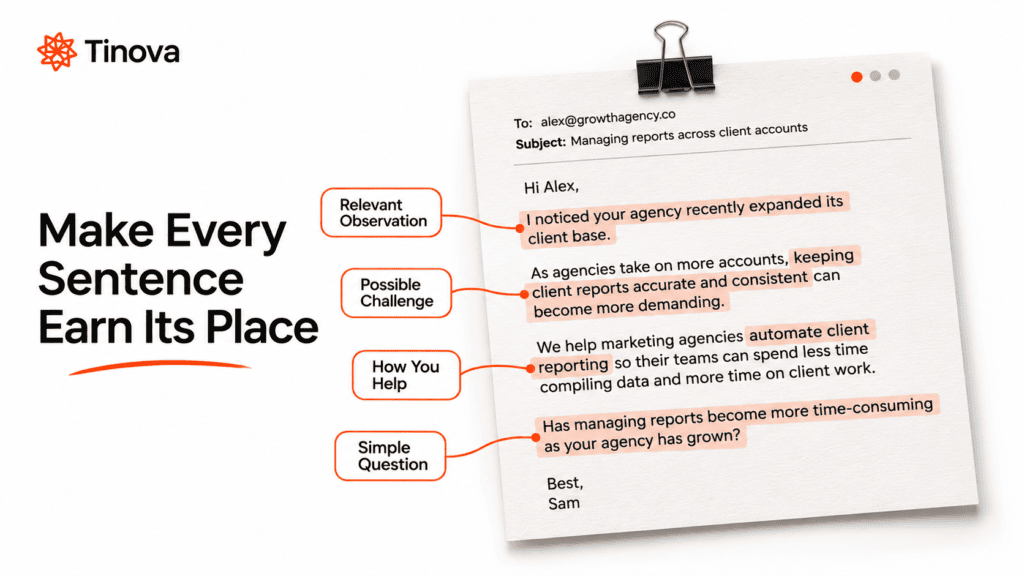
Relevant observation → Possible challenge → How you can help → Simple question
Example Cold Email
Subject: Managing reports across client accounts
Hi [Name],
I noticed [Company] has recently expanded its client base. As agencies take on more accounts, keeping client reports accurate and consistent can become more demanding.
We help marketing agencies automate client reporting so their teams can spend less time compiling data and more time on client work.
Has managing reports become more time-consuming as your agency has grown?
[Your Name]
The goal is to start a relevant conversation, not explain every product feature.
If you don’t have testimonials, demonstrate how your product works or explain your relevant expertise. Avoid claims you cannot support.
Step 6: Follow Up With Something Useful
A prospect may miss your first message or have other priorities. Your follow-up should add context rather than repeat the same request.
| Timing | Purpose |
| Day 1 | Initial personalized email |
| Day 4 | Share another relevant observation |
| Day 9 | Explain your solution or address a concern |
| Day 15 | Send a polite final follow-up |
Example Follow-Up
Hi [Name],
I wanted to follow up on my earlier email. Does your team prepare client reports manually, or have you already automated that process?
I’m interested in how agencies manage reporting as their client base grows.
These intervals are illustrative, not a universal schedule. Adjust them to your audience, avoid excessive contact, and stop when someone opts out.
Step 7: Manage Replies and Track Your Pipeline
A reply doesn’t automatically mean someone is a qualified buyer.
If a prospect responds, “Can you share more details?”, understand their needs before sending a generic product presentation.
For example:
“Of course. Is reducing the time spent preparing reports your main priority, or is keeping reporting consistent across client accounts the bigger concern?”
Use a spreadsheet or basic CRM to track:
Researched → Contacted → Replied → Qualified → Meeting booked
Record each prospect’s response, relevant problem, last interaction, next action, and follow-up date.
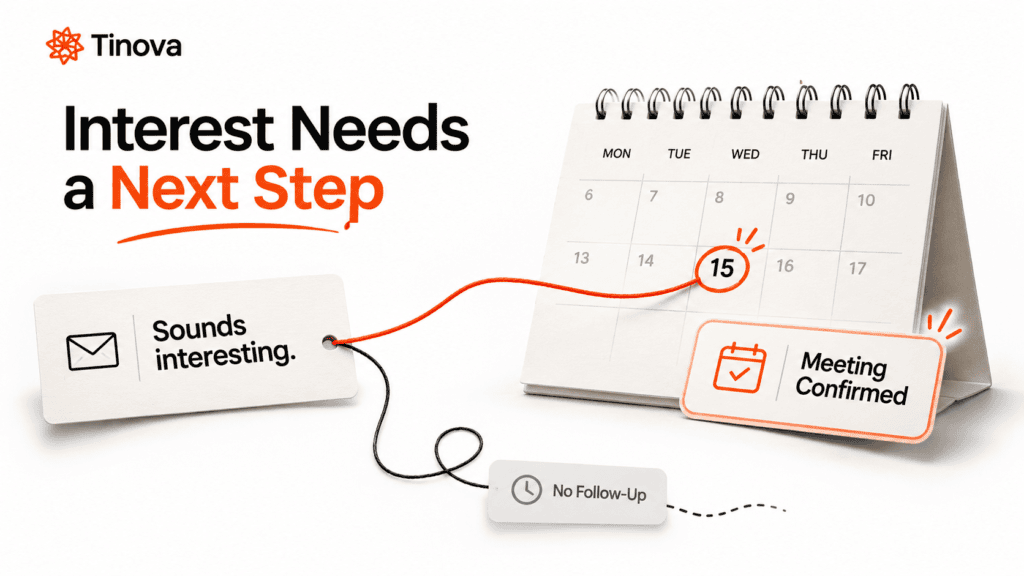
This helps you move interested prospects toward useful conversations without losing track of them.
How to Measure Your Cold Outreach Results
Don’t measure success only by emails sent. Track what happens after your messages reach prospects.
| Metric | What It Helps You Understand |
| Bounce rate | Contact accuracy and possible delivery problems |
| Reply rate | Whether messages start conversations |
| Positive reply rate | Whether prospects show relevant interest |
| Meeting-booking rate | Whether interest progresses to meetings |
| Qualified opportunities | Whether you’re reaching suitable potential buyers |
Track these results by outreach batch and review what prospects actually say before changing your approach.
Your Cold Outreach Isn’t Working? Here’s What to Review
| What’s Happening | What to Investigate | What to Do Next |
| Emails bounce | Contact accuracy and authentication | Verify addresses and review sending setup |
| Few replies | ICP, timing, and message relevance | Review your first outreach batch |
| Replies are mostly negative | Buyer needs and offer relevance | Reassess targeting and positioning |
| Interested prospects don’t book meetings | CTA and perceived meeting value | Improve your next-step request |
| Meetings happen but nobody buys | Urgency, objections, and qualification | Review sales conversations before increasing volume |
These patterns suggest where to investigate, not definitive causes.
The important question isn’t how many more emails you can send. It’s which part of your outreach process needs improvement before you contact the next group of prospects.
Not Getting the Responses You Expected From Cold Outreach?
Before sending another batch of emails, take a closer look at your targeting, messages, and follow-up process. You may not need more outreach. You may need to improve one part of the approach you’re already using.
Book a free 30-minute GAP Analysis with Tinova. We’ll review your current outreach process, help identify what’s holding it back, and set a measurable goal for your next steps.
Written by Tinova Growth Team
The Tinova Growth Team shares practical guidance for early-stage B2B founders working through challenges in positioning, marketing, sales, and customer acquisition. Our articles focus on helping founders understand what’s holding their business back and what they can do next.