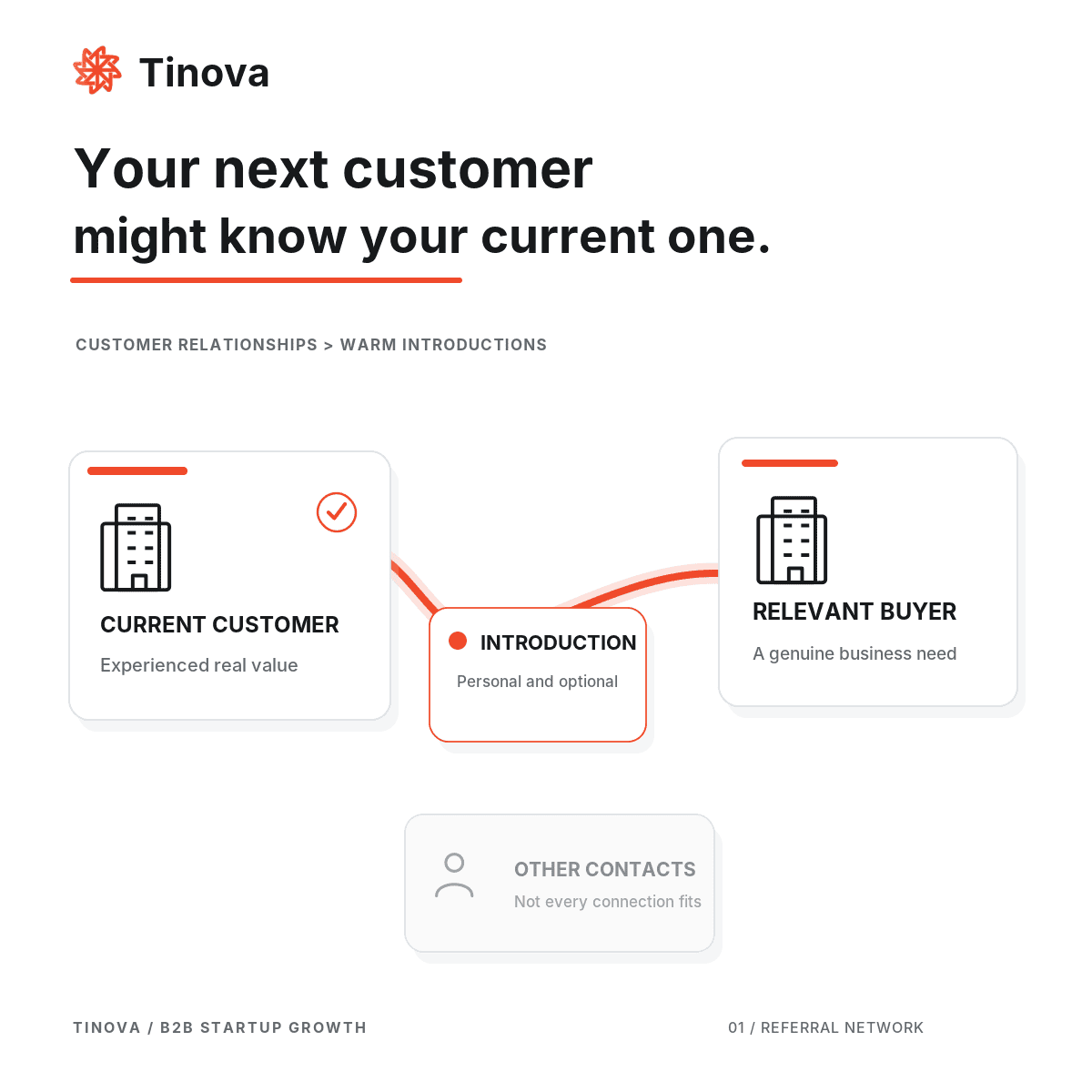
Winning your first few customers takes time. You’ve worked to earn their trust, understand their needs, and deliver something worth paying for. Now you’re thinking about where your next customers will come from.
Your existing customers may be able to help, but asking for referrals isn’t always straightforward. You might not know who to approach, when to ask, or how to make the request without making the relationship feel transactional.
A simple B2B customer referral program can help turn genuine customer relationships into relevant introductions. Here’s how to get started without a large customer base, expensive tools, or a dedicated sales team.
Is Your B2B Startup Ready for a Referral Program?
Before asking for referrals, check whether customers have a genuine reason to recommend your business.
Look for three things:
- Meaningful results: Has the customer completed a project, improved a process, or achieved a useful outcome?
- Positive feedback: Have they expressed satisfaction or chosen to continue working with you?
- Understanding of your value: Do they understand what you help with and which businesses could benefit?
If customers are still struggling to get value from your product, focus on improving their experience first. A referral request won’t fix an unresolved customer problem.
Which Customers Should You Ask for Referrals?
Not every satisfied customer knows the people you want to reach.
Look for customers who understand your work, have experienced meaningful results, and maintain relationships with businesses that fit your ideal customer profile.
For example, imagine your startup has 12 customers. Three have achieved good results and regularly work with businesses similar to your target market.
Start with those three rather than approaching all 12.
A smaller group allows you to make personal requests, understand their willingness to recommend you, and evaluate whether the introductions are relevant.
When and How Should You Ask for a B2B Customer Referral?
A successful implementation, completed project, renewal, or positive feedback conversation can be a natural opportunity to ask.
Avoid asking immediately after a customer signs up. Give them time to experience the value first.
Make Your Referral Request Specific
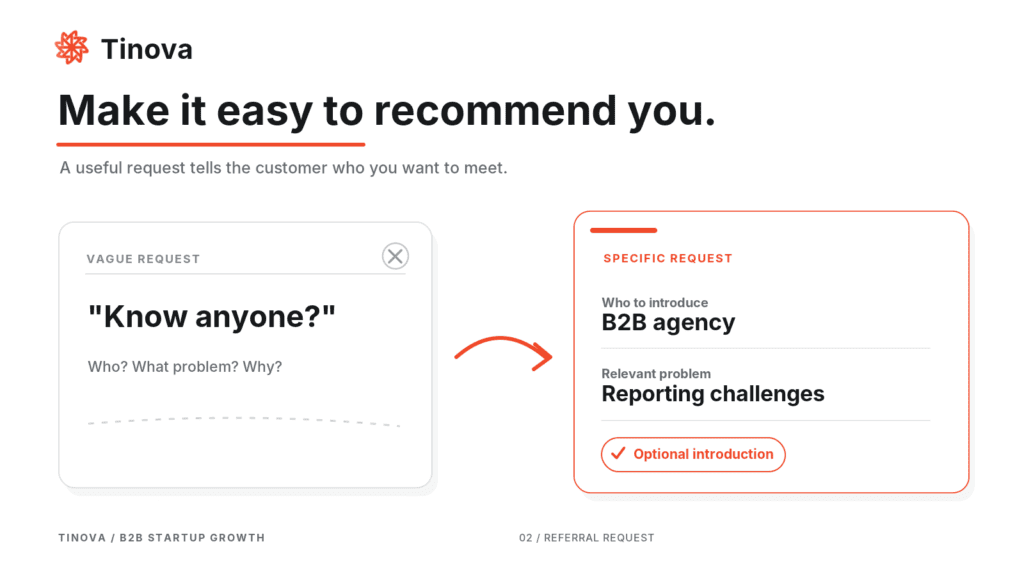
Instead of asking, “Do you know anyone who might need our services?”, describe the type of business you want to reach.
Example referral request:
“Hi Alex, I’m glad the new reporting process is helping your team. Do you know another B2B agency dealing with similar reporting challenges? If someone comes to mind, would you feel comfortable introducing us?”
Give customers a short description they can forward if they choose.
Make it clear that an introduction is optional. Don’t ask customers to share someone’s contact details without permission.
Should Your B2B Referral Program Offer Rewards?
Start without financial incentives if customers are comfortable making personal introductions. A genuine thank-you may be enough.
If participation is low, first investigate whether customers have experienced enough value, understand who to refer, and find the introduction process straightforward.
Consider rewards only when they serve a clear purpose.
| Reward Approach | Possible Application |
| No financial reward | Personal thank-you |
| Service credit | Credit toward a future project |
| Exclusive benefit | Additional training or account benefits |
| Financial reward | Agreed payment for a qualifying referral |
Set the conditions before introducing rewards. Decide whether a reward is earned when an introduction is made, a contract is signed, or an invoice is paid.
Check your profit margins and applicable rules, especially where payments to employees or professionals could create conflicts of interest.
What Should You Do After Receiving a Customer Referral?
A warm introduction doesn’t automatically make someone a qualified prospect.
Before suggesting a demo or meeting, understand why the introduction was made.
Check three things:
- Company fit: Does the business match your ideal customer profile?
- Decision-maker involvement: Are you speaking with someone who can influence or approve a purchase?
- Business need: Does the company have a problem your product or service can solve?
Example: Responding to a Warm Introduction
“Hi Jordan, Alex mentioned your team is reviewing its client reporting process. I’d be interested to understand what you’re looking to improve. Would a short conversation be useful?”
If the company doesn’t have the problem you solve, don’t treat the introduction as a sales opportunity simply because someone recommended you.
Thank the referring customer, respect the prospect’s communication preferences, and follow up based on the conversation.
The goal is to understand whether the introduction can become a genuine business opportunity, not to pressure either person into a sale.
How Can You Manage Customer Referrals Without Expensive Software?
A spreadsheet or your existing CRM is enough when you’re starting out.
| Field | What to Record |
| Referring customer | Who made the introduction |
| Referred company | Potential customer’s business |
| Introduction date | When it came in |
| Buyer fit | Whether the company qualifies |
| Next action and date | What needs to happen next |
| Sales status | Meetings, proposals, and decisions |
| Revenue and reward status | Sales generated and rewards owed |
Review open referrals weekly.
Every introduction should have someone responsible and a clear next action so promising conversations don’t get forgotten.
How Do You Measure Whether Your Referral Program Is Working?
Track the journey from introduction to paying customer, not just the number of people referred.
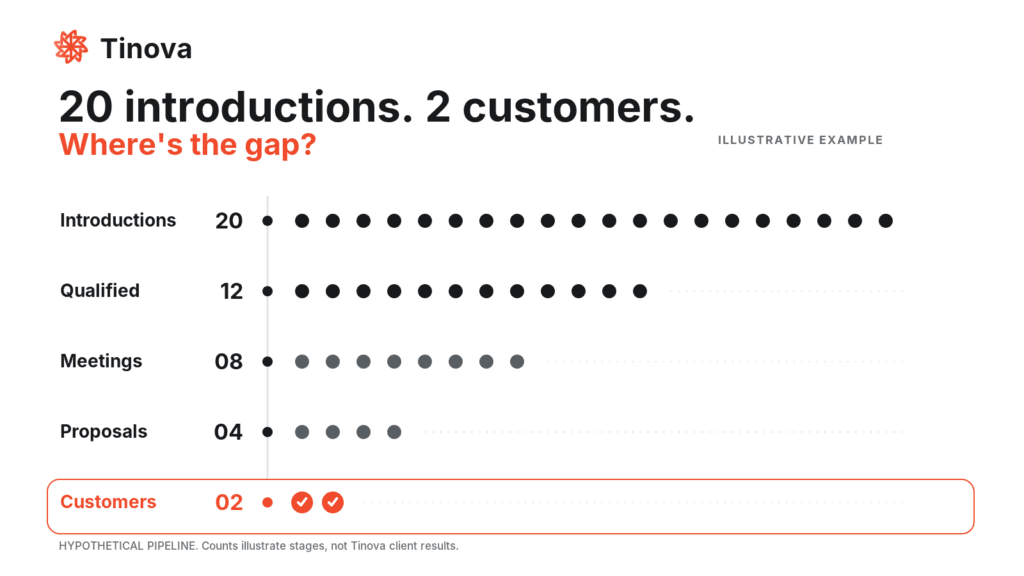
Illustrative referral pipeline:
| Stage | Count |
| Introductions | 20 |
| Qualified prospects | 12 |
| Meetings | 8 |
| Proposals | 4 |
| Paying customers | 2 |
In this hypothetical example, two customers from 20 introductions represent a 10% introduction-to-customer conversion rate.
But that number alone doesn’t explain where opportunities are being lost.
What Should You Investigate When Referrals Don’t Convert?
| What’s Happening | What to Investigate |
| Few introductions | Timing and clarity of your request |
| Introductions don’t qualify | Whether customers understand your ideal buyer |
| Qualified referrals don’t book meetings | Your response and approach |
| Meetings don’t become customers | Buyer needs, urgency, value, and purchasing process |
| Customers convert but costs are high | Rewards, sales effort, and profitability |
These are possible causes to investigate, not guaranteed explanations.
Calculate Referral Customer Acquisition Cost
Referral CAC = Total referral acquisition costs ÷ New referred paying customers
Include applicable referral rewards, program expenses, and acquisition-related sales effort.
Compare the result with the revenue and value of the customers acquired. A smaller number of profitable, long-term customers may be more valuable than many introductions that never become sales.
A Simple 30-Day Plan to Start
| Week | What to Do |
| Week 1 | Identify three customers who have experienced meaningful value |
| Week 2 | Prepare personal requests and decide whether rewards are necessary |
| Week 3 | Contact those customers and manage any introductions |
| Week 4 | Review qualification, meetings, sales opportunities, and follow-ups |
The first 30 days are for testing your referral process, not guaranteeing new customers.
B2B sales can take months, but you’ll learn whether existing customers are willing to introduce you, whether those introductions reach suitable buyers, and what needs improvement.
Turn Customer Relationships Into New Business
Having satisfied customers is a good start, but building a referral process takes more than asking for introductions. If you’re unsure how to identify the right customers, reach potential buyers, or turn introductions into sales, Tinova’s free 30-minute GAP Analysis can help you find where your customer acquisition process needs attention.
Written by Tinova Growth Team
The Tinova Growth Team shares practical guidance for early-stage B2B founders working through challenges in positioning, marketing, sales, and customer acquisition. Our articles focus on helping founders understand what’s holding their business back and what they can do next.