Welcome to our series on building and growing a startup.
Starting a business involves more than having a good idea. From understanding what your business needs to improving your offer and developing the skills to run it, each stage brings different decisions.
Explore the articles in this series:
Part 1: If You Had 30 Days to Work on Your Startup, What Would You Work On?
Part 2: How to Make Your Offer Clear to Potential Customers
Part 3: What Skills Do You Need to Run a Startup? ← This post
Let’s get into it.
You may know how to build a product but struggle to find someone willing to pay for it. Or perhaps you’re comfortable selling but unsure whether your business can afford another employee.
The skills needed to run a startup include customer research, sales, marketing, financial management, product and technical judgment, communication, and leadership.
You don’t need to master all seven yourself. You need to know which capabilities your business has, which are missing, and which matter most now.
What Are the Essential Skills Needed to Run a Startup?
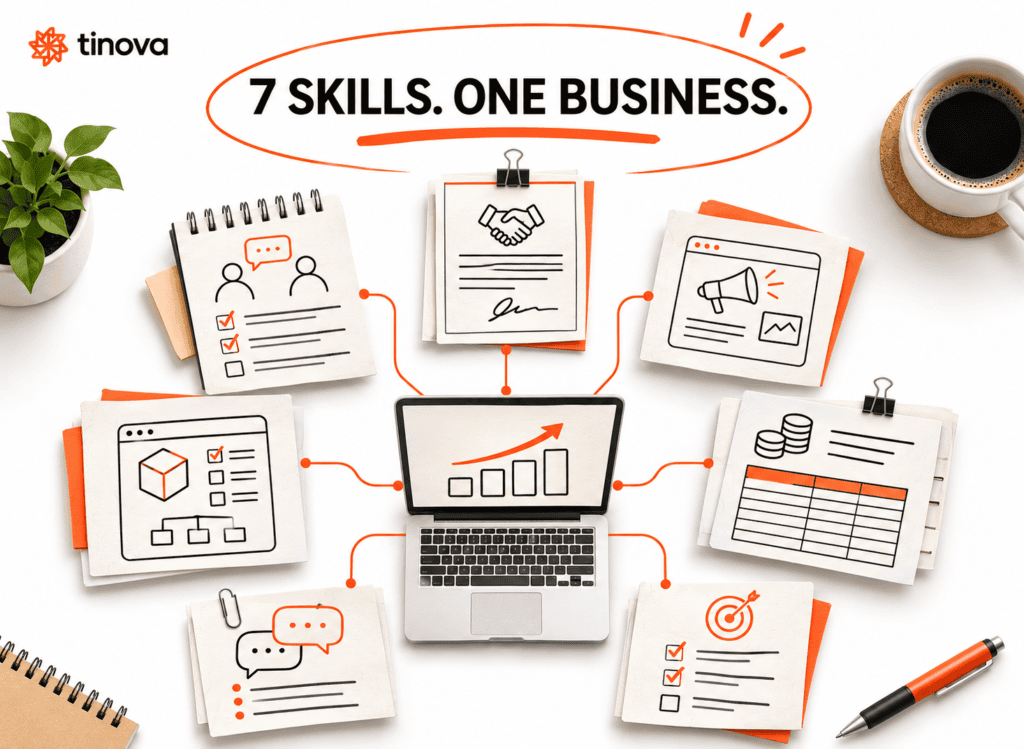
Each capability helps your startup perform a different responsibility. The question isn’t whether you’ve studied it, but whether someone can use it effectively.
| Skill | What effective execution looks like |
| Customer research | Identify a specific buyer, their problem, and how they currently solve it. |
| Sales | Qualify prospects, discuss objections, and agree on a purchasing next step. |
| Marketing | Reach relevant buyers and distinguish qualified enquiries from views or clicks. |
| Financial management | Understand revenue, expenses, cash timing, and whether a sale covers its direct costs. |
| Product and technical judgment | Assess requirements, feasibility, reliability, security, and delivery risks. |
| Communication | Explain the offer clearly, listen to feedback, and agree on expectations. |
| Leadership and decision-making | Set priorities, assign ownership, and review results before committing resources. |
Sales and marketing are related but different. Marketing helps suitable buyers discover a solution. Sales helps them evaluate it and make a purchasing decision.
A non-technical founder doesn’t have to become a programmer. But the team needs technical expertise, and the founder should understand enough to question estimates, assess product quality, and make responsible decisions.
Which Startup Skills Matter Most at Each Stage?
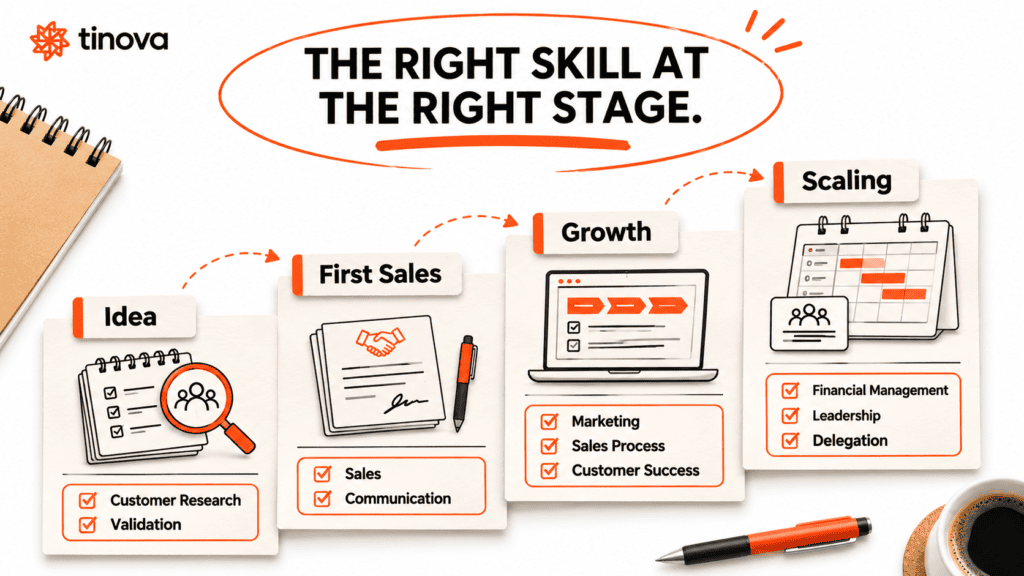
Your current business problem helps determine where to build capability first.
| Your startup’s situation | Skills to examine | What you need to establish |
| Idea, little customer evidence | Research, validation, basic finance | Who has the problem, and is it worth solving? |
| Product built, few sales | Sales, communication, product judgment | Why aren’t suitable buyers purchasing? |
| First customers, inconsistent growth | Marketing, sales process, customer success | Where do customers come from, and do they stay? |
| Increasing customers and workload | Finance, leadership, delegation | Can you deliver reliably and manage cash? |
These are priorities, not permission to ignore other responsibilities. You still need financial oversight, sound operations, and appropriate technical standards from the beginning.
How Can You Tell Which Skills Your Startup Is Missing?
A disappointing result doesn’t automatically mean you lack a skill. First investigate the situation:
- What isn’t working? Name the specific responsibility or result, such as booking qualified meetings or covering monthly expenses.
- Which capability does that require? Consider buyer research, selling, delivery, finance, or team management.
- What evidence suggests that capability is weak? Look for repeated mistakes, missing processes, or a task nobody can perform reliably.
Consider a founder with a functioning SaaS product but no paying customers. More sales training might help. Yet the obstacle could be weak buyer demand, an unclear offer, or users who cannot authorize payment.
Check where the buying process stops before deciding who needs training.
| What you observe | Skill to examine | Another possible explanation |
| Qualified calls end without next steps | Sales qualification | Low urgency or missing authority |
| Customers leave after onboarding | Customer success | Product does not meet expectations |
| Revenue rises while cash stays tight | Financial management | Late payments or high delivery costs |
This distinction prevents you from spending money on the wrong solution.
Should You Learn a Skill, Hire Someone or Outsource It?
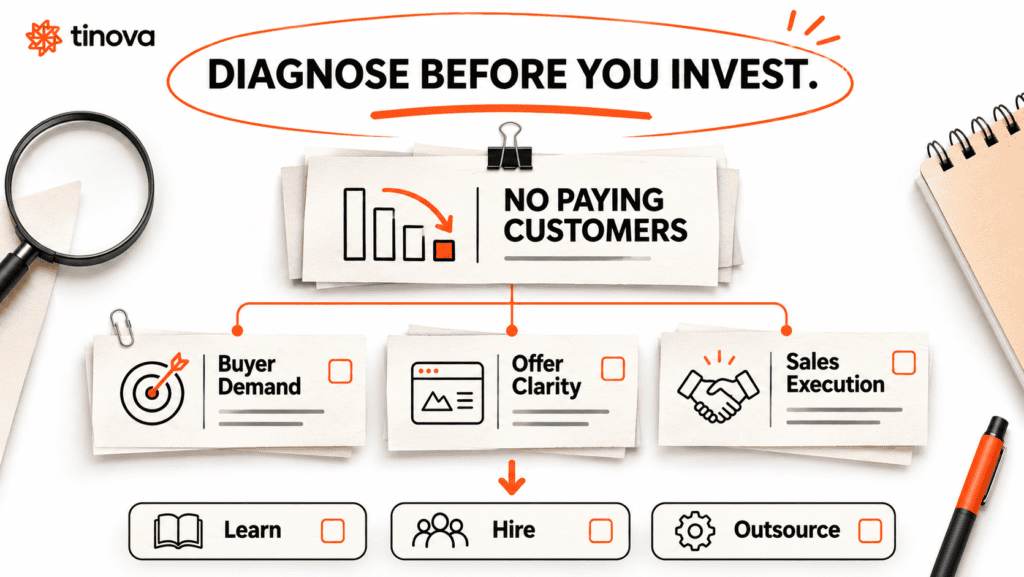
Learn enough to make important decisions. Founders should understand their customers, how the business earns money, and what acceptable work looks like. This doesn’t require doing every task personally.
Outsource specialist execution. Accounting, security reviews, design, and campaign implementation may need expertise without a permanent role. Define the expected result and review the work. Responsibility for the business decision stays with you.
Hire when the work becomes recurring. A new role makes sense when responsibilities are clear, the workload is consistent, and your cash position supports the commitment.
Hiring a salesperson will not fix a product that buyers don’t want. Diagnose the problem before adding a salary.
How Can You Improve a Startup Skill Through Real Work?
Choose one responsibility and practise it through actual business work. Record what you produce, seek feedback, then repeat.
Y Combinator’s startup lectures highlight the importance of talking to users and learning from their experiences when building and improving a product.
| Skill | Exercise | Evidence to review |
| Research | Interview a relevant buyer | Can you describe their problem and current alternative? |
| Sales | Examine one stalled opportunity | Can you identify fit, objections, and a next action? |
| Finance | Calculate direct costs of one sale | Do you know what remains to cover overhead? |
| Product | Review a customer requirement | Can you explain feasibility and delivery risks? |
| Leadership | Delegate one defined task | Was the agreed outcome delivered and reviewed? |
For a deeper look at acquisition economics, see Tinova’s B2B customer acquisition cost guide.
One exercise is a starting point, not proof of mastery. Look for better decisions and more reliable execution over time.
Which Startup Skill Should You Work on First?
Identify one important responsibility your business cannot currently execute or evaluate with confidence. Decide whether the next step is learning, delegating, or hiring, then define the result you’ll examine.
If you need a broader view of your startup’s readiness, Tinova’s Readiness Blueprint can help you review where your business stands and what deserves attention next.
Written by Tinova Growth Team
The Tinova Growth Team shares practical guidance for early-stage B2B founders working through customer acquisition, product decisions, and sustainable growth.