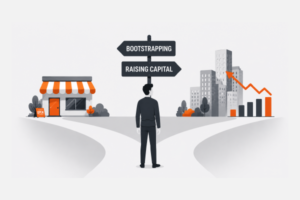

Should pre-seed SaaS startups invest in SEO? Learn the timing, runway logic, AI visibility opportunity, and signs that tell you when SEO is worth it.
You searched for SEO for SaaS startups, so here is the honest answer: SEO can be valuable, but it may not be your first marketing investment at pre-seed.
We sell content, yet we would still tell a founder to wait if the buyer, positioning, and first customer channel are not clear.
SEO is a long-term channel. At pre-seed, your bigger need may be customer evidence.
The question is not “Does SEO work?”
It is:
“Is SEO the best use of your time and runway right now?”
Why Does SEO Take So Long?
SEO does not have one fixed timeline. Ahrefs found that respondents commonly reported three to six months before seeing results, while Semrush notes that meaningful ranking movement for a new site can take four to 12 months or longer, depending on competition, resources, and the site itself.
That matters at pre-seed because you may still be trying to answer basic questions:
- Who is the buyer?
- What problem matters most?
- What language do they use?
- Which channel gets a response?
- What makes them willing to pay?
If those answers are still changing, building a large SEO program can mean producing content around a message you have not validated.
The Real Pre-Seed SEO Problem
SEO becomes harder to justify when your buyer and positioning are still assumptions.
You can rank for a keyword and still attract the wrong audience.
You can publish 30 articles and still not know why someone should buy.
You can earn search visibility without proving that the person searching has the budget, urgency, or authority to become a customer.
That is why positioning comes before promotion.
Tinova’s HXC framework starts with five questions: who feels the problem most, what they have tried, where they gather, what language they use, and why they need a solution now. Those answers give you a much stronger foundation for SEO later.
What Should a Pre-Seed SaaS Startup Measure Instead?
At pre-seed, search metrics can tell you whether people are finding or engaging with your content, but they do not answer the most important business question:
Will anyone pay?
Your stronger early signals may be:
- Customer conversations
- Discovery calls
- Pilot requests
- Repeat product use
- Referrals
- Purchase commitments
A simple test can give you this information faster.
Tinova’s 30-Prospect Test uses 30 qualified prospects, personal outreach, response tracking, and a two-week review. The goal is not to build a huge sales pipeline. It is to learn whether your buyer, problem, and message hold up with real prospects.
A search impression tells you someone searched. A customer conversation tells you why they might buy.
What About AI Search and SEO for SaaS Startups?
This is where the conversation gets more interesting.
Google now has dedicated guidance for AI features in Search, including AI Overviews and AI Mode. Google says these experiences can surface web sources, while its broader Search guidance still emphasizes making content useful, understandable, crawlable, and structured.
So you do not need to choose between “traditional SEO” and “AI visibility.”
A better pre-seed move is to create one genuinely useful resource that gives AI systems a reason to reference your company.
Do not treat this as a guaranteed shortcut. There is no reliable formula that guarantees an AI citation.
Instead, publish information your company is well positioned to provide.
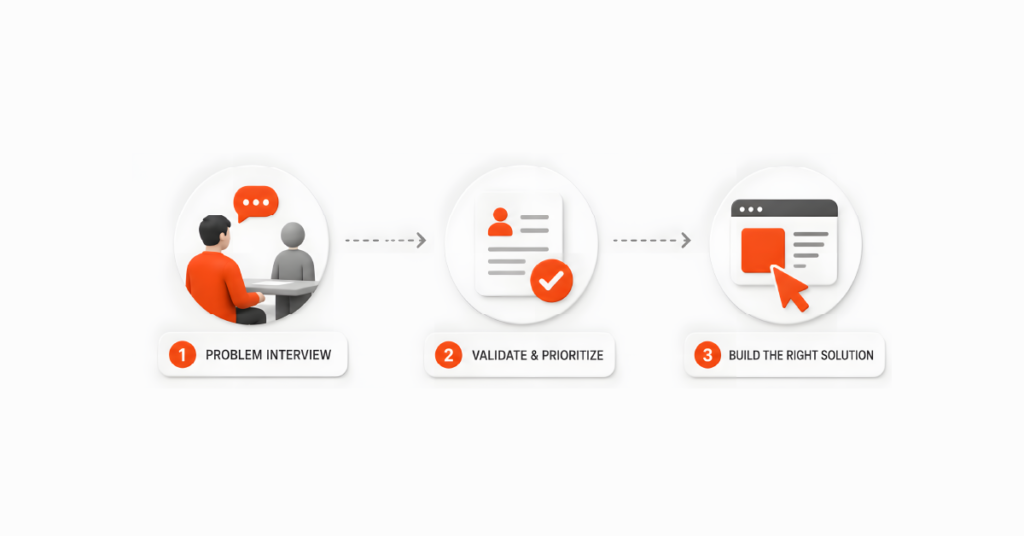
What Can a Pre-Seed Startup Publish for AI Visibility?
Instead of producing dozens of generic articles, create one resource based on your own experience.
For example:
- 50 customer interviews with clear findings
- A diagnostic scorecard based on real customer data
- A benchmark from your own product usage
- A framework that solves a specific customer problem
- Original research that challenges a common assumption
Make the information easy to understand with clear headings, direct answers, tables, examples, and specific evidence.
This gives both search engines and AI systems a clearer source to understand.
Google’s current Search documentation also emphasizes structured data as a way to help Google understand page content, although structured data alone does not guarantee a particular search appearance.
The Citation Sprint
Think of this as a Citation Sprint, not a full SEO campaign.
Pick one question your ideal customer asks.
Then create the best resource you can around that question using information only your company can provide.
For example:
Question: Why do early SaaS founders struggle to identify their first buyer?
Instead of writing another generic 2,000-word article, interview 30 prospects, document the patterns, publish the findings, and explain what the results mean.
Now you have:
Customer research → original insight → useful resource → potential search visibility → potential AI citation
And you have learned about your buyer at the same time.
What Should You Do This Quarter?
Instead of committing to a large SEO program, focus on three things:
1. Talk to 30 potential customers
Use Tinova’s 30-Prospect Test to learn the exact words buyers use and test whether the problem is urgent enough to start a conversation.
2. Test one high-intent channel
Choose one channel where you can speak directly with potential customers. The goal is to learn what works before putting more runway behind it.
3. Publish one original resource
Turn your customer conversations, product data, or research into a useful resource that can support both SEO and AI visibility.
This gives you customer insight and content evidence at the same time.
When Should a SaaS Startup Start SEO?
SEO becomes easier to justify when three things are true:
You understand your buyer.
Your positioning is stable enough to build around.
You can give the channel enough time and consistent effort to compound.
That does not mean every startup should wait until Series A. Some SaaS companies have strong search demand from the beginning, especially when buyers actively search for the problem or category.
The point is to sequence SEO around the business, not follow a universal startup timeline.
Before investing heavily, ask:
- Do we know exactly who we want to reach?
- Do we know what they search for?
- Do we know which problems have buying intent?
- Can we consistently produce useful content?
- Can we wait long enough to evaluate the channel?
If the answer to several of these is no, customer research may deserve the next dollar and hour before a large SEO program.
If you are already estimating acquisition costs, Tinova’s CAC guide for early-stage startups explains why a precise CAC number can be misleading before you have enough customer data.
A Tinova Insight: Diagnose Before You Build
Tinova’s current proof library reports 200 startups diagnosed and 77 businesses scaled. Its proof system separates named client results from agency numbers and gives each published result a client, timeframe, and description of what was built.
That approach is relevant to SEO too.
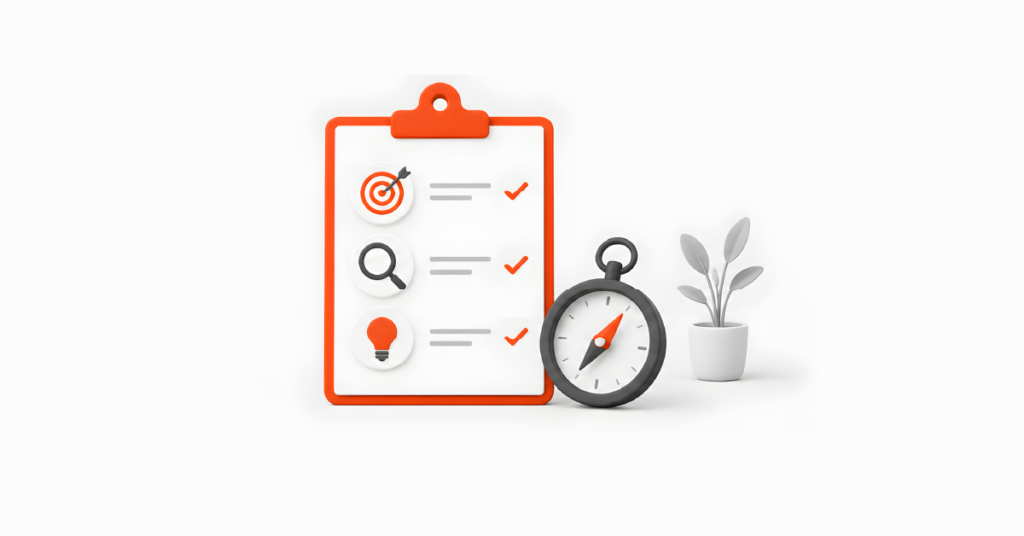
Diagnose first. Build second.
If customer conversations show that buyers search for a specific problem, that gives you a stronger SEO starting point than choosing keywords from a generic SaaS list.
If those conversations show that buyers do not search for the problem at all, you have learned that before spending months producing content.
Conclusion
SEO can become a strong SaaS acquisition channel, but pre-seed does not automatically mean “start SEO now.”
First, understand your buyer. Test your positioning. Find a channel that creates real customer conversations.
Then use what you learn to decide where SEO fits.
If you want to build content early, start with one original resource based on real customer insight rather than a large content calendar.
The goal is not to publish more.
It is to publish something worth finding.
If you are still figuring out your first customer, channel, and positioning, Tinova’s Investor-Ready in 21 Days program helps pre-seed and seed founders build the foundation before fundraising.
FAQs
Is SEO worth it for pre-seed SaaS startups?
It can be, but it depends on the startup. SEO makes more sense when you know your buyer, understand search intent, and can invest consistently. If those pieces are not clear, customer discovery may be the better first investment.
When should a SaaS startup start SEO?
Start when you understand your buyer, have a clear positioning, know which searches connect to buying intent, and can give SEO enough time to produce meaningful evidence. There is no single funding stage that fits every SaaS company.
How long does SEO take for a SaaS startup?
There is no guaranteed timeline. Ahrefs reports three to six months as a common range from its survey, while Semrush says new sites can take four to 12 months to see meaningful ranking movement, with competitive terms taking longer.
What is AEO and should pre-seed startups care?
Answer Engine Optimization, or AEO, refers to structuring content so answer engines can understand and potentially use it. At pre-seed, the practical focus should be original, useful information, not chasing a guaranteed citation.
Can SEO work without a large budget?
Yes. Founders can handle basic SEO themselves, especially technical setup, keyword research, and content optimization. The bigger cost is time. Ahrefs notes that SEO can be done without an agency, but meaningful results still depend on the quality and consistency of the work.