
Learn how to define your ICP with a disqualification list. Use seven practical filters to qualify prospects, protect your roadmap, and focus sales.
How to Define Your ICP: Start With Who You Will Reject
Most founders treat their ICP like a TAM slide.
“B2B SaaS companies.”
“SMBs.”
“Founders and consultants.”
Those are markets, not useful ICPs.
A strong Ideal Customer Profile tells your team who fits, why they fit, and when to walk away. This guide shows you how to define your ICP using a simple disqualification-list method.
Key Takeaways
- Your ICP should help you say no, not just describe who could buy.
- Build it from firmographics, trigger events, and the person who owns the problem.
- Review closed-won and closed-lost deals before creating assumptions.
- Create a negative ICP or Kill List for poor-fit accounts.
- Turn your ICP into CRM filters so your team can actually use it.
What Is an ICP?
An Ideal Customer Profile (ICP) describes the type of company that gets the most value from your product and is most likely to buy and stay.
For B2B SaaS, that can include company size, industry, revenue, location, technology, buying triggers, and the person responsible for the problem.
TK Kader’s ICP framework makes a similar point: a useful ICP goes beyond basic company characteristics and connects the account to its needs, behaviors, and buying conditions.
The important question is not:
“Who could use our product?”
Ask:
“Which customers are worth building the business around?”
The Account-Count Test
Count the companies that match your current ICP.
If the answer is 50,000+ accounts, you may have defined a market segment rather than an ICP.
For an early-stage B2B company, a focused list gives you a better chance to learn from the same type of buyer repeatedly. Tinova’s 30-Prospect Test takes this idea further: start with 30 closely matched prospects, track their responses, and use what you learn to refine the ICP.
If you cannot find 30 good prospects, your ICP may need more work.
The Rejection Test
Here is a simple test:
Name the last prospect your ICP told you to reject.
If nobody can name one, your ICP may not be guiding decisions.
For example, imagine your ICP is:
Series A B2B SaaS companies with 20 to 50 employees, using HubSpot, that hired a VP of Sales within the last 90 days.
Now compare that with:
Growing B2B companies that need better sales.
The first definition gives your team criteria to search, qualify, and reject. The second gives almost every salesperson a reason to pursue another account.
A useful ICP creates boundaries.
Build Your ICP From Three Layers
A practical ICP needs three layers.
1. Firmographics
Define the company:
- Industry
- Employee count
- Revenue
- Business model
- Geography
- Technology used
2. Trigger Event
Find the event that creates urgency:
- New executive hire
- Funding round
- Tool migration
- Regulatory change
- Reorganization
- Rapid hiring
A company can fit every firmographic requirement and still have no reason to buy today.
3. Internal Owner
Ask:
Who owns this problem?
If nobody is responsible for solving it, the deal can stall even when the company looks like a perfect fit.
This is one reason a strong ICP should describe more than company size and industry. TK Kader also recommends looking at trigger events and the people involved when defining an ICP for B2B SaaS.
Build Your ICP From Evidence, Not a Template
Start with your last 10 closed-won and closed-lost opportunities.
Look for:
- Company characteristics
- Trigger event
- Decision-maker
- Current solution
- Reason they bought
- Reason they walked away
- Implementation effort
- Retention or churn
Your wins show where value is appearing.
Your losses show where the model breaks.
Even with a small customer base, these patterns are more useful than filling out a generic ICP template.
Tinova’s recent pre-seed guidance makes the same point from another angle: talking to 20 to 30 potential customers can reveal whether the problem, buyer, and message are actually connecting.
The Negative ICP: Your Kill List
Now write down who you are not targeting.
Your Kill List might include:
- Companies below your minimum budget
- Accounts without an active buying trigger
- Prospects without a person responsible for the problem
- Customers requiring heavy custom development
- Use cases that pull your product toward a different market
- Regions you do not support
- Accounts with implementation costs that exceed their value
This is not about rejecting revenue for the sake of being selective.
It is about spotting revenue that creates a bigger cost later.
The Cost of the Wrong Customer
Roadmap debt
A poor-fit customer may request features that solve one customer’s problem but do not help your core market.
Weak messaging
When you speak to five different customer types, your message becomes harder to make specific.
Expensive delivery
A small contract that needs heavy customization can consume more time than a larger, better-fit account.
Weak references
A customer who does not resemble your target market may give you a logo but little help reaching the next ten customers.
Revenue is not automatically good revenue.

The 7 ICP Disqualifiers
| Disqualifier | Why It Matters | Example |
| No active trigger | No urgency to buy | No recent event connected to the problem |
| Budget too low | Acquisition and support costs may not work | $200 budget for enterprise implementation |
| No decision-maker | Deal can stall | Contact cannot influence the purchase |
| High implementation cost | Deal may become unprofitable | Custom integration for a small contract |
| Low reference value | Limited help with your target market | Customer is far from your beachhead |
| Off-core use case | Can pull the roadmap in another direction | One-off feature for one account |
| Market mismatch | Adds support or legal complexity | Region you are not equipped to serve |
These are working filters, not universal rules. Your actual disqualifiers should come from your customers, economics, and product strategy.
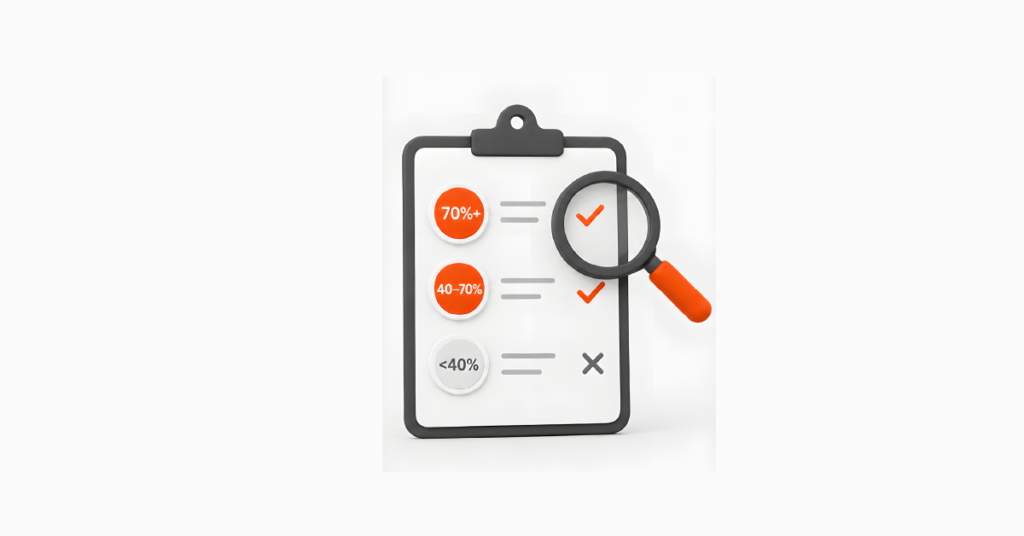
Turn Your ICP Into a Score
Use a simple 1 to 5 score for each account.
| Criterion | 1 | 3 | 5 |
| Firmographic fit | Poor match | Partial match | Exact target |
| Urgency | No trigger | Older trigger | Active trigger |
| Budget authority | Unknown | Likely | Confirmed |
| Implementation | Heavy custom work | Moderate setup | Standard setup |
| Reference value | Little relevance | Adjacent | Strong target-market fit |
You can set your own threshold based on your sales economics.
The point is not the exact number.
The point is making qualification visible before your team spends hours on an account.
Your ICP Should Become a CRM Filter
An ICP that lives only in a document is easy to ignore.
Turn the criteria into CRM fields such as:
- Employee count
- Industry
- Technology
- Trigger event
- Budget
- Decision-maker
- Disqualifier
- ICP score
Then your sales team can filter accounts before outreach.
Tinova’s 30-Prospect Test uses a similar discipline: identify a small group of closely matched prospects, contact them, track the responses, and use the results to improve your ICP.
Your ICP Has an Expiry Date
Your ICP should change as you learn.
Review it every quarter against:
Closed-won + closed-lost + churn + customer feedback
Maybe companies with 20 to 50 employees looked ideal six months ago, but your best retention now comes from companies with 50 to 100 employees.
Update the profile.
TK Kader describes ICP as part of an ongoing GTM process rather than a static document.
Your ICP should reflect what your customers are teaching you now.
A Tinova Insight: Start With 30, Not 30,000
Tinova’s current founder-led sales framework recommends testing 30 closely matched prospects before trying to reach thousands. The test takes about two weeks and tracks who replies, who asks questions, who declines, and which prospects are actually the right fit.
That creates a useful sequence:
Define → Filter → Talk → Learn → Refine
You do not need a perfect ICP before starting.
You need one specific enough to test.
FAQs
What is an Ideal Customer Profile?
An ICP defines the type of company most likely to benefit from your product and become a strong customer. It can include firmographics, technology, buying triggers, budget, and the person who owns the problem.
How narrow should an early-stage ICP be?
Narrow enough that your team can identify a clear group of similar accounts and learn from them repeatedly. For an early-stage B2B startup, testing a focused list is more useful than trying to address an entire market.
How do I define an ICP with fewer than 10 customers?
Review your existing wins, losses, churn, customer conversations, and sales calls. Look for repeated characteristics, triggers, buyers, and reasons for purchase. Then test those patterns with new prospects.
Should I reject customers who do not fit my ICP?
If an account requires major product changes, heavy support, unusual implementation, or serves a market you are not building for, it may belong on your Kill List. The decision should come from your economics and strategy.
What is a negative ICP?
A negative ICP defines the customers you do not want to pursue. It turns your ICP into a qualification system by giving your team clear reasons to stop pursuing poor-fit accounts.
Your ICP Should Help You Say No
A useful ICP is not a paragraph about your dream customer.
It is a decision tool.
It tells your team who to target, what signals to look for, and when to walk away.
Start with your last 10 wins and losses. Build the three layers. Write your Kill List. Test it with 30 prospects. Then update it based on what customers actually do.
If your ICP never causes you to reject an opportunity, it may not be specific enough.
Need help defining your market and GTM foundation? Explore Tinova’s Business Foundation or Investor-Ready in 21 Days.