
The best tools to find B2B customers depend on your channel. Compare directories, communities, outbound tools, and a simple channel test.
The best tools to find B2B customers are not always the ones with the biggest databases.
At pre-seed, your first job is to find where your buyers already look, ask questions, or respond to outreach.
That could mean a niche directory, a founder community, LinkedIn, targeted outbound, or an integration marketplace.
The mistake is running four channels halfway and learning from none of them.
Start With One Channel, Not Four
When the product, positioning, and buyer are still being tested, spreading effort across SEO, outbound, ads, community, and partnerships makes results hard to read.
Tinova’s current Pre-Seed Marketing Channel guide uses a simple rule: one buyer, one channel, one test, one measurable outcome.
Y Combinator gives similar early-stage advice: talk to users, learn from them, and do the work needed to get the first customers before trying to build a large growth system.
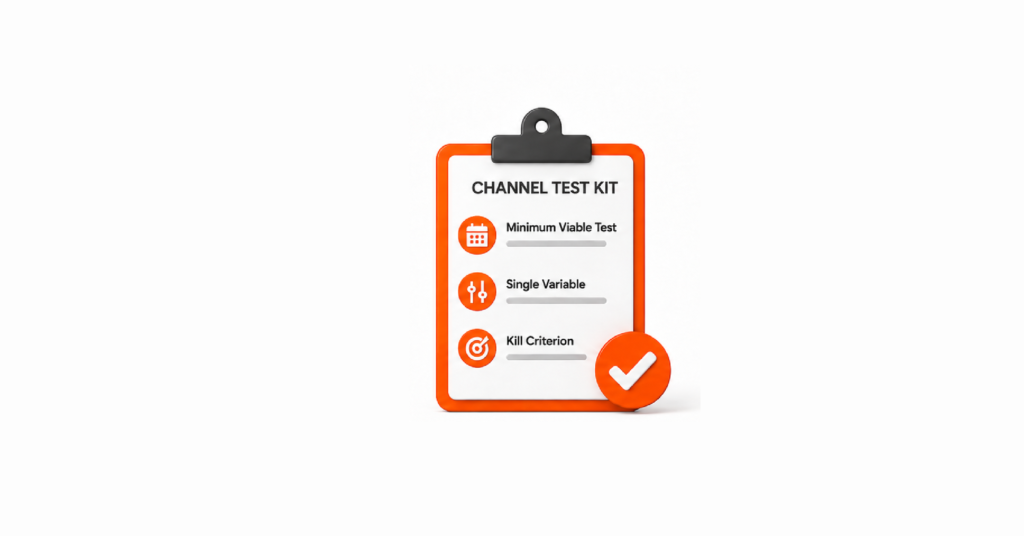
Stripe’s guide to getting your first 10 customers also recommends active customer development early, using networks, communities, directories, and direct outreach to find prospects.
Where Should You Look for B2B Customers?
| Channel | Useful tools | Best fit |
| Directories | G2, Capterra, industry directories | Buyers comparing known solutions |
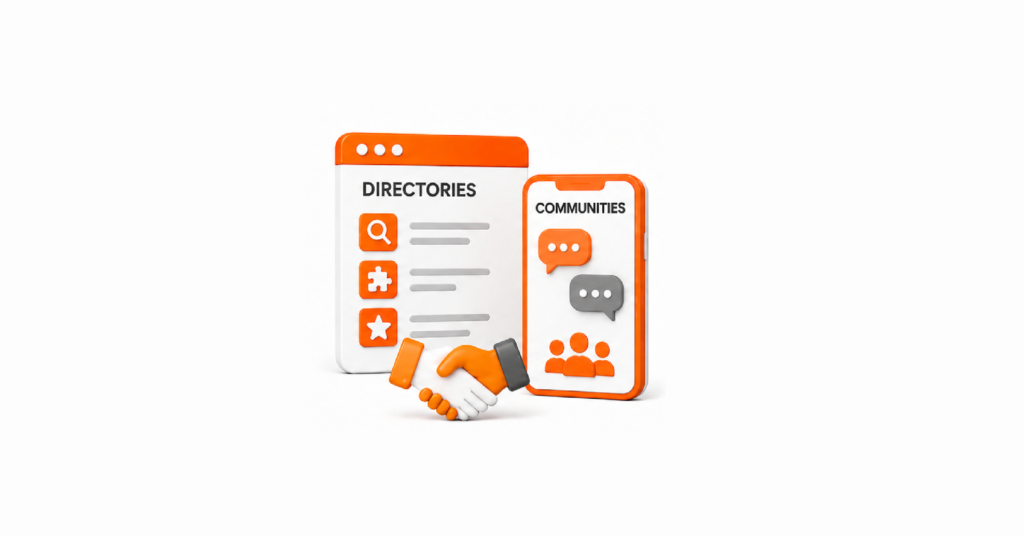
| Communities | Slack groups, Reddit, professional groups | Problems discussed publicly |
| Outbound | LinkedIn, Apollo, Clay | Narrow ICPs and trigger-based outreach |
| Partner ecosystems | Slack, HubSpot, Salesforce marketplaces | Products with a strong integration fit |
| Content and SEO | Search Console, analytics, CMS | Topics buyers actively search for |
The tool only helps after you know who you want to reach and why they should care.
The Best Place to Start Is Often Your Existing Network
Your first prospects may already be one introduction away.
Ask former colleagues, beta users, customers, advisors, and partners:
“Who do you know that deals with this problem?”
Warm introductions can produce useful conversations faster than broad cold outreach, while also giving you better language for your next message.
Tinova’s Founder-Led Sales guide makes the same point from another angle: early sales conversations are a research system. The goal is not just to close a deal. You are learning why a buyer says yes, no, or not yet.
Three Listings Beat Fifty Generic Ones
Directories can work well when buyers already use them to compare vendors.
Do not submit your company to every directory you can find.
Choose:
- One directory your buyers already use
- One relevant industry directory
- One marketplace that fits your product
A focused listing with clear positioning is more useful than dozens of pages that attract nobody relevant.
Use Outbound Tools for Research, Not Volume
Tools like Apollo and Clay can help you build targeted prospect lists, enrich company data, and identify trigger events.
The important part is the target.
A stronger test looks like:
50 SaaS companies + one clear buyer + one trigger + one message
A weaker test looks like:
5,000 contacts + five industries + six messages
The first setup gives you evidence. The second gives you a spreadsheet.
Communities Work When You Actually Participate
A community can become a strong acquisition channel when your buyers already use it to solve the problem.
Start by answering questions, sharing useful examples, and noticing the language people use.
Do not join a community only to post your link.
Ask your last three customers:
“Where did you go for advice before you bought?”
Their answers may reveal the community, newsletter, association, or professional group worth testing.
Your First Channel Test
Before you start, define three things:
Audience: one specific customer segment.
Test: one action through one channel.
Success metric: qualified conversations, demos, trials, or customers.
For example:
“We will reach revenue operations leaders at SaaS companies through trigger-based LinkedIn outreach and measure qualified calls over 30 days.”
Tinova’s B2B Distribution Channels guide recommends matching the test window to the channel. Founder-led outbound can produce signals within weeks, while SEO, communities, and partnerships need longer periods.
Do not judge every channel by the same clock.
The Channel Resource Fit Score
Score each channel from 1 to 5:
| Criterion | Question |
| Buyer Access | Can you reach your target buyers here? |
| Intent | Are they already looking for help with this problem? |
| Speed | How quickly can you learn from the test? |
| Cost | Can you run it without putting pressure on the budget? |
| Founder Fit | Can you keep doing it for several months? |
Add the scores.
20 to 25: Strong candidate. Run the test properly.
15 to 19: Worth testing with a narrow use case.
Below 15: Do not make it your main channel yet.
The goal is not the highest theoretical reach. Pick the channel you can execute, measure, and learn from.
One Tinova Example: One Audience Can Change the Result
Tinova’s published project portfolio includes a useful example. Tahira Collection generated $10,000 in the first 48 hours after the positioning and launch sequence were narrowed to one audience instead of five. That is a client-specific result, not a benchmark, but it shows why audience selection and channel choice belong together.
Tinova’s results library also reports 200 startups diagnosed and 77 businesses scaled, with published client outcomes separated from agency-level figures.
That is the bigger lesson: do not scale a channel before you know which buyer and message are producing the response.
When Should You Add a Second Channel?
Add another channel when the first one gives you a repeatable pattern:
- You know who responds
- You know what message gets attention
- You know what problem they describe
- You can repeat the process
- Someone can own the work
That second channel should support the first rather than restart your entire GTM process.
For example, a founder-led outbound motion can later be supported by SEO content, referrals, or a focused partner channel.
What to Skip for Now
At pre-seed, be careful with:
Large contact databases: They cannot fix weak targeting.
Paid ads: They can buy reach before you know whether the message works.
Broad PR: Attention is not the same as qualified demand.
Five channels at once: You lose the ability to tell which one produced the result.
A simple spreadsheet, LinkedIn, a few relevant communities, and one focused test can be enough to learn more than a large marketing stack.
FAQ
What are the best tools to find B2B customers?
Start with LinkedIn, niche directories, relevant communities, and targeted outbound tools such as Apollo or Clay. The best tool depends on where your buyers already spend time and how you sell.
How do I find my first B2B customers?
Start with your existing network, warm introductions, targeted prospect research, communities, and direct outreach. Stripe’s guide to first customers recommends actively identifying and approaching prospects rather than waiting for early demand to appear on its own.
Should I use Apollo or Clay at pre-seed?
They can be useful for narrow prospect research and trigger-based outreach. Do not use them to compensate for an unclear ICP or weak message.
How many marketing channels should a startup use?
Start with one primary channel. Add another after the first produces a repeatable pattern that you understand.
How long should I test a B2B channel?
Match the test to the channel. Outbound can produce useful signals within weeks, while SEO, communities, and partnerships need more time. Set the review point before you start.
Ready to Pick One Channel?
Your problem may not be a lack of tools.
It may be that too many channels are competing for too little attention.
Start with one buyer, one channel, one test, and one result you can measure.
For a broader look at how to choose the right route, read Tinova’s B2B Distribution Channels guide. To identify the biggest leak across your offer, positioning, website, or follow-up, you can also book a free GAP Analysis.
Written by: Tinova Growth Team
Tinova is a marketing and growth agency for startups and owner-led businesses. Its official site reports 200 startups diagnosed, 77+ businesses scaled, 3 awards in 2026, and $10M+ in client funding pipeline built.
Updated: September 24, 2026
Review Focus: Repeatable revenue, retention, customer acquisition cost, business durability, product-market fit.