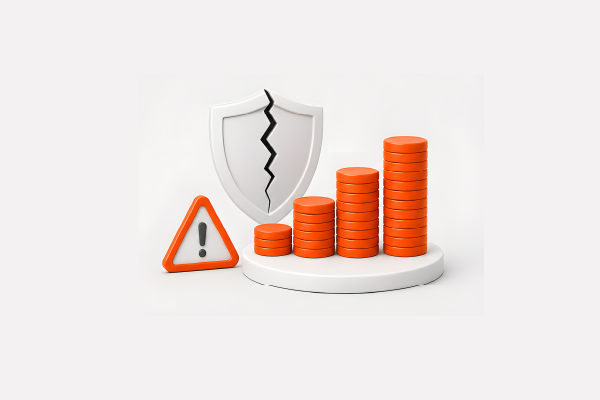

Your go-to-market slide isn’t a vision board. It’s an underwriting document. Investors test four numbers and one sentence. If the numbers came from a benchmark blog and not your own data, they’ll know. Here’s how to build a GTM plan that survives due diligence.
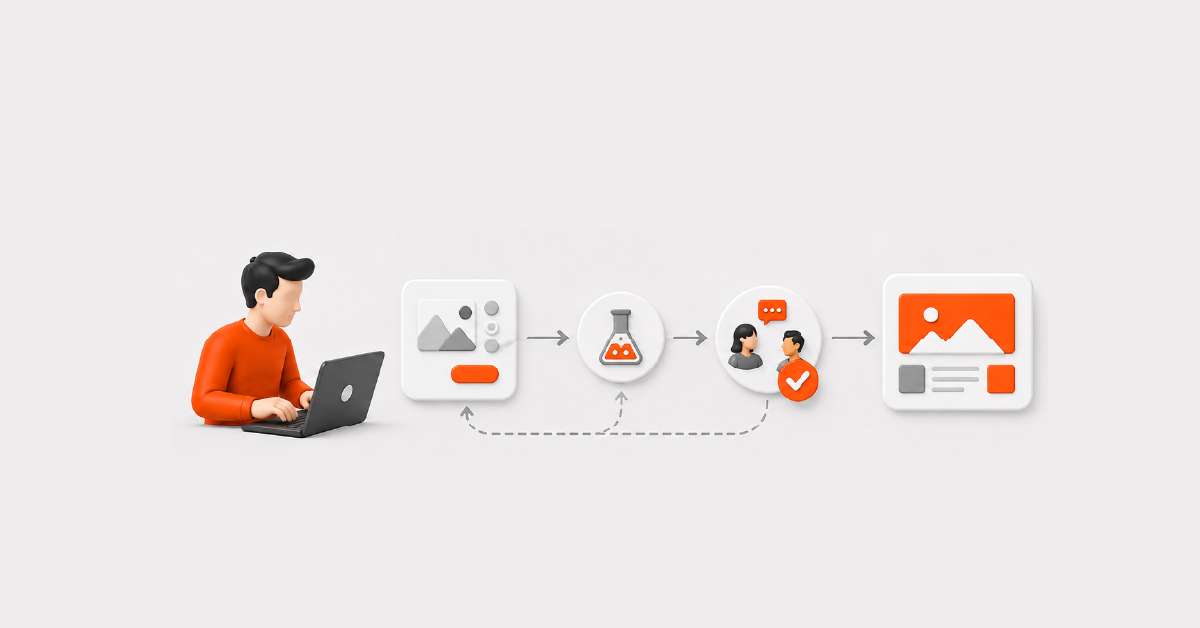
What a pre-seed GTM plan is actually being judged on
Investors want to know how a customer moves from unaware to paying.
They look for a process you have already repeated and numbers backed by your own customer data, not industry averages.
Real customer evidence is more valuable than a perfect forecast.
Repeatability, not volume
Investors do not expect hundreds of customers at the pre-seed stage. They want proof that you can acquire customers through a repeatable process.
As Tino Aliye explains, a few customers do not reduce risk unless you know how to get the next few. The question is not how many customers you have. It is whether you can repeat the process.
Why a benchmark you copied is a negative signal
Copied benchmarks reduce credibility. If you quote an industry-average CAC without your own data, investors know you have not tested it yourself. Your numbers should come from your own sales process whenever possible.
Citing a blended CAC figure is a tell: the number is meaningless unsegmented
A blended CAC hides what is really happening. Enterprise sales and self-serve customers have different acquisition costs. Segment your CAC by customer type and acquisition channel. Research from First Page Sage and Benchmarkit shows CAC can range from $239 to $14,772, making one blended number misleading.
The plan as an experiment list, not a forecast
A pre-seed GTM plan is a list of experiments, not predictions. Present three GTM experiments, each with a cost, a timeline, and a clear kill criterion.
This shows investors you can test, learn, and improve instead of relying on optimistic forecasts.
The four numbers
These four numbers are the foundation of the GTM Underwriting Framework. Label every metric as Observed, Inferred, or Assumed so investors know where the data came from and how reliable it is.
Number 1: ACV, and the motion it implies
Do not report one ACV for every customer. Show ACV by sales motion. For example, founder-led outbound may have an observed ACV of $18,000, while self-serve may have an inferred ACV of $2,400.
Label each figure clearly so investors understand the economics of every motion.
Number 2: Cycle length, measured from first touch to cash
Why founders systematically under-report this by 40%
Measure your sales cycle from the first contact, not the first sales call. Include LinkedIn messages, emails, and introductions.
Many founders underestimate cycle length by about 40%. Report it as a range and label it Inferred until you have data from at least 10 closed deals.
Number 3: Conversion at your single tightest stage
Do not report a full-funnel conversion rate with limited data. Choose the stage with the strongest evidence.
For example: “8 of 30 discovery calls became paid pilots (27%), observed in Q1 2026.” One high-confidence conversion metric is more valuable than a full funnel based on assumptions.
Number 4: CAC, honestly loaded (including your own time)
The founder-time line item nobody includes and every investor adds back
Include founder time in your CAC calculation. Tools, ads, and travel are only part of the cost. Hours spent on outreach, sales calls, and onboarding also matter.
Show Spend CAC and Fully Loaded CAC separately, with a note explaining founder hours. This gives investors a more realistic view of customer acquisition cost.
Confidence labels: observed, inferred, assumed, and why labelling them helps you
Label | Definition | Investor interpretation |
Observed | Measured from your own customer data with the sample size included. | Most credible. Investors will ask about the sample size. |
Inferred | Based on partial data and a clear assumption. | Credible if the assumption is reasonable. |
Assumed | Taken from industry benchmarks or reports with the source cited. | Useful for planning, not for proof. |
A GTM plan with mostly observed metrics builds trust. A plan built mainly on assumed numbers tells investors the model has not been tested yet.

The sentence: one repeatable motion, stated plainly
The template, and three real-shaped examples
Template:
“We acquire [ICP] through [one channel] by [specific action], and we know this because we have done it [n] times with a [conversion rate].”
Example 1:
“We acquire revenue operations leaders at 50 to 200-person SaaS companies through cold email triggered by Series A funding announcements. We have done this 8 times with a 22% reply-to-pilot conversion rate.”
Example 2:
“We acquire engineering managers through our open-source CLI tool on GitHub. We converted 11 teams to paid plans from 340 GitHub stars, with a 3.2% conversion rate.”
Example 3:
“We acquire marketing directors through a private Slack community where we answered questions every week for six months. Four members became paying customers.”
What makes a motion “repeatable” rather than “worked twice”
A GTM motion is repeatable when you can explain the steps, repeat them, and achieve similar results. Two customers from your co-founder’s network do not prove a repeatable process.
As Tino Aliye explains, early revenue can create false confidence. The real test is whether you can repeat the result with people who do not already know you.
Then you need before you’re allowed to call it a motion
For founder-led outbound, aim for 8 to 10 closed deals from cold outreach before calling it a repeatable motion.
For content or community-led growth, aim for 10 to 15 customers acquired directly through that channel.
If your sample size is smaller, call it an early signal and state the sample size. A motion with only three customers is still a hypothesis, not a proven GTM strategy.
The experiment list that replaces the hockey stick
Three experiments, each with a cost, a duration and a kill criterion
Replace revenue forecasts with three GTM experiments. For each one, include the cost, timeline, and kill criterion.
For example: “Test LinkedIn outbound to VP Sales at fintech companies ($3,000 in tools, 8 weeks, stop if fewer than 5 qualified meetings come from 150 outreach attempts).”
This shows investors how you use capital to learn, not just to grow.
Tying experiments to the milestone that unlocks your next round
Working backwards from the seed bar to this quarter’s test
Start with the milestone needed for your next funding round, then work backward. If your seed round requires one repeatable GTM motion with 15 customers at a target ACV, your current experiment should test the channel most likely to reach that goal.
Show the sequence: this experiment validates the channel, the next quarter scales it, and the following quarter reaches the milestone. Investors evaluate the logic behind the plan, not perfect forecasts.
What to say about the channels you haven’t tried yet
Be clear about the channels you have not tested.
For example: “We have not tested content marketing, partnerships, or paid search yet. Content marketing is our next priority because our buyers search for [X] before they know our category exists.”
Being honest about what you have not tested shows focus and clear priorities. Claiming a multi-channel strategy at the pre-seed stage reduces credibility.
The questions you will be asked about this slide
“How did you get your last five customers?” The answer that ends processes
This question, highlighted in multiple r/venturecapital discussions, tests one thing: Can you explain exactly how you acquired your last five customers?
For each customer, show the channel, the trigger, and the time from first contact to revenue. If you cannot explain your last five wins, your GTM plan is not proven.
“What happens when you stop selling personally?”
Investors know you are the main sales channel today. They want to know if your business can grow through a sales team, content, or product-led growth.
If the answer is “not yet,” say it clearly and explain the next experiment that will test it.
“Why do you lose?”
Every startup loses deals. Know your top two loss reasons, whether it’s price, a competitor, a lost champion, or procurement. Explaining the pattern shows you understand your sales process. Claiming an 80% win rate without context hurts credibility.
“What would you spend the first $200K on, and what does it prove?”
Don’t answer with “marketing.” Instead, connect every dollar to a specific GTM experiment.
For example: $60K for a part-time sales hire to test outbound, $40K for SEO content, $50K for SOC 2 Type 1 to remove procurement barriers, and $50K in reserve.
Tie every investment to a measurable outcome. That is what turns a budget into a GTM plan.
The GTM Underwriting Test (score /10)
The ten checks
# | Check | Score 1 if true |
1 | ACV is stated by motion, not blended |
|
2 | Sales cycle is measured from first contact to cash |
|
3 | Conversion rate is shown for one specific stage |
|
4 | CAC is split into spend CAC and fully loaded CAC with founder time |
|
5 | Every metric has a confidence label (observed, inferred, assumed) |
|
6 | One sentence explains your repeatable GTM motion with the channel and sample size |
|
7 | At least three GTM experiments include cost, duration, and kill criterion |
|
8 | Every assumed metric includes a cited source |
|
9 | You can answer “How did you get your last five customers?” without hesitation |
|
10 | The first $200K is assigned to specific experiments, not broad categories |
|
Below 6: what to fix before the deck goes out
If your score is below 6, don’t send the deck yet. Run the missing experiments, collect the missing data, and strengthen your evidence.
An honest number with a clear confidence label is more credible than an unsupported estimate. Fix the gaps before the meeting because investors will find them.
FAQs
What goes on a go-to-market slide at pre-seed?
Include four key metrics: ACV by motion, sales cycle, stage-specific conversion rate, and fully loaded CAC. Give each metric a confidence label (observed, inferred, or assumed).
Add one sentence describing your repeatable GTM motion with its sample size, plus three GTM experiments with a cost, timeline, and kill criterion. Skip revenue projections.
How do you calculate CAC before you have marketing spend?
Calculate spend CAC (tools, ads, travel) and fully loaded CAC (including founder time). Divide your total cost by the number of customers acquired.
Even with three customers, you can report the number if you state the sample size and confidence level. Your own data is more valuable than a benchmark.
What conversion rates should a pre-seed startup show investors?
Only present conversion rates from your own data. For example: “27% conversion from demo to pilot across 30 demos.” Use industry benchmarks only as planning assumptions and clearly label them as assumed.
How do you present GTM with only a handful of customers?
Focus on your GTM motion, not customer volume.
Explain how you acquired those customers, present the data you have with confidence labels, and show the experiments you’re running next.
Investors evaluate how you acquire customers, not how large your spreadsheet is.
Mid-article CTA: Download the GTM Underwriting Test scorecard and evaluate your GTM slide. Then book a 15-minute scorecard review.
End CTA: Ready to build a GTM plan investors can trust? Apply for a GTM audit and turn your customer data into a stronger investor story.
For further reading:
- Why AI Discovery Is Reshaping B2B Customer Acquisition
- Founder-Led Sales: Win Your First Customers Before Hiring a Sales Team
- Customer Readiness Comes Before Investor Readiness
- Go-to-Market Strategy Series
- Evaluate Your Go-to-Market Strategy Before You Scale

Topics: