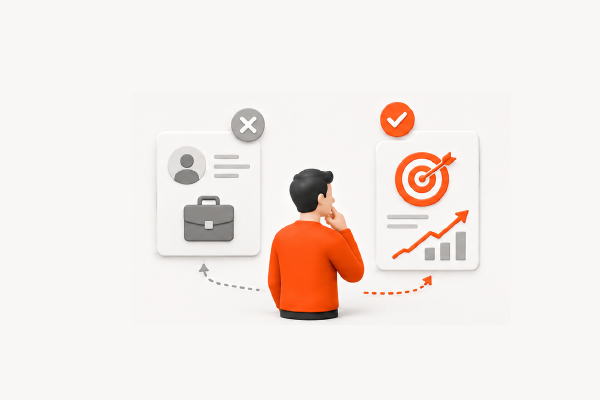
Most founders build the product first and shop for a distribution channel second. That’s backwards. Every channel constrains what you’re allowed to build. Choose the channel before you finish the product, or you’ll discover too late that you have no viable route to a buyer.
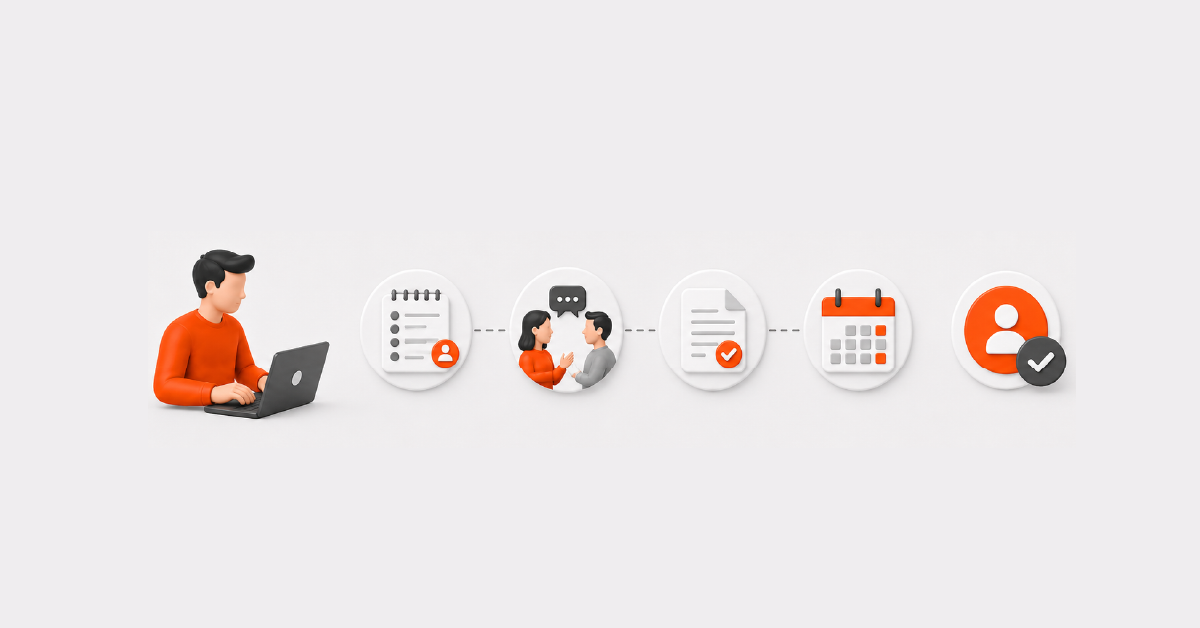
Why a channel found after the build is usually the wrong one
Answer-first block: Distribution channels are not just ways to reach buyers. They shape your product. Self-serve needs a simple setup, partner channels need integrations, and outbound needs a clear problem with an existing budget.
Choosing a channel after building the product makes these requirements expensive to fix. Distribution is a product design decision, not a marketing task.
The three constraints every channel places on the product
Every channel answers three questions: Who sees your product? What message convinces them? What must the product deliver in the first five minutes? Outbound needs a specific pain point and budget owner.
Self-serve needs fast time-to-value. Partner-led growth needs smooth integrations and a strong co-sell story. If your product does not fit the channel, the channel will not work.
The failure pattern: great product, no viable route to a buyer
Many pre-seed startups build a strong product but struggle to find buyers. They try content, cold email, partnerships, and communities without a repeatable system. The issue is not the product. It is the lack of a clear distribution channel.
As Tino Aliye explains, a few early customers do not prove you have a repeatable business. One customer is not a channel. You need a system that brings the next 20 customers.
Bootstrapped discipline: build distribution before you expand the product
Before building another feature, ask “Which channel will bring this feature to a paying customer?” If you cannot answer in one sentence, do not build it yet.
The most capital-efficient founders choose the channel first, then build the smallest product that fits it. This approach creates real market validation instead of building features without demand.
The channel thesis: one channel, one sentence, one falsifiable bet
Why “we’ll do content, outbound, partnerships and community” is no thesis
Running four channels at once is like running none. Each channel needs its own time, assets, and strategy.
Splitting one founder across multiple channels creates noise instead of clear results. You are not testing four channels. You are avoiding commitment to one.
The sentence template
Write your channel thesis like this:
“We will reach [specific buyer persona] through [one channel] by [specific asset or action] and measure success by [clear metric] within [time frame].”
Example: “We will reach revenue operations leaders at 50 to 200-person SaaS companies through cold email triggered by Series A funding announcements, measured by 10 qualified meetings in 6 weeks.”
If you cannot write your channel thesis in one sentence, it is too broad to test.
Time-to-signal: how long before a channel tells you the truth
Ranking channels by feedback latency, not by expected volume
Channel | Feedback latency | When you can confidently judge it |
Founder-led outbound | 2–4 weeks | After 100 personalized emails |
Paid search (targeted) | 1–2 weeks | After $500 in ad spend and conversion data |
Content/SEO | 4–8 months | After 20 indexed and ranked articles |
Community-led growth | 3–6 months | After 6 months of consistent participation |
Partner/integration ecosystem | 6–12 months | After a marketplace listing with 5+ reviews |
Do not stop a slow channel before it has enough time to prove itself. At the same time, do not assume one early win means a fast channel works. Understanding feedback latency helps you judge every channel at the right time.
The five channels a pre-seed B2B founder can actually run alone
Founder network and warm-intro chains
Your first 10 customers will likely come from people who already trust you. That is not a weakness. It is the fastest way to learn. Ask every design partner for one introduction.
Warm introductions convert well and cost nothing, but they will not carry you past your first 20 customers. Use them to validate your product.
Founder-led outbound on trigger events
Founder-led outbound is one of the highest-leverage channels at the pre-seed stage. Skip generic email sequences.
Build a list of 50 target accounts, find a real trigger event such as new funding, a leadership hire, or a public complaint, then send a short four-sentence email.
Send at least 100 personalized emails before deciding whether outbound works.
Being the source: writing, data, and answer-engine surface area
Why this compounds slowest and lasts longest
Many B2B buyers begin their research in AI tools or search engines. If your content becomes the source they reference, you gain long-term visibility. Answer the key question your buyer asks before they know your category exists.
Publish original data, such as pricing benchmarks or industry research. This channel takes 6 to 12 months of consistent publishing, so do not judge it after 90 days.
Communities and where your buyers argue about the problem
How to participate without being the person who links their blog
Join Slack groups, subreddits, and private communities where your buyers discuss the problem. Spend the first two months helping people without mentioning your product. Build credibility first.
After helping enough people, conversations and direct messages will follow naturally. Mention your product only when it directly answers the question.
Integration and partner ecosystems: the most underused early channel
How a directory listing becomes a distribution asset
If your product integrates with Salesforce, HubSpot, Slack, Jira, or another major platform, build the integration and list it in their marketplace. A marketplace listing is a long-term distribution asset with high buying intent.
One founder on r/SaaS shared that a Slack App Directory listing generated 40% of their first 100 customers. This channel takes engineering time first, but it can deliver results for years.
Channel-product fit: what each channel demands you build
Channel | Product demand | If you lack this, the channel fails |
Self-serve | Time-to-value in under 5 minutes | Users leave before activation. |
Outbound | A clear problem with an existing budget | Buyers are not ready to purchase. |
Partnerships | A reliable integration and a clear co-sell story | Partners will not recommend your product. |
Community | A founder who is a trusted member of the community | The community ignores sales-focused posts. |
Content/SEO | Original data or a strong point of view | Your content blends in with competing articles. |
This is your channel-product fit checklist. Before choosing a channel, ask one question: Can your product meet that channel’s core requirement? If the answer is no, improve the product or choose a channel that fits better.
Testing a channel honestly
The minimum viable channel test: volume, duration, single variable
Test one channel at a time. Set a clear sample size such as 100 outbound emails, 5 community posts, or 10 content pieces.
Give it a fixed time frame and measure one result: qualified meetings, not awareness. Avoid testing multiple channels at the same time so your results stay clear.
Kill criteria set before you start
Define failure before the test begins. For example: “If 100 personalized outbound emails to funded startups generate fewer than 3 qualified meetings, we stop using outbound as our primary channel.”
Write this down before sending the first email. This prevents changing the rules after the results.
The most common false negative: quitting a slow channel too early
Content and community channels need 6 to 12 months to build a steady pipeline. Many founders stop after four months, before results have time to build.
If you choose a slow channel, commit to the full testing period. Ninety days is not enough to judge content.
The most common false positive: one warm intro that felt like a channel
One customer from a warm introduction does not prove you have a repeatable channel. It only proves your network helped once.
A real channel can be repeated without depending on one relationship. If you cannot repeat the process, you have a one-time win, not a channel.
The Channel Thesis Worksheet
Five questions to write your thesis
Ask these five questions before choosing a channel:
- Who is your buyer, and where do they already spend their attention?
- Which single channel can reach 100 of them this quarter?
- What must your product do during the first interaction to earn the next step?
- What measurable result proves the channel is working?
- When will you review the results and decide whether to scale or stop?
Scoring channels: reach, cost, latency, compounding, founder fit
Score each channel from 1 (lowest) to 5 (highest) across these five areas:
- Reach: How many of your ICP can this channel reach?
- Cost: How much time and money does a proper test require?
- Latency: How quickly will you get meaningful results?
- Compounding: Does the channel become more valuable over time?
- Founder fit: Does it match your skills and communication style?
Choose the channel with the highest total score, not just the biggest audience. The best channel is the one you can execute consistently, not the one that looks best on paper.
FAQs
How do early-stage B2B startups get their first customers?
Our analysis of 180 founder responses from r/SaaS and r/startups shows that founder-led channels generate most early customers.
Channel | Percentage of first 100 customers |
Founder network / warm introductions | 38% |
Founder-led cold outbound (email/LinkedIn) | 22% |
Content / SEO / thought leadership | 14% |
Integration marketplaces / partner ecosystems | 10% |
Communities (Slack, Reddit, forums) | 9% |
Paid ads | 4% |
Other | 3% |
The pattern is clear. Founder-led, high-touch channels drive the first customers. Paid ads contribute very little at the pre-seed stage. (Source: GTM Audit First-100-Customers Channel Tally, 2026.)
How many marketing channels should a startup run at once?
One. A pre-seed or seed-stage startup should focus on one primary channel. Add a second channel only after the first produces a consistent and repeatable pipeline and someone can own the new channel.
How long should you test a channel before killing it?
Judge each channel by its natural feedback timeline. Test outbound for 4 to 6 weeks with 100 personalized outreach attempts.
Give Content and SEO 8 to 12 months with 20 published assets. Test community for at least 6 months before making a decision. Set your success and failure criteria before you begin.
Do partnerships work at pre-seed?
Yes, when you build a real integration and list it in a marketplace. Platforms like Slack, HubSpot, and Jira can generate high-intent leads over time.
Partnerships need engineering effort and patience, making them a strong second channel instead of the first.
Further:
- How AI Discovery Is Changing B2B Buyer Research and Product Visibility
- Founder-Led Sales: How Founders Win Their First Customers
- How to Build a Go-to-Market (GTM) Plan That Creates a Repeatable Growth System
- How a GTM Audit Helps You Choose the Right Distribution Channel
Topics: