To get your first customers as a B2B startup founder, find businesses with a problem they need to solve, reach the person responsible for it and give them a clear way to buy.
You don’t need a large audience, an established brand or a sales team to begin. Founder-led sales helps you understand what makes customers willing to pay by speaking with them directly.
If you have a product, an MVP or a service ready to sell, here’s how to turn that offer into revenue.
This article is part of our series on building and growing a startup.
Explore the articles in this series:
Part 1: If You Had 30 Days to Work on Your Startup, What Would You Work On?
Part 2: How to Make Your Offer Clear to Potential Customers
Part 3: What Skills Do You Need to Run a Startup?
Part 4: How to Validate a Startup Idea Before Building a Product
Part 5: How to Get Your First Customers as a B2B Startup Founder ← This post
Find Buyers Who Have a Reason to Buy Now
A company may need your product someday and still have no reason to buy it today.
Look for businesses that meet four conditions:
- They have a problem your product can solve.
- The problem affects revenue, time or an important business goal.
- They have a budget or access to someone who controls it.
- Their requirements match what you can deliver.
Customer buying signals include relevant job openings, operational changes, business expansion and dissatisfaction with existing tools.
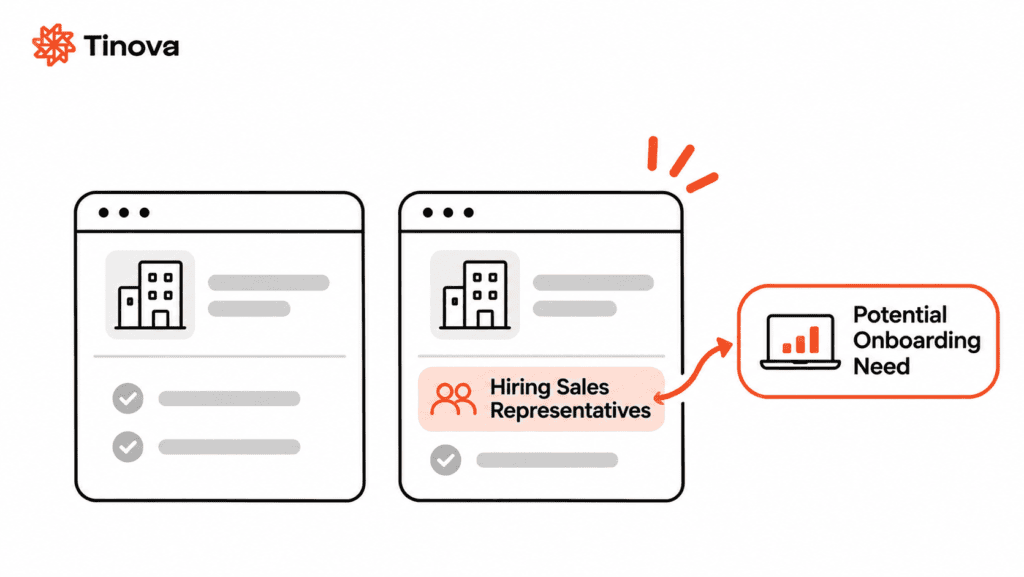
For example, if you sell sales onboarding software, a company hiring its first sales representatives may be a better prospect than one that simply matches your target industry.
Hiring gives you a reason to investigate whether onboarding is becoming a priority. It does not confirm demand on its own.
How to Find Customers for a Startup Without a Marketing Budget
Start with the acquisition channel that gives you the most direct access to qualified buyers.
Choose Where to Find Your First Buyers
| Your starting point | Where to begin |
| You have industry connections | Ask former colleagues for introductions. |
| You have a limited network | Research businesses through LinkedIn and industry directories. |
| You have active beta users | Contact people who repeatedly use your product. |
| Buyers discuss their problems online | Participate in relevant professional communities. |
| Other businesses serve your target audience | Seek introductions through complementary service providers. |
When asking for introductions, describe the specific customer you want to meet and provide a short message your contact can forward.
Patrick McKenzie recommends starting with existing relationships and manually researching prospects in Stripe Atlas’s guide to early customer acquisition.
Find the Right Decision-Maker
The person who uses your product may not be the person who approves its purchase.
For example, when selling sales onboarding software:
- User: The sales representative using the software.
- Problem owner: The sales manager responsible for onboarding.
- Budget holder: The executive authorized to approve the purchase.
These roles may overlap in smaller businesses. Use LinkedIn, company websites or direct inquiries to identify who owns the problem and how purchasing decisions are made.
Start a Relevant Sales Conversation
Research each company before contacting it. Your first message should explain why you’re contacting them, what problem you can help solve and what you’re asking them to do next.
For example:
“I noticed you’re expanding your sales team. How are you currently managing onboarding for new representatives? We’ve built software to help teams manage that process. Would you be open to a short conversation?”
If there is no reply, follow up a few days later with a useful observation or relevant question. Respect any refusal or request not to be contacted.
Build Trust Before You Have Testimonials
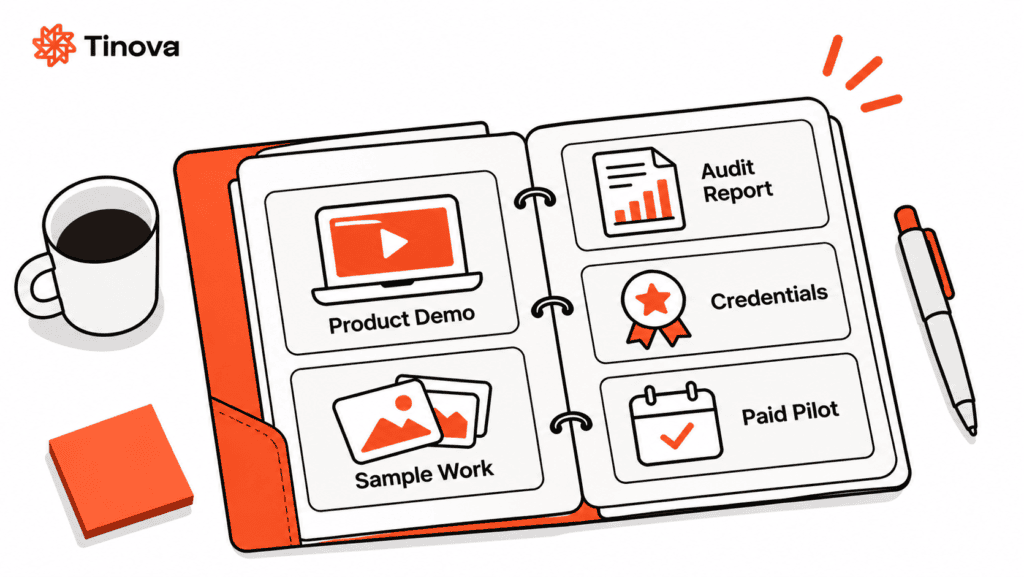
Without customer reviews or case studies, focus on evidence that addresses the buyer’s specific concerns.
| Buyer concern | What you can show |
| Does your product work? | A working demonstration |
| Can you deliver the service? | Relevant sample work |
| Do you understand our problem? | A focused audit |
| Do you have relevant expertise? | Verifiable previous experience |
| Is buying from you too risky? | A defined pilot with success criteria |
Harvard Innovation Labs’ guide to getting your first customer also emphasizes reducing the risk involved in trying a new solution.
Show what you can deliver today without making claims you cannot support.
How to Get Your First Paying Customer
A positive sales conversation is not the same as a purchase decision.
Understand how the problem affects the buyer’s business and what needs to happen before they can commit.
Ask:
- How are you handling this today?
- What happens if the problem remains unresolved?
- What would a solution need to achieve to justify the cost?
- Who else needs to approve the purchase?
Once you establish that your offer fits, suggest an appropriate commercial next step.
A buyer ready to use your software may need a paid subscription with onboarding support. Someone who needs more evidence may prefer a paid pilot. A service-based business could offer a fixed-scope first project.
If another stakeholder must approve the purchase, arrange a meeting with that person or agree on a date to review the proposal.
Define the scope, price, timeline and expected outcome. When the buyer is ready, agree on a start date and provide the relevant agreement, invoice or payment link.
Free signups and verbal interest provide useful feedback, but they are not revenue.
What to Do If You Still Have No Paying Customers
Sending more messages may not solve your customer acquisition problem.
In our work with Genova Medical Courier, we identified medical accounts with an existing courier problem and developed the offer and pricing before launching outreach.
Before increasing acquisition activity, establish whether you’re approaching the right businesses with an offer they have a reason to consider.
Use the following table to investigate possible causes rather than assume why prospects aren’t buying.
| What you see | What to investigate | What to try next |
| No replies | Targeting, message or deliverability | Review your prospect list and check message delivery. |
| Replies but no meetings | Offer clarity or next step | Test a smaller, clearer request. |
| Meetings but no opportunities | Urgency or buying authority | Ask about business impact, urgency and purchasing authority. |
| Interest but no purchase | Trust, price or approval | Ask what remains unresolved before they can buy. |
| Free users do not pay | Value or willingness to pay | Speak with active users about why they haven’t purchased. |
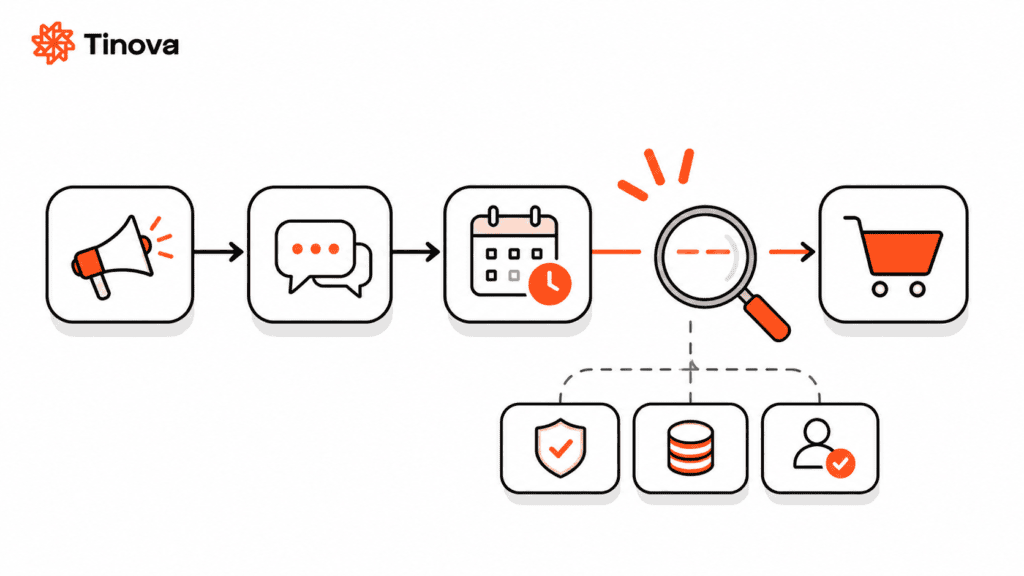
Review your last ten sales attempts. Record the prospect, reason for targeting them, response, stage reached and any known objection.
Look for recurring patterns, change one part of your approach and compare the results.
What to Learn From Your First Paying Customer
Record who bought, how you reached them, why they chose your offer, what nearly prevented the purchase and whether they received the expected value.
As we explain in our guide to founder-led sales, understanding why customers buy helps you develop a sales process you can repeat.
If you’re reaching potential customers but still aren’t generating sales, Tinova’s Free GAP Analysis can help you identify where your customer acquisition process is breaking down and decide what to fix first.
Written by Tinova Growth Team
The Tinova Growth Team shares practical guidance for early-stage B2B founders working through positioning, marketing, sales and customer acquisition.