Run the LLM Test to spot generic startup messaging. Use three checks and a 10-point scorecard to make your positioning clearer and more distinctive.
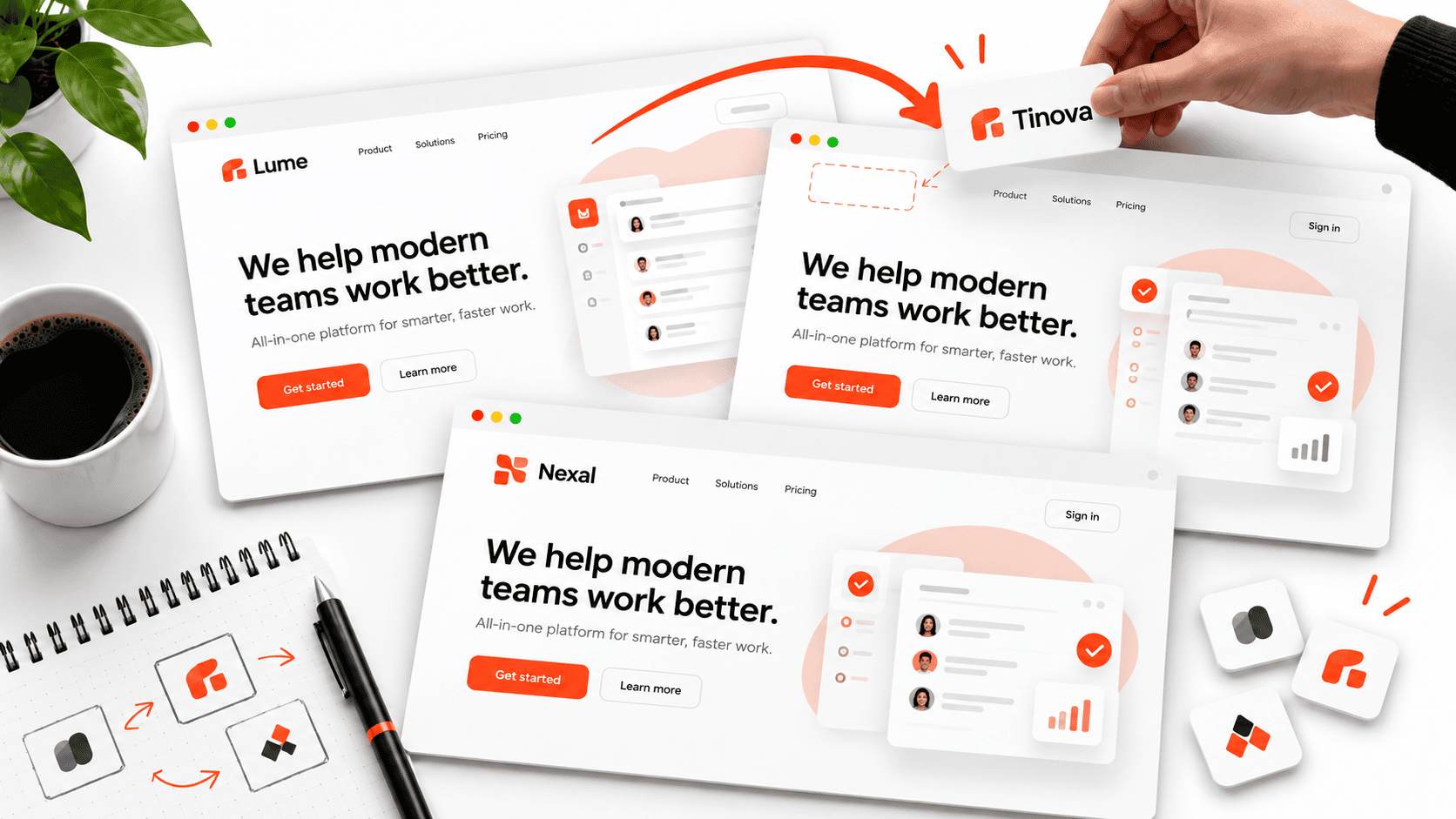
Put a competitor’s logo on your homepage. Would anyone notice?
If your headline still fits, your message may describe the category rather than your company.
Clarity alone is not differentiation. Your competitors can explain their products clearly, too. What makes your message distinct is a specific buyer, a problem they care about, and a reason to choose your solution.
The LLM Test gives you three ways to diagnose generic messaging, plus a 10-point scorecard to assess your differentiation.
TL;DR: Run the Cover-the-Logo Test, Rival-Logo Swap, and LLM Test. If your message fits several competitors, use the scorecard to find what is missing before increasing your marketing spend.
Why Blending In Costs You
Sameness is more than a branding problem. It can make buyers struggle to understand why your company deserves their attention.
In Wynter’s 2026 B2B Vendor Differentiation Survey, 64% of surveyed B2B SaaS marketing leaders found it difficult to distinguish vendors through their websites and messaging. In a blind test of five real CRM value propositions, the average brand-matching score was just 1.86 out of 5.
Buyer indecision creates another challenge. A Harvard Business Review analysis of more than 2.5 million sales conversations found that 40% to 60% of deals ended in “no decision,” even after buyers had expressed interest. Generic messaging is not the sole cause, but these findings show why helping buyers understand their options matters.
AI search adds another reason to be specific. Language models need clear information to summarize what a company does and how it differs. Clear copy helps AI tools interpret your offer, but it cannot guarantee a recommendation or ranking.
The Three Tests
1. The Cover-the-Logo Test
Hide your company name and logo. Read your homepage headline and first paragraph.
Can a stranger identify:
- Who you serve?
- What problem you solve?
- Why your solution matters?
Fail: “We empower modern teams with an all-in-one platform.”
Pass: “We help commercial cleaning companies schedule crews across multiple locations.”
Your logo should reinforce your positioning, not explain it.
2. The Rival-Logo Swap Test
Take your headline, subheadline, and value proposition. Place a competitor’s logo above them.
Does the message still make sense?
Weak: “We help teams collaborate more effectively.”
Stronger: “We help independent insurance agencies catch missing information in commercial policy applications.”
The first describes a broad category benefit. The second identifies a buyer and a specific problem. If a competitor could use your exact message without changing anything, keep refining it.
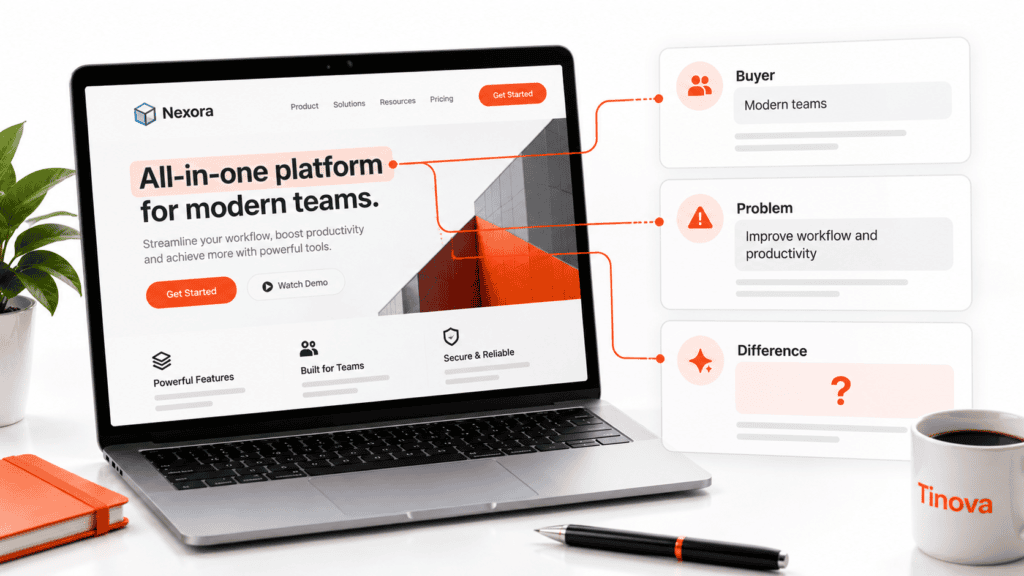
3. The LLM Test
Remove your company and product names. Paste your homepage copy into an LLM and ask:
“What does this company offer, who is it for, and what makes it different from competitors?”
Fail: “This company values innovation and customer success.”
Pass: “A tool for independent insurance agencies that reduces compliance paperwork through automated document checks.”
The test reveals what your copy communicates without the help of your brand name. It is a messaging diagnostic, not a prediction of how an AI system will rank you.
Visual 2 — Middle (The LLM Test)
Find Language Only Your Brand Can Own
Do not start by searching for clever slogans. Start with customer evidence.
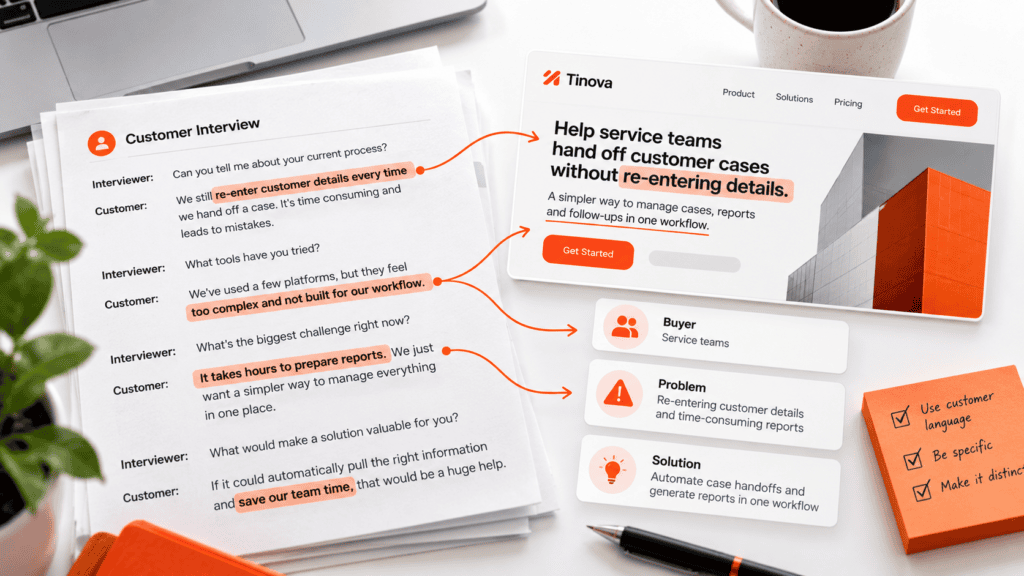
Review sales calls, customer interviews, support messages, reviews, and lost-deal notes. Look for answers to three questions:
- What problem made the customer look for a solution?
- What have they tried already?
- Why did those attempts fall short?
Use their words to describe the problem and explain your approach. Tinova’s brand strategy service focuses on audience research, positioning, and a messaging framework that helps a company communicate its difference consistently.
Visual 3 — Middle (Customer Language Creates Differentiation)
Make Your Difference Specific
A useful positioning statement names a buyer, a problem, and a clear point of view.
| Generic Claim | More Specific Message |
| “Our software is seamless.” | “Your service team can hand off cases without re-entering customer details.” |
| “We offer end-to-end solutions.” | “We manage intake, reporting, and follow-up in one workflow.” |
| “Our AI-powered platform saves time.” | “Our tool drafts inspection reports from structured field notes.” |
These examples are illustrative. Use only benefits your product can support with evidence.
Make a claim a competitor would need to challenge, not a claim every competitor can repeat. Your difference could be the buyer you serve, the problem you prioritize, the approach you reject, or the result you can prove.
For help choosing the right audience, read Tinova’s guide to finding your High-Expectation Customer.
When Similarity Is Fine
A new product category may need a simple explanation before buyers can compare alternatives. In that case, explain what the product does first, then show why your approach is different.
In an established category, competitors may share features, but your message should still clarify your buyer, use case, trade-off, or evidence.
Similar features do not require identical messaging.
The Differentiation Test: Score Your Messaging Out of 10
Give yourself one point for every “Yes.”
| # | Check | A “Yes” Means |
| 1 | Cover-the-Logo Test | A stranger can identify your buyer and problem. |
| 2 | Rival-Logo Swap | A competitor’s logo would not fit your message. |
| 3 | LLM Test | An LLM identifies a specific offer, not generic praise. |
| 4 | Specific Problem | Your headline names a clear customer pain. |
| 5 | Distinct Point of View | Your message states a position you can defend. |
| 6 | Concrete Benefits | Vague claims are replaced with specific outcomes. |
| 7 | Cost of Inaction | You can explain the cost of keeping the current approach. |
| 8 | Customer Language | Your copy reflects words customers actually use. |
| 9 | Clear Difference | Your message gives buyers a reason to consider you. |
| 10 | Defined Audience | Your position is not designed to appeal to every buyer. |
How to Interpret Your Score
- 8 to 10: You have a clear point of difference. Validate it with customers and keep improving your message.
- 6 to 7: You have a starting point, but important gaps remain.
- 0 to 5: Your messaging may blend into the category. Revisit your audience, problem, and proof before increasing spend.
This scorecard is a practical diagnostic, not a scientific ranking or a guarantee of conversion.
FAQs
What is the Cover-the-Logo Test?
Hide your company name and logo. If a stranger cannot identify your buyer and the problem you solve, your homepage needs clearer positioning.
Why does our startup sound like competitors?
Your copy may rely on category phrases such as “all-in-one,” “seamless,” or “AI-powered” without explaining the benefit that sets your offer apart.
How do I differentiate my B2B startup?
Choose a specific buyer, identify an urgent problem, and explain your approach using customer language and evidence. Your message should give buyers a clear reason to consider you.
How do I make my messaging AI-search friendly?
State what you offer, who it serves, which problem it solves, and how it differs. Clear, accurate information gives search and language-model systems more useful context, but does not guarantee visibility.
Test Before You Rewrite
A low score is a reason to research, not simply rewrite your headline. Speak with customers, review lost deals, and identify the difference your product can genuinely support.
Tinova’s Genova Medical Courier case study offers a relevant example. The team selected a specific buyer group, developed the offer and pricing around its needs, then built the brand, website, and outbound approach. Tinova reports $68,000 in booked revenue in 38 days. This is one client result, not proof that messaging alone produced the outcome.
If your audience, positioning, or offer remains unclear, explore Tinova’s services to learn how a GAP Analysis can help identify what needs attention first.
Sources: Wynter, B2B Vendor Differentiation Survey (2026); Matthew Dixon and Ted McKenna, Harvard Business Review, Stop Losing Sales to Customer Indecision (2022).
Written by: Tinova Growth Team
Tinova is a marketing and growth agency for startups and owner-led businesses. Its current site reports 200 startups diagnosed, 77+ businesses scaled, 3 awards in 2026, and $10M+ in client funding pipeline built.
Updated: October 7, 2026
Disclosure: Tinova provides diagnostic and strategic marketing services. This article offers practical guidance and does not guarantee a particular business outcome.