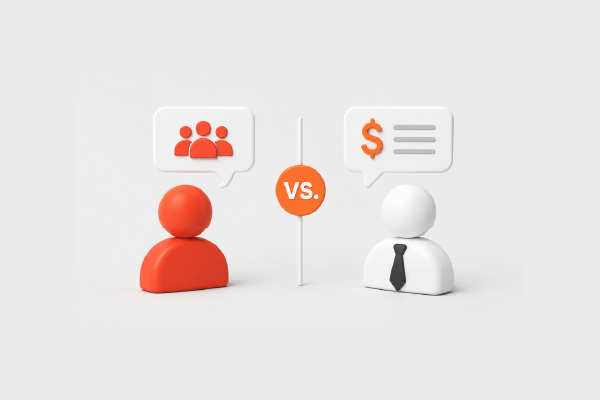
Early revenue can look like success while hiding bigger risks. Learn why retention and repeatable sales matter more than first customers, how to test your revenue, and the metrics investors value most.
The first customer pays. Then another. Your revenue turns positive, and it feels like your business is working.
But early revenue doesn’t always mean you’ve built a sustainable business. You could be losing customers as fast as you gain them or relying on sales you can’t repeat. When those customers leave and new ones stop coming, that confidence disappears.
This is the reality for many pre‑seed founders staring at startup revenue but not growing, unsure if their early sales are a fluke or a foundation.
This guide explains how to separate real business growth from a revenue illusion. You’ll learn how to test repeatable sales, compare customer acquisition costs, and measure the numbers investors care about before they invest.
What You’ll Learn
- Why early revenue can hide problems in your business model.
- A simple test to see if your sales are repeatable.
- The customer acquisition cost split many pre-seed founders miss.
- A real example of a client who returned after their own pipeline slowed.
- The durability metrics that matter more than revenue alone.
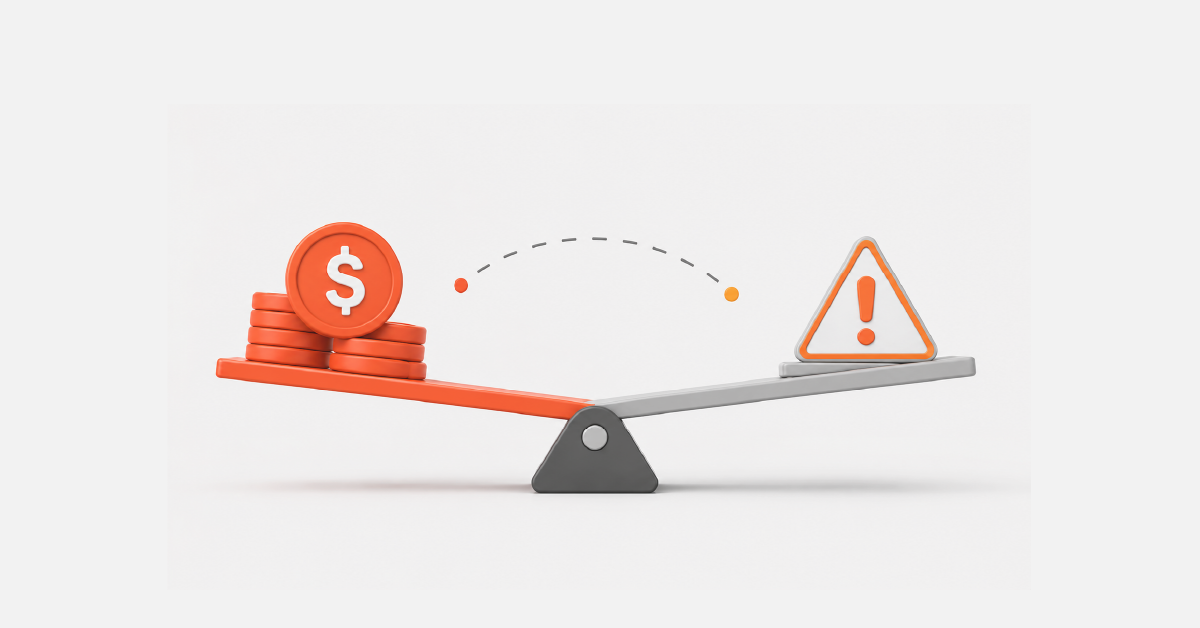
Why Revenue Feels Safe but Can Hide Risk
Revenue feels like proof that your business is working. A customer paid, so it seems like you’ve found a winning model.
But early revenue can create false confidence. Your first customers may come from referrals, warm connections, or early adopters who are more willing to try a new product. That doesn’t prove you have a repeatable go-to-market strategy.
One founder shared that their startup was growing 7% a day, but every new customer cost too much to acquire. When they stopped spending on ads, growth disappeared. Revenue looked strong, but the business wasn’t sustainable.
Keep asking the hard questions. Will customers renew? Can you find the next 100 customers without doubling your costs? Would the business survive if your biggest customer left?
The answers reveal whether your revenue is building a business or hiding a bigger risk.
The Repeatability Test: One-Off Wins or a Real Business?
Closing a few deals isn’t the same as building a repeatable business. A strong business can consistently turn leads, demos, or conversations into paying customers.
Imagine you generated 30 leads and closed six customers. Ask yourself: Can you repeat that result with another 30 similar leads using the same process? If those customers came from one introduction, one event, or one lucky opportunity, your revenue isn’t predictable.
Repeatability also depends on who buys. If your first customers come from different industries with different needs, you’ve proven a few individual wins, not a repeatable sales process.
Here’s a simple test. Review your last 10 paying customers. Look at how they found you, why they bought, and whether the sales journey followed the same pattern. If you can’t find a clear pattern, you don’t have a repeatable revenue engine yet.
Investors don’t just invest in hard work. They invest in a business that can repeat its results.
New Customer vs. Returning Customer CAC
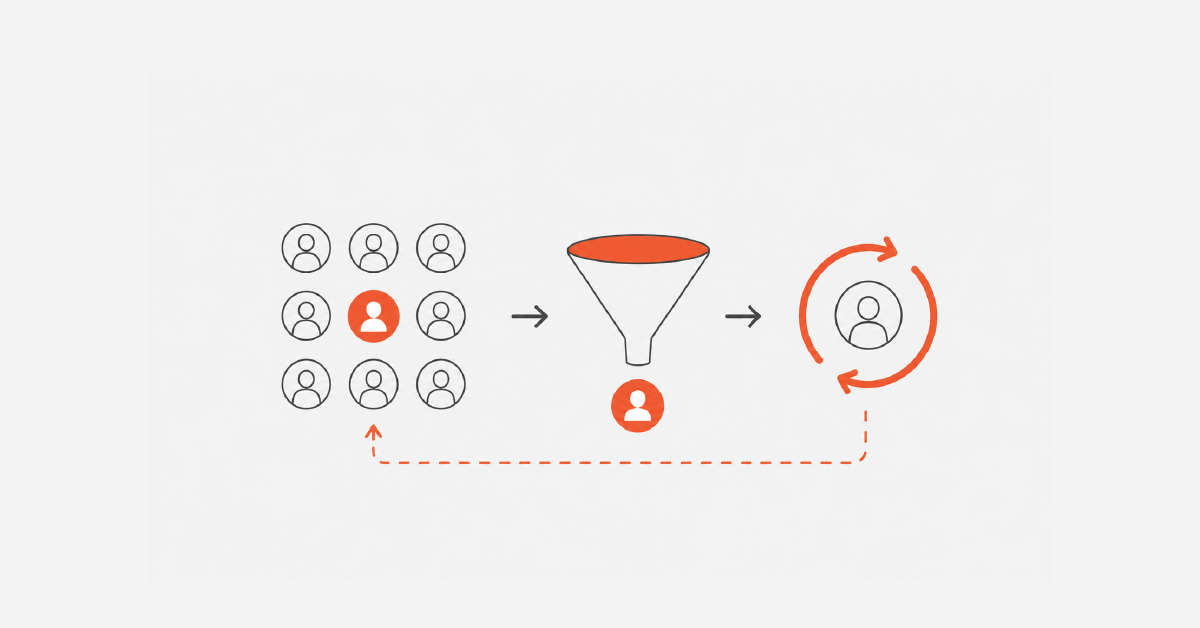
Many pre-seed founders track total revenue and overall customer acquisition cost (CAC) but miss one important comparison: the cost of winning a new customer versus keeping an existing customer.
New customer CAC includes marketing, sales, software, and discounts used to close the first sale. Returning customer CAC is lower because it focuses on renewals, upsells, product improvements, and customer relationships.
If 70% of your monthly revenue depends on new customers, you’re constantly replacing lost growth. If 40% or more comes from renewals, upsells, or expansions, you’re building a business that grows more efficiently over time.
The table below compares both and shows what each pattern says about the strength of your business.
What It Signals | What It Signals | Risk | Investor Read |
80%+ from new customers each month | Heavy reliance on constant acquisition. | High churn, no expansion. Revenue stops when marketing stops. | “Show me retention before I fund growth.” |
40‑60% from existing customers (renewals, upsells) | Early signs of stickiness and expansion. | Manageable, but still need to monitor concentration. | “This team understands the customer lifecycle.” |
<20% from existing customers | Transactional model, no recurring pull. | One‑and‑done risk. Very hard to scale efficiently. | “Where is the recurring revenue motion?” |
One SaaS founder lost their biggest customer overnight. That single account generated more than 60% of monthly revenue. The business looked healthy until that customer left.
The real problem wasn’t revenue. It was customer concentration, repeatability, and retention. Without a steady way to win new customers or grow existing ones, one cancellation put the entire business at risk.
The Client Who Left, Then Came Back
One founder won a few early customers and started generating revenue. Believing the business was on the right path, they stopped improving their go-to-market strategy.
A few months later, they came back. Customers had left, new ones weren’t replacing them, and they couldn’t explain why the first sales happened.
That’s the difference between revenue and a repeatable sales system. A real business knows how to turn leads into customers through a process that can be repeated.
If you know that X leads produce Y meetings and Z customers, you have a predictable growth engine. If you can’t explain that path, your revenue depends on luck, not a system.
Many founders celebrate their first $10K month, then struggle when growth slows because they built revenue, not a repeatable business.
The Metrics That Prove Business Durability
Investors don’t look at revenue alone. They want proof that your business can keep customers, grow revenue, and improve over time. These three metrics tell that story.
NRR measures how much revenue existing customers generate after renewals, upgrades, and churn. An NRR above 100% shows your customers become more valuable over time, a strong sign of a healthy business.
Repeat Usage Rate
Track how many customers complete your core action at least three times within 30 days. If repeat usage stays below 30%, your business may struggle to keep customers.
Gross Margin Trend
Growing revenue means little if your costs keep rising. If every new customer requires more manual work, your business becomes harder to scale. A strong business sees gross margins improve as it grows.
The table below shows how these metrics help measure the strength and durability of your business.
Metric | Fragile Signal | Durable Signal |
Net Revenue Retention | Below 80%. You lose more from churn than you gain from expansion. | Above 100%. Existing customer base grows on its own. |
Repeat Usage (30‑day) | Below 30% of users return to the core action. | Above 50%. Users build habits around your product. |
Gross Margin Trend | Declining or stagnant below 50%. | Stable or improving above 60%. Each new customer costs proportionally less to serve. |
Customer Concentration | One customer > 30% of revenue. | No single customer > 15%. Revenue loss from one client doesn’t threaten survival. |
These metrics help you look beyond total revenue and measure whether your business can keep growing through challenges. A startup with $20K MRR and 110% NRR is stronger than one with $50K MRR that loses 20% of its customers every month. Investors value customer retention and durable growth, not revenue alone.
Is revenue the same as product-market fit? No. Revenue can come from a one-time purchase, a referral, or a discount. Product-market fit means customers keep buying, returning, and recommending your product.
Why is retention more important than early revenue? Customer retention proves your product delivers lasting value. Without it, every sale starts from zero. Investors value retention because it supports long-term growth.
How do you know if your revenue is repeatable? Review your last 10 paying customers. Did they come from the same source? Did they follow a similar buying journey? If you can’t spot a clear pattern, your revenue isn’t repeatable yet.
Early revenue is worth celebrating, but it doesn’t prove you have a strong business. Test repeatable sales, measure customer retention, track CAC, and monitor margins to understand the real health of your business.
Our Investor Readiness Audit helps founders build a repeatable growth system, identify gaps in their business, and create the proof investors want to see.

Topics: