Raised funding and think you’ve reached product-market fit? Funding shows investor confidence. Product-market fit proves customers want your solution. Learn the difference, the signals that matter, and a simple PMF check you can use this week.
The funding hits your account. The round closes. Investors believed in your vision, and your pitch worked. It feels like you’ve proven your startup.
Not quite.
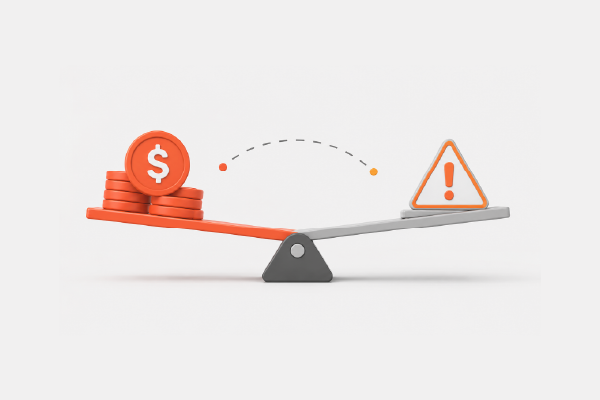
Funding is not proof of product-market fit. It shows investors believe in your potential. Product-market fit proves that customers have a real problem and want your solution enough to use or pay for it.
Confusing the two can cost time, money, and momentum. You can raise capital and still build a product the market doesn’t want.
This guide explains the difference between raising funding and product-market fit, the signals that prove real customer demand, and how to test for PMF without spending more money.
What You’ll Learn
- Why selling to investors and customers requires different strategies.
- How to spot the gap between investor confidence and customer demand.
- The metrics and signals that prove product-market fit.
- How to structure your message for both investors and customers.
- A simple repeatability check you can use this week.

Two Sales. Two Different Audiences.
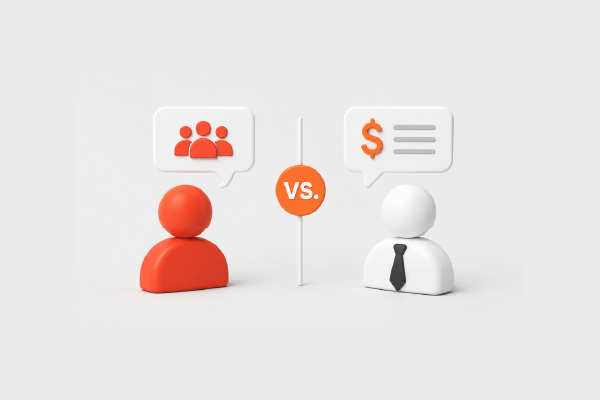
Every founder makes two sales. The first is to investors, where you sell equity and future potential. The second is to customers, where you sell a solution to a real problem.
These audiences buy for different reasons.
Investors back your team, market opportunity, and ability to execute. They’re asking, “Can this become a big business?”
Customers pay because they need a problem solved now. They don’t buy your long-term vision. They buy value that helps them today.
Raising funding doesn’t prove you’ve won customers. A great pitch can attract investors even if demand is still unproven. Funding gives you runway, but it doesn’t create product-market fit.
One founder shared that they raised $3 million and spent $2 million trying to find product-market fit. They built new features, tested different ideas, and kept improving the product, but customers still didn’t need it enough to buy. The funding extended the runway, but it couldn’t create real demand.
That’s the difference between raising funding and product-market fit.
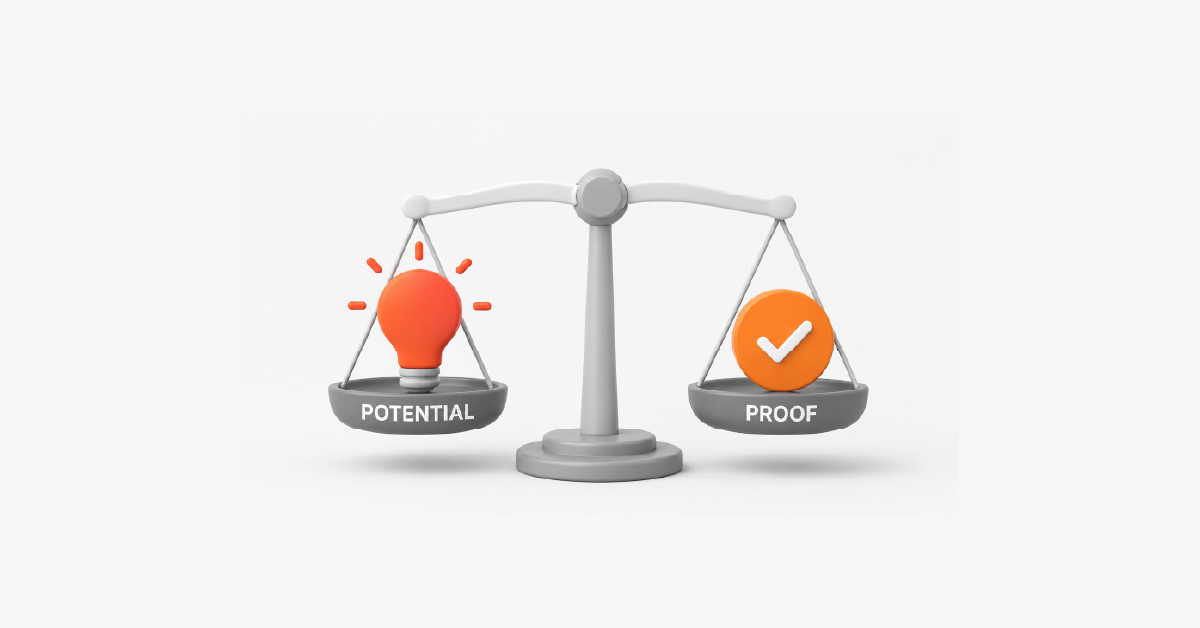
Potential vs. Paid Pain
Investors buy potential. They invest because they believe your team, market, and vision can create a successful business.
Customers buy solutions. They pay when your product solves a real problem they need fixed today.
Confusing these two is where many funded startups struggle. Funding helps you build, but it doesn’t prove product-market fit or real customer demand.
One founder shared they raised $200,000 and built the full product before having enough customer conversations. When investors later asked for revenue, there wasn’t any. They had funding, but not a validated business.
Real product-market fit starts with repeat customer behavior, not investor excitement. Before raising more money, make sure customers keep coming back because your product solves a problem worth paying for.
What Product-Market Fit Really Looks Like
Product-market fit isn’t a feeling or a few positive comments. It’s clear proof that people find your product, use it, return, and recommend it. That’s when the market starts pulling your product.
A common mistake is pitching a strong vision without market proof . Founders present a compelling story but have no design partners, letters of intent, paying pilot customers, or even a waitlist willing to pay.
A great story may attract investors. A great solution earns customers. That’s the difference between fundraising and building a real business.
Weak Signals (Not Product-Market Fit)
- Free signups with no repeat use.
- Beta users who never become paying customers.
- Free pilots with well-known companies.
- Social media attention without revenue or retention.
Strong Signals (Real Product-Market Fit)
- 5 to 10 paying customers who found you on their own.
- 30-day retention above 40%.
- One customer segment using your product in the same way.
- Word-of-mouth referrals that bring in new customers.
- Customers who say they’d be disappointed if your product disappeared.
Many founders discover product-market fit when they stop pushing the product and start responding to customer demand. One group of users keeps asking for the same feature. One industry keeps renewing. Those repeated patterns are stronger proof than funding alone.
The Two-Audience Pitch Deck
If funding and product-market fit are different, your pitch deck should show both clearly. One part should prove customer demand. The other should explain why investors should invest.
Market Proof Pages
- The customer’s problem in their own words.
- Pilot results, conversion rates, or retention data.
- Design partners and their commitment.
- A clear path from problem to paying customer.
Investor Pages
- Market size and why now is the right time.
- Your team’s ability to execute.
- Business model and growth plan.
- Use of funds tied to one clear milestone.
Start with customer proof before telling the funding story. When investors see that customers already value your product, your growth plan becomes much more convincing.
Without customer proof, you’re asking investors to fund an idea. Some will invest, but you’ll still need to prove product-market fit after the funding arrives.
How to Know You Have Product-Market Fit
You don’t need a complex framework to test product-market fit. A simple repeatability check can give you a clear answer.
The Repeatability Check
- Review your last 10 new users or trial signups.
- Count how many completed your core action at least three times within 14 days.
- Ask your repeat users:
“What would you use if this product disappeared tomorrow?”
If they name a competitor or a manual process and say your product saves them time, money, or effort, that’s a strong signal.
If they say “nothing” or “I’d stop doing it,” the problem may not be important enough.
This test costs nothing and turns opinions into real customer data.
As a benchmark, if fewer than 20% of new users become repeat users within two weeks, you haven’t reached product-market fit yet. If that number stays above 40% across multiple groups of users, you’re seeing strong signs of real demand.
The table below gives you a quick way to measure where you stand.
Repeat Usage Rate (First 14 Days) | What It Signals | Your Next Move |
Below 20% | The product does not stick. Users try and leave. | Stop building features. Talk to the users who left. Find the core gap. |
20% to 40% | Early signs of value but not yet consistent. | Double down on the segment with the highest repeat rate. Remove distractions. |
Above 40% | Strong repeat behavior. Users find ongoing value. | Focus on conversion and paid pilots. Document the segment pattern for investors. |
You don’t need a perfect product to run this test. You need honest customer conversations. The feedback you collect will tell you far more about product-market fit than any funding announcement.
Can you raise funding without product-market fit? Yes. Many pre-seed startups raise funding based on their team, market opportunity, and vision. The investment means investors believe you can find product-market fit, not that you’ve already achieved it. Use the funding to prove demand, not as proof that it already exists.
Is funding proof of product-market fit? No. Funding proves fundraising ability. Product-market fit proves customer value. Keep those two measurements separate.
How do you measure product-market fit at the pre-seed stage? Focus on repeat customer behavior, direct customer conversations, and paying customers who discovered your product and keep using it. These signals matter more than outside validation.
Funding isn’t the finish line. It’s the starting point. The real goal is proving that customers need your product. Use investor funding to find product-market fit, not to assume you’ve already reached it.
Our Investor Readiness Audit helps you test your PMF evidence, separate story from proof, and build the signals that give investors confidence.
Get the Investor Readiness Audit →
Further Reading
- Which Segment to Prove First
Topics: