
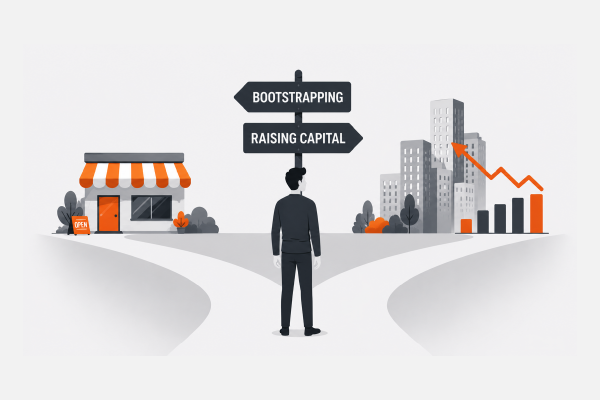
Bootstrapping vs raising capital isn’t just a money question, it’s a decision that can kill your startup if you get it wrong. See what investors actually look for before you choose.

Introduction
Every founder faces the same question: bootstrapping vs raising capital. One path lets you keep control. The other can help you grow faster. But what if you can’t raise funding? Or worse, what if you choose the wrong path and hurt your startup before it has a chance to grow?
Most advice focuses on funding rounds, pitch decks, and term sheets. It tells you how to raise money, but not whether you should. It almost never explains why founders get rejected. what investors actually look for, or which startup funding option makes the most sense for your business.
In this guide, you’ll learn how investors think, why many startups fail to raise capital, and how to decide whether you should bootstrap or raise capital with confidence.
The Real Reason Most Founders Struggle to Raise Capital (It’s Not What You Think)
Most founders hear the same advice: build traction, improve your pitch deck, and network harder. Yet many still leave investor meetings with silence instead of a term sheet. The problem isn’t just revenue, market size, or a few weak slides.
Investors say no for reasons they never spell out. One of the biggest is founder-market fit. They need to believe you’re the right person to solve this problem. A long list of product features won’t convince them. A clear story that explains the problem, why it matters, and why your team is uniquely positioned to solve it will.
Traction matters too, but not as a single achievement. Investors look for momentum. They want to see progress over time. A business moving in the right direction is far more convincing than a business with one good month.
This is where the venture capital verses the bootstrapping decision becomes important. Many founders spend months chasing funding without understanding what investors actually want. After repeated rejections, they turn to bootstrap vs VC funding as a backup instead of making it a “deliberate strategy from the start.”
The biggest mindset shift is this: investors aren’t only asking, “Is this a good business?” They’re asking, “Can this founder build a company that wins this market?” If your pitch focuses only on what your product does, you’re missing the bigger picture. Show them the future you’re building and the momentum that proves you can get there.
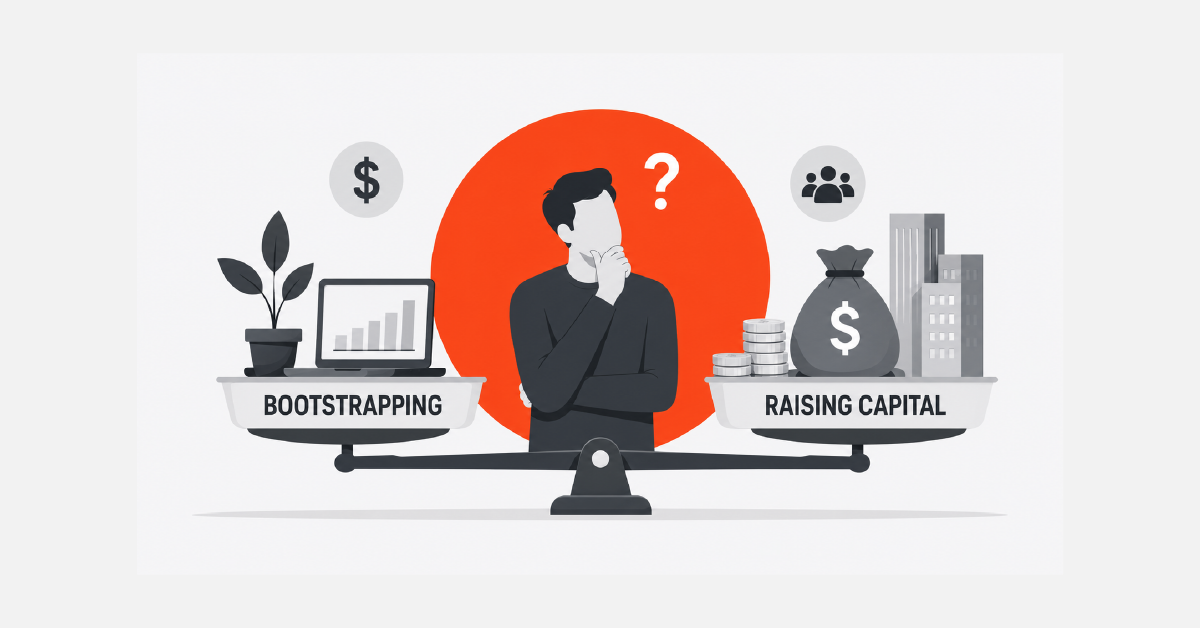
Bootstrapping: The Slow Path That Builds Strong Foundations
Bootstrapping means growing your business with your own money and the revenue you earn from customers. Instead of relying on investors, you reinvest profits, keep full ownership, and stay in control of every decision.
That freedom comes with responsibility. You’re accountable to your customers, not investors or a board. But it also means every expense, every hire, and every paycheck depends on the business bringing in revenue. There isn’t a funding round waiting to cover mistakes.
Bootstrapping means growing your business with your own money and the revenue you earn from customers. Instead of relying on investors, you reinvest profits, keep full ownership, and stay in control of every decision.
That freedom comes with responsibility. You’re accountable to your customers, not investors or a board. But it also means every expense, every hire, and every paycheck depends on the business bringing in revenue. There isn’t a funding round waiting to cover mistakes.
The biggest advantage of bootstrapping is control. You decide your product roadmap, company culture, and growth strategy without giving up equity. Limited resources also force you to solve problems creatively and stay close to your customers because their feedback and payments drive your growth.
The trade-off is slower growth and more financial pressure. Some opportunities may pass by because you don’t have extra capital to move quickly.
That’s why the self-funded startup vs funded startup debate isn’t just about money. It’s about choosing the pace and level of risk that fits your business.
Many successful founders have built profitable companies without outside funding. They reinvested customer revenue, improved their product over time, and scaled on their own terms. For them, the answer to bootstrap or raise funding wasn’t about following a trend. It was about keeping ownership until the business was ready.
One of the strongest signals of a healthy business is paying customers. Investors may believe in your vision, but customers only spend money when you’re solving a real problem. Before deciding on bootstrapping vs raising capital, ask yourself one question: if outside funding disappeared tomorrow, could your business still grow on its own?
Raising Venture Capital: Faster Growth Comes With Trade-Offs
Venture capital can help your startup grow much faster than bootstrapping. With the right funding, you can hire faster, expand into new markets, and build your product more quickly.
But taking VC funding also changes the direction of your business. Investors expect rapid growth and eventually a return on their investment through an acquisition or IPO.
That’s because venture capital firms rely on a few companies to generate most of their returns. A profitable business isn’t always enough. They want startups with the potential to scale quickly and dominate a market.
After raising capital, your role changes too. Board meetings, investor updates, and growth metrics become part of your routine.
You’ll likely give up some equity and have less freedom over major decisions. You’re no longer building the business on your own terms. You’re building it with investors who have their own expectations.
Many founders see fundraising as the finish line, but it’s really the start of a new chapter. The pressure to grow doesn’t disappear after the money arrives. In many ways, it increases.
That’s why the bootstrap vs VC funding decision is about more than access to capital. It’s about choosing the type of business you want to build.
Venture capital vs bootstrapping isn’t a question of which is better. It’s about which path matches your goals, your growth strategy, and the future you want for your company.
Inside the Investor's Mind: What They Won't Tell You Before You Pitch
Investors don’t just invest in businesses. They invest in founders who can convince them they have the right vision, timing, and ability to win.
Your product and traction matter, but they only support the bigger story you’re telling.
Most investors evaluate every startup through three questions: Is this a big enough market? Can this team execute? And why is now the right time? If your pitch answers these before they’re asked, you’re already ahead.
Your mindset matters just as much as your metrics. Investors pay attention to how you handle tough questions, respond to feedback, and explain your decisions.
They’re looking for founders who learn quickly, stay confident under pressure, and understand both the opportunities and the risks.
Fundraising is also more personal than many founders expect. Investors want to know whether you’re someone they can work with for years.
That’s why conversations, honesty, and trust often leave a stronger impression than a polished pitch deck alone.
Before choosing between venture capital vs bootstrapping, remember that raising money isn’t just about convincing investors.
It’s about deciding whether their expectations match the future you want to build. If they do, fundraising can accelerate your growth. If they don’t, the answer to should I bootstrap or raise capital may already be clear.
The Decision Framework: When to Bootstrap, When to Raise, and When to Wait
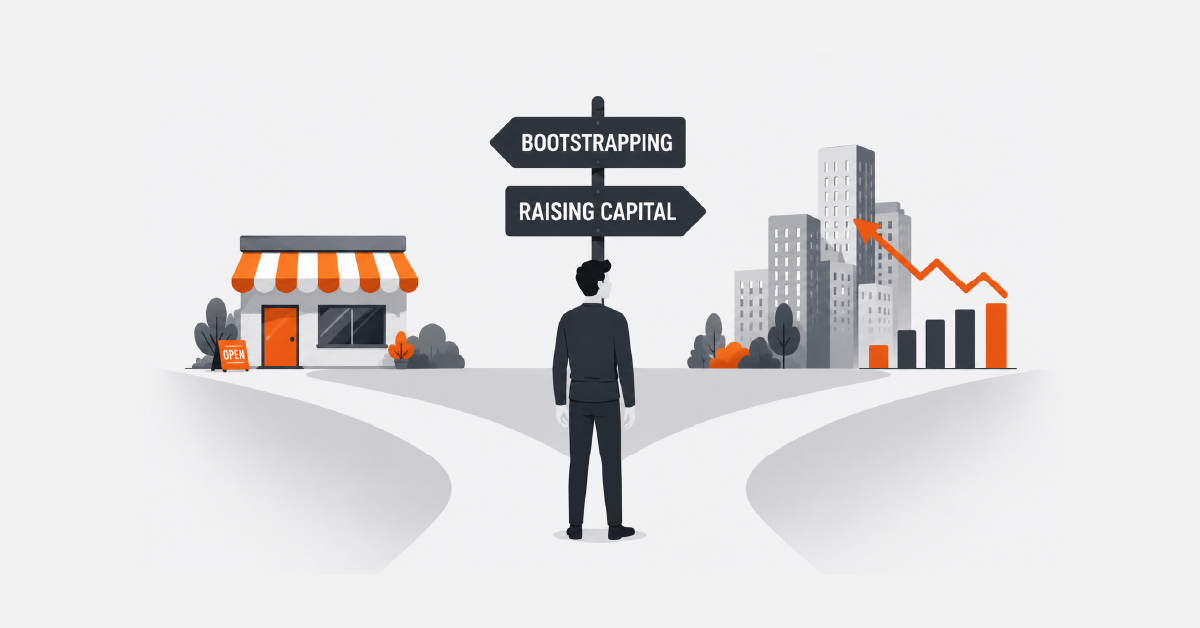
There isn’t a single answer to bootstrapping vs raising capital. The right choice depends on your business, your market, and your long-term goals.
Start by asking yourself three questions:
How important is it to keep full control of your company? Does your market reward the first company to grow fast, or can you build steadily over time? And can your business generate enough revenue to fund its own growth?
Bootstrapping is the better option if you’re building a niche business, have healthy margins, or want to grow on your own terms. In the self-funded startup vs funded startup debate, founders who value ownership and independence lean toward bootstrapping.
Raising capital makes more sense when speed is critical. If you’re in a highly competitive market, building a capital-intensive product, or relying on network effects, outside funding can help you scale before competitors do. In those cases, the bootstrap or raise funding decision becomes much clearer.
There’s also a third option many founders overlook: wait. Build traction first, prove customers want your product, then raise from a position of strength if you still need capital. Investors are far more interested when you’ve already reduced risk and shown real demand.
Before choosing from the available startup funding options, ask yourself whether your business can survive without outside funding and whether giving up some control is worth faster growth.
The best decision isn’t the one everyone else is making. It’s the one that fits the company you’re trying to build.
Bootstrapping Then Raising: The Hybrid Path Most Founders Ignore
Many founders think they have to choose between bootstrapping vs raising capital from day one. In reality, some of the most successful startups followed a different path.
They bootstrapped first, proved their business, and raised funding only when it helped them grow faster.
Starting with bootstrapping lets you validate your product with real customers, generate revenue, and build a stronger business before approaching investors.
Instead of asking them to believe in an idea, you’re showing them a company that’s already making progress. That gives you more leverage and better negotiating power.
Imagine, a SaaS founder who builds a product while consulting on the side. As recurring revenue grows, they eventually raise a strategic round, because they’re ready to scale. They keep more ownership and have greater control over the terms.
This approach changes the venture capital vs bootstrapping conversation. It isn’t always about choosing one path over the other. Sometimes, it’s about choosing the right timing. The bootstrap vs VC funding decision becomes a strategy instead of a trade-off.
Before deciding, ask yourself one question: How much progress could you make over the next year if customer revenue, not investor funding, became your biggest priority? Your answer may tell you whether to raise now, raise later, or keep growing on your own.
Common Traps That Lead Founders to the Wrong Choice (And How to Avoid Them)
Choosing between bootstrapping vs raising capital isn’t just about numbers. It’s also about avoiding the mistakes that push founders toward the wrong decision.
One of the biggest traps is raising money simply because it seems like the next step. Funding announcements get attention, but raising capital only makes sense if it helps your business achieve a clear goal. A high valuation with the wrong terms can cost you more than it gives you.
Another common mistake is comparing your startup to companies that are years ahead. Every business grows differently.
A profitable bootstrapped company can be just as successful as a heavily funded one. Focus on building the business that’s right for your market, not someone else’s timeline.
Many founders also treat a term sheet as validation. But investor interest isn’t the same as building a great company.
Before asking should I bootstrap or raise capital, ask yourself exactly how the money will help you create significantly more value. If you can’t answer that clearly, you may not be ready to raise.
Finally, be careful whose advice you follow. Investors, founders, and mentors all have different incentives. Listen to people who understand your business and your goals, not just those who have the loudest opinions.
The best startup funding options aren’t the ones that generate headlines. They’re the ones that help you build a stronger business. In the end, the real question isn’t whether you can raise money. It’s whether raising money is the right move for your company.
Conclusion: The Founder's Compass, Not a Rulebook
The bootstrapping vs raising capital decision doesn’t have a universal answer. The right path depends on your market, your business model, and the kind of company you want to build.
If your business needs rapid growth to compete, raising capital may be the right move.
If you value ownership, control, and steady, customer-funded growth, bootstrapping could be the better fit. And if you’re still unsure, consider building traction first. Real customers and real revenue often make the decision much clearer.
The key takeaway is simple: don’t raise money because everyone else is doing it. Raise because it helps you reach a goal you couldn’t achieve on your own. That’s what separates a smart funding strategy from an expensive mistake.
In the end, venture capital vs bootstrapping isn’t about choosing the “better” option. It’s about choosing the one that matches your vision, your priorities, and your long-term goals.
Five years from now, the best decision will be the one that helped you build the business you truly wanted, not the one that looked the most impressive.
FAQs
What is the difference between bootstrapping and raising venture capital?
Bootstrapping means growing your startup with your own money and customer revenue while keeping full ownership and control. Raising venture capital means giving up equity in exchange for funding that helps you grow faster. The real difference isn’t just money. It’s the pace you grow, the control you keep, and the expectations you choose to take on.
Should I bootstrap or raise capital for my startup?
That depends on your market, your growth goals, and how quickly you need to move. If your business can grow through customer revenue, bootstrapping may be the better choice. If speed is critical and your market rewards rapid growth, raising capital could make more sense. Choose the path that fits your business, not the one everyone else follows.
What do investors look for before investing in a startup?
Investors look beyond a good product. They want proof that you’re solving a real problem, gaining traction, and building in a market with room to grow. Just as important, they want confidence that you and your team can execute. A compelling story backed by real progress always carries more weight than a polished pitch deck alone.
Can I bootstrap my startup and later raise venture capital?
Yes. Many founders bootstrap first to validate their product, gain customers, and build revenue before raising capital. This approach gives you stronger negotiating power and lets you raise funding because it helps you grow faster, not because you need it to survive.
How do I know if my startup is ready for venture capital?
You’re ready when funding helps you accelerate growth instead of covering basic expenses. Investors want to see product validation, consistent customer demand, and a clear plan for how capital will create measurable growth. If you’re still testing your core assumptions, keep building first.
Why do most founders fail to raise capital even with a good business?
A strong product doesn’t guarantee funding. Investors back founders who can show momentum, explain why the timing is right, and communicate a vision people believe in. Many startups miss out because they focus on features instead of proving they can build a company that wins.
When should a startup raise venture capital?
Raise venture capital when capital creates an advantage you can’t achieve through revenue alone. If your market rewards speed, network effects, or rapid expansion, funding can help you compete. If you can continue growing through customers and cash flow, waiting may put you in a much stronger position when you decide to raise.
Topics: