You’ve built your product, launched your website, and started reaching out to potential customers. But emails go unanswered, sales conversations don’t lead to purchases, and you’re still trying to figure out how to get people to pay for what you’ve built.
This is a common challenge for early-stage startup founders. Having a working product doesn’t mean you’ve found the right buyers or given them a reason to choose it.
Getting your first 10 customers starts with understanding who needs your product, what they’re struggling with, and what might be stopping them from buying. Here’s how to approach each stage.
Why Are You Struggling to Get Your First Customers?
Before trying another marketing tactic, identify where potential customers are dropping off.
| What’s happening? | What to investigate | What to do next |
| Nobody responds | Targeting and messaging | Review whether your prospects actually have the problem you solve |
| People respond but won’t meet | Offer relevance and urgency | Make your invitation more specific to their needs |
| Meetings happen but nobody buys | Trust, value, and buying authority | Review objections and whether you’re speaking to decision-makers |
Start by reviewing your last 10–15 outreach attempts or sales conversations. Look for patterns before changing your entire approach.
Who Should You Target for Your First 10 Customers?
Trying to reach every business that could use your product makes it harder to find people who actually need it.
Define One Specific Customer Segment
Identify the industry, company size, problem you’re solving, and person experiencing that problem.
For example, instead of saying, “We help companies improve customer communication,” try:
“We help B2B SaaS companies with 10–25 employees reduce customer churn through automated follow-up emails.”
Also identify who experiences the problem and who approves the purchase. They may be two different people.
Prioritize Buyers Who Are Ready to Act
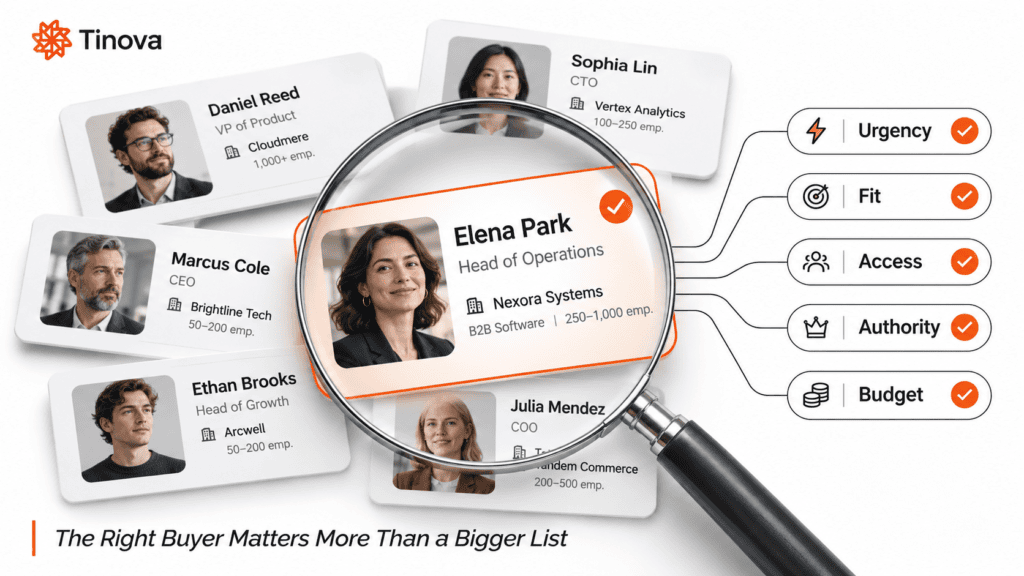
A prospect might fit your ideal customer profile but still have no reason to purchase right now.
Use this simple scorecard to compare prospects. Give each factor a score from 1 (low) to 3 (high).
| Qualification factor | What to consider |
| Problem urgency | How much does the problem affect their business? |
| Customer fit | Does your solution match their needs? |
| Accessibility | Can you reach the relevant person? |
| Buying authority | Can they approve or influence the purchase? |
| Budget | Can they afford a solution? |
Add the scores to help prioritize your outreach. A higher score indicates a stronger prospect to investigate, not a guaranteed sale.
Where Can You Find Your First B2B Customers?
Choose your first acquisition channel based on where your potential customers are and how easily you can reach them.
| Channel | When to use it |
| Warm introductions | You have relevant professional contacts who can make introductions |
| LinkedIn and cold email | Your target buyers are identifiable decision-makers |
| Online communities | Buyers discuss their problems in industry groups and forums |
| Partnerships | Agencies or consultants already serve your target audience |
Start with one primary channel. Pay attention to whether it brings relevant conversations, not just responses or connections. You can test another channel once you understand what’s working.
How Can You Build Trust Without an Established Brand?
When buyers haven’t heard of your startup, they need to understand why your solution is worth considering.
Show that you understand their problem. Research their business before reaching out. Explain how the problem you’re addressing relates to their situation instead of sending a generic pitch.
Demonstrate your product. A live demo or working prototype helps prospects see how your solution addresses their needs.
Offer a small paid pilot. Start with a limited engagement that defines the problem, deliverables, duration, cost, and expected results. This gives the customer a manageable way to evaluate your solution before making a larger commitment.
How Do You Turn Sales Conversations Into Paying Customers?
Getting a meeting is only part of the process. You need to understand what the prospect needs and whether your product is the right fit.
Ask Questions That Reveal Buying Intent
During discovery calls, ask:
- “What are you currently doing to solve this problem?” Understand what they’ve tried and where they’re still struggling.
- “What happens if this problem remains unresolved?” Find out how it affects their business and whether they need to address it now.
- “Who else would be involved in making this decision?” Identify the people who need to approve the purchase.
Present an Offer That Addresses Their Needs
Connect your product to the result the buyer wants. For example, instead of saying, “Our software automates customer follow-up,” explain how it helps their team keep track of prospects after sales calls and assign clear next steps.
Before ending the conversation, agree on what happens next, who is responsible, and when you’ll follow up. If you’re sending a proposal, make sure it addresses the concerns discussed during the call.
A Practical 30-Day Plan to Get Your First Customers
Use this four-week plan to organize your customer acquisition efforts.
| Week | Action |
| Week 1 | Define your ideal customer, identify their main problem, and list 30–50 relevant prospects. |
| Week 2 | Research prospects, request introductions, and start personalized outreach. |
| Week 3 | Hold discovery calls, qualify buyers, and present relevant offers. |
| Week 4 | Follow up, address objections, and work toward your first paid commitments. |
Track Your Progress From First Contact to Sale
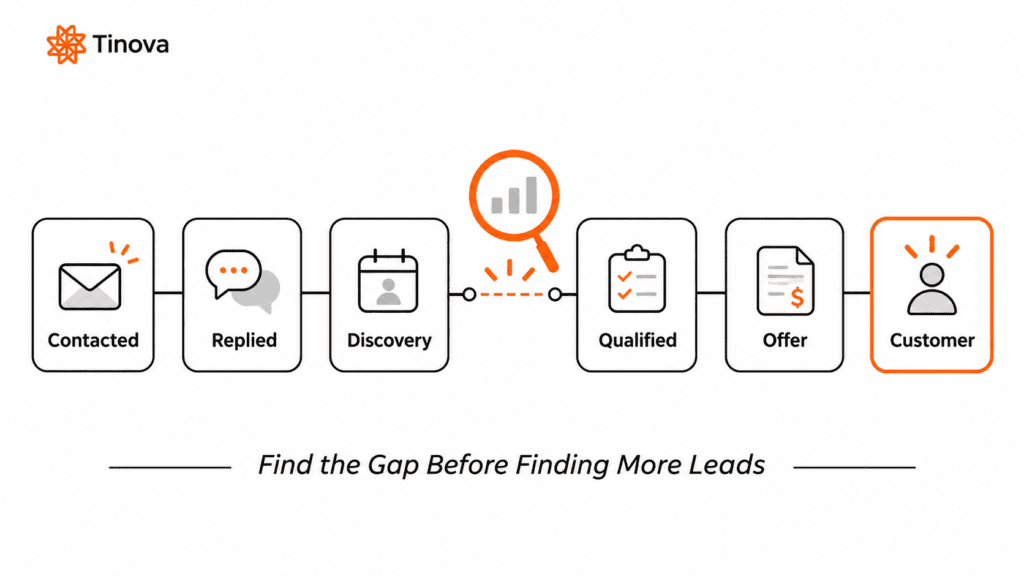
Measure each stage: prospects contacted → replies → discovery calls → qualified opportunities → offers → paying customers.
If people reply but don’t book meetings, review your messaging. If meetings happen but sales don’t follow, examine your qualification process and how you’re communicating business value.
You can also track customer acquisition cost (CAC) to understand how much you’re spending to acquire each customer.
At the end of each week, review what worked and what needs to change. This is an execution plan, not a promise that every startup will acquire 10 customers in 30 days.
What Can Your First 10 Customers Teach You?
Your first customers can show you why people choose your product and what might prevent others from doing the same.
After each sale, record what motivated the purchase, which objections came up, what established trust, and what results the customer experienced. Compare these answers to identify patterns you can use to improve your messaging, product, and sales process.
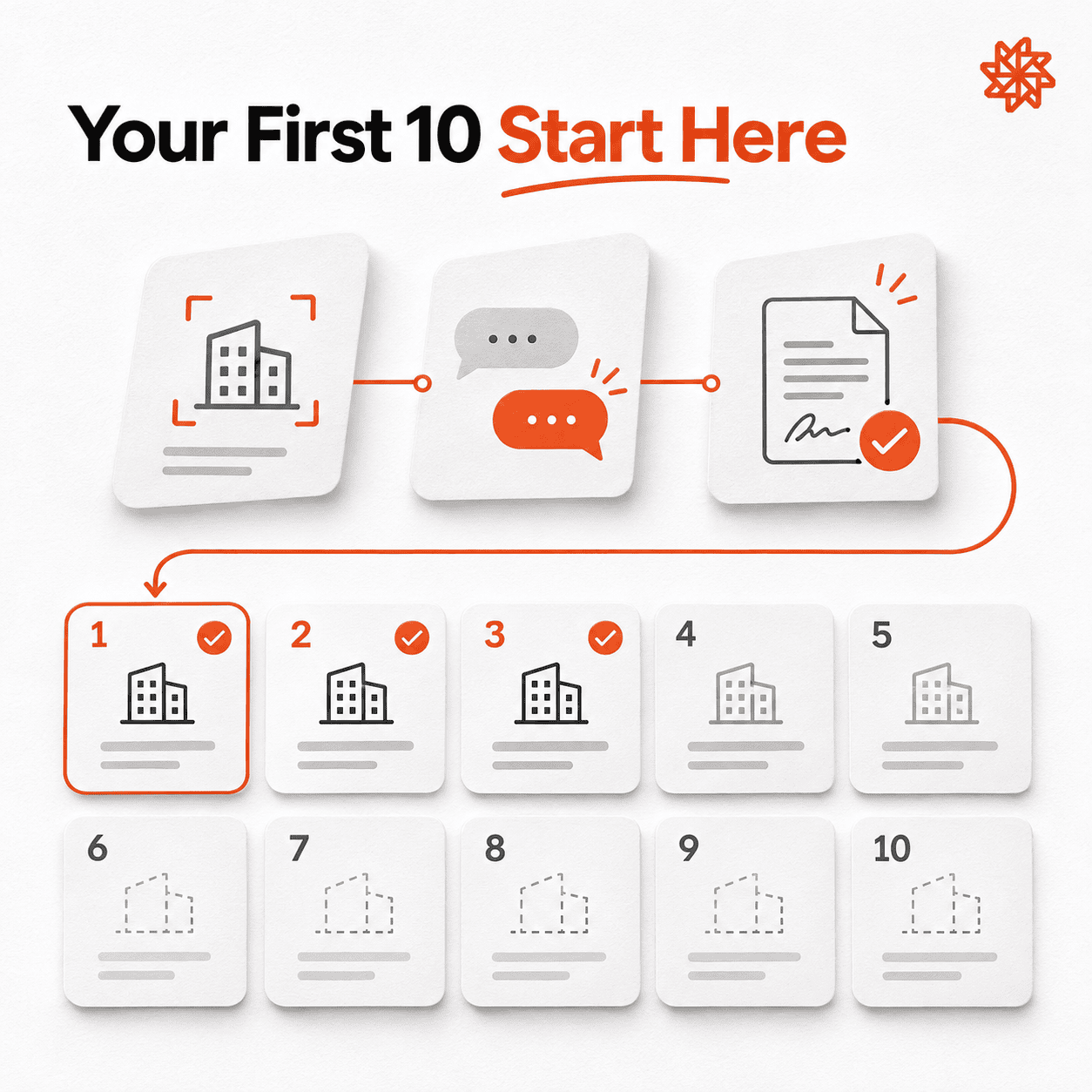
Your first 10 customers should help you understand what works before you try to reach the next 100.
Still Trying to Win Your First Customers?
You’ve learned how to find potential buyers, build trust, and move sales conversations forward. But if people still aren’t buying, it’s worth finding out where things are going wrong.
Book a free 30-minute GAP Analysis with Tinova. We’ll review your current approach, identify one gap affecting your customer acquisition, and help you set a clear goal to work on next.
Written by Tinova Growth Team
The Tinova Growth Team shares practical guidance for early-stage B2B founders working through challenges in positioning, marketing, sales, and customer acquisition. Our articles focus on helping founders understand what’s holding their business back and what they can do next.