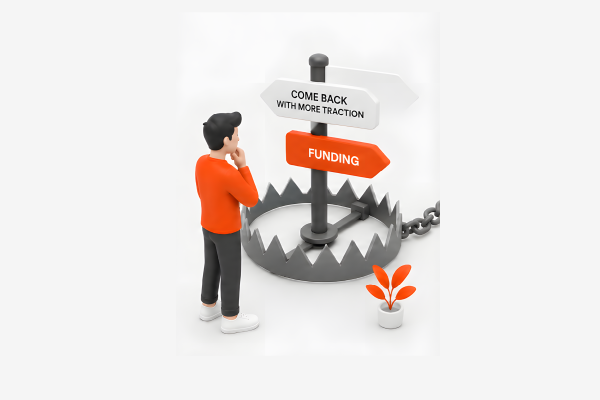
Chose PLG because it worked for Notion? If your contract value can’t fund it, your motion will bleed cash. Learn the ACV bands, unit economics, and decision tree that pick the right GTM.
Most founders pick their go-to-market (GTM) motion the same way they pick a logo font: they copy a company they admire.
The problem is that the company they copied closes $75,000 annual contracts, while they charge $200 a month. It’s like putting a Ferrari engine in a go-kart and calling it strategy.
Your annual contract value (ACV) determines how much you can spend to acquire a customer and how that customer should be sold to.
Ignore that, and you build a growth engine that stays busy but never pays back.
The rule is simple: your GTM motion should follow your ACV. Product-led growth fits below $5,000 ACV. A hybrid approach (product plus sales) works between $5,000 and $50,000. Sales-led growth makes sense above $50,000.
Pick a motion your pricing can’t support, and you’ve made one of the most common early-stage GTM mistakes.
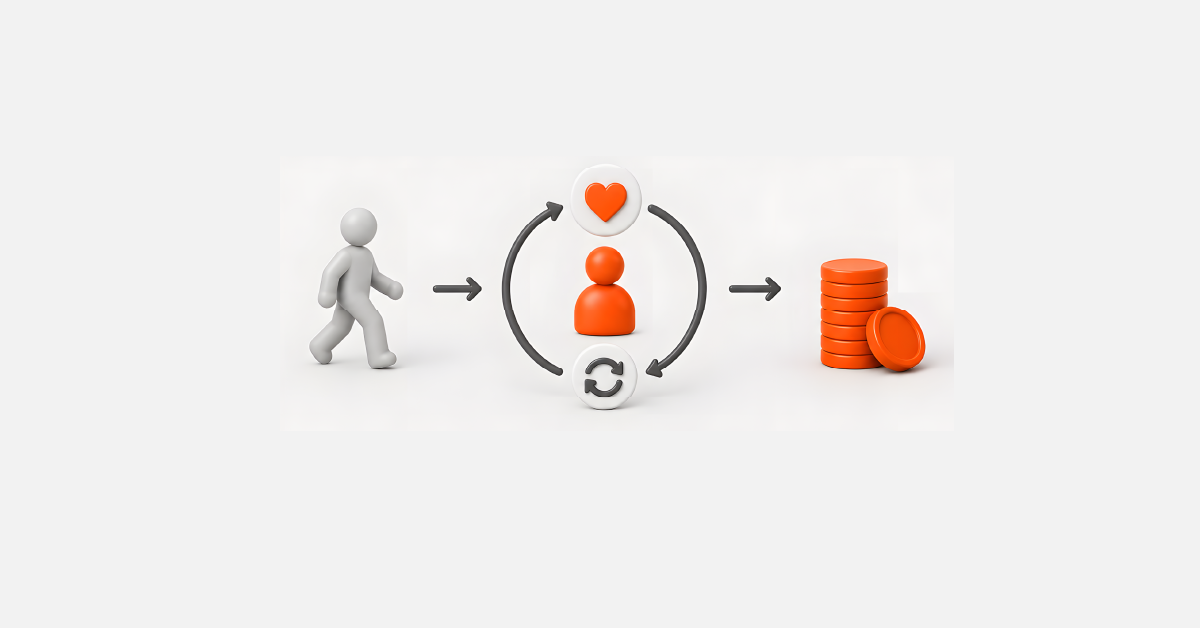
Motion is a function of price, not preference
Your GTM motion is driven by three numbers: average contract value (ACV), customer acquisition cost (CAC), and payback period. Buyer complexity and market education matter, but price sets the ceiling.
Many founders copy a GTM motion because it feels safe. The problem is they copy companies with a free tier, millions of users, a $120 million funding round, and a five-figure ACV. The motion looks proven, but the economics don’t carry over.
Raising a seed round doesn’t prove product-market fit, and copying a GTM motion doesn’t make it work for your business.
The three motions and the economics that separate them
Product-led growth (PLG): The product sells itself. Users sign up, see value, and upgrade without talking to a person. It works when customers can buy with a credit card and onboard on their own. CAC stays low, but success depends on high volume and strong acquisition loops.
Sales-led growth: A salesperson qualifies, demos, negotiates, and closes the deal. This works when the product needs setup, multiple decision-makers, or procurement. CAC ranges from $5,000 to $15,000+, so each deal must recover those costs.
Hybrid motion: The product brings users in through a free trial or self-serve experience, while sales helps expand accounts or close enterprise deals. This fits the middle ACV range and is the hardest model because it combines two cost structures.
The ACV bands and what happens at each boundary
ACV Band | Natural Motion | Typical CAC Range | Payback Window Expectation |
< $5,000 | Product-led growth | $100 – $800 | < 6 months |
$5,000 – $50,000 | Hybrid (product + inside sales) | $1,200 – $8,000 | 6 – 15 months |
> $50,000 | Sales-led (field or enterprise) | $8,000 – $25,000+ | 12 – 18 months |
These bands are not rules from a guru. They come from the math. Below $5,000 ACV, you can’t afford a person on every deal. Above $50,000 ACV, a self-serve checkout page won’t close a procurement team.
The awkward middle: $5,000 – $50,000 and why pure motions fail there
A pure PLG motion leaves expansion revenue behind because no one works with high-potential accounts. A pure sales-led motion drives CAC too high for the deal size. A hybrid motion is the best fit, but it depends on strong coordination between product-qualified leads and a lean sales team.
Many startups invest too little in sales or automate the handoff too early, causing the model to break.
The four mismatches and how each one fails
PLG at enterprise ACV: the free tier that never converts
A startup launches a generous free tier, gets 4,000 sign-ups, and celebrates. Only three become paying customers. The motion looks successful, but revenue tells a different story. The users aren’t buyers.
Enterprise customers need security reviews, compliance checks, and an internal champion. PLG didn’t fail. The price point didn’t fit the motion.
Sales-led at $2K ACV: CAC payback that never arrives
“Is outbound worth it for a $99 per month product?” In most cases, no. The math explains why.
The arithmetic: why a $1,200 CAC kills a $2,000 contract
Take a $200 per month product with an average customer lifespan of 10 months. That’s a $2,000 contract value. A junior SDR and AE, including tools and commission, cost about $12,000 per month. Close two deals, and CAC is $6,000 per customer. Even a $1,200 CAC, which is optimistic for outbound, consumes 60% of the contract value before onboarding, support, and churn.
You never reach a healthy 3:1 LTV:CAC ratio. The problem isn’t the team. The ACV can’t support the sales motion.
Outbound into a market with no problem awareness
Outbound works when buyers already know they have a problem. If you’re introducing a new category, every conversation starts with education. Response rates fall, sales cycles grow, and customer acquisition costs increase. The market needed education first, not a sales sequence.
Inbound with no audience: waiting for a funnel that doesn’t exist
Inbound works when search demand, social trust, or referrals already bring qualified visitors. A pre-seed startup with no domain authority or content won’t see that flow. Inbound leads can convert at nearly 50%, while outbound converts closer to 10%, but only if inbound demand exists. You built the conversion engine, but never filled the top of the funnel.
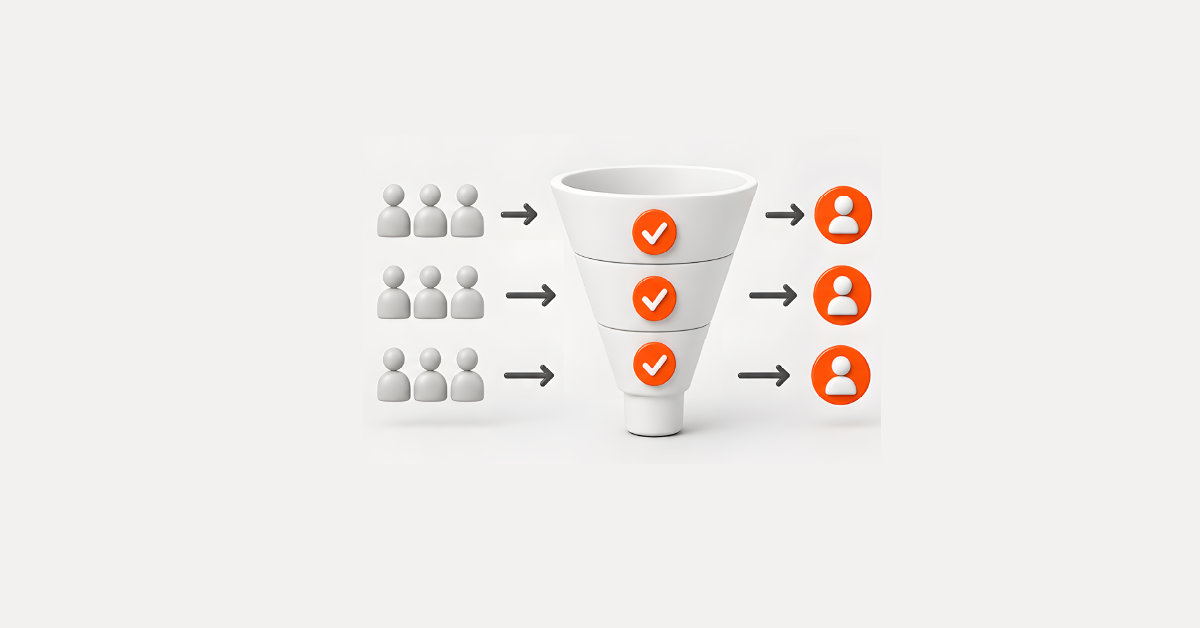
The unit economics that decide the argument
LTV:CAC: 3:1 floor, 3–5:1 healthy, and what above 5:1 actually means
A 3:1 LTV:CAC ratio is the minimum for a sustainable business. Below that, customer acquisition costs too much. A 3:1 to 5:1 ratio shows a healthy GTM motion where each sales dollar creates a return. Above 5:1 can mean you’re investing too little in growth and missing market share.
These benchmarks only make sense when measured by GTM motion and ACV.
CAC payback under 12–18 months and why the clock matters at pre-seed
If it takes more than 12 months to recover your CAC, you’re funding growth with investor capital. At the pre-seed stage, that shortens your runway. Beyond 18 months, every new customer puts more pressure on cash flow. The answer is a higher ACV, a lower CAC, or a more efficient GTM channel.
Why “average CAC” is a meaningless number
Many founders ask, “What’s a good CAC for an early-stage startup?” The answers range from $200 to $15,000 because average CAC means nothing without GTM motion and contract value.
Blended CAC ranges from a few hundred to five figures depending on motion. Segment or don’t cite
- PLG with organic loops: $239 blended CAC, with lower costs possible through virality.
- Hybrid motion: $1,200 to $5,000 CAC.
- Enterprise sales-led: $5,000 to $14,772 CAC.
One CAC number without context creates the wrong conclusion.
Rising acquisition costs and what a ~60% CAC increase means for your model
B2B customer acquisition costs have increased by about 60% over the last five years. According to Omnibound’s 2026 B2B SaaS marketing benchmarks, a GTM motion that worked with a $50 CAC may now need $120 CAC. If your ACV stayed the same, your margins shrank. At that point, you need a better GTM motion, a higher price, or both.
Choosing a motion you can actually staff at pre-seed
The one-person-motion constraint
At pre-seed, the founder is the GTM motion. You can’t build a full sales or product growth team yet. Choose a motion that one or two people can run. PLG needs a strong product and growth capability.
Hybrid needs a founder who can sell. Sales-led needs a founder who can close high-value deals. Pick the motion your team can execute today, not the one you hope to hire for later.
Motion sequencing: earn the right to the second motion
You don’t need every GTM motion at once. Many startups begin with founder-led sales to win design partners, then add PLG when the product becomes self-serve. Others start with PLG and add sales after larger accounts appear.
The first motion should generate the revenue that funds the second. The mistake is adding a high-cost motion before your ACV can support it.
When to change price to change motion (rather than the reverse)
If your product needs a sales conversation but your ACV is $3,000, raise the price before hiring a salesperson. At $12,000 ACV, the economics make far more sense. Pricing is a GTM decision, not just a revenue decision.
Raising price as a GTM decision, not a revenue decision
Increasing your price from $200 per month to $800 per month does more than increase revenue. It gives you the budget to hire a strong sales rep and move from an ineffective PLG approach to a hybrid GTM motion. Treat pricing as the foundation of your GTM strategy, not just a way to improve margins.
The GTM Motion Decision Tree
Start with your realistic ACV and work through these six questions.
- Is your ACV above $50,000?
Yes: Choose a sales-led motion. Your deal size supports an enterprise sales process.
No: Go to question 2. - Is your ACV below $5,000?
Yes: PLG can work if you have strong organic acquisition or a self-serve product. Without those, build a simple inbound engine with content and community before adding sales.
No: You’re in the hybrid zone ($5K to $50K). Go to question 3. - Do buyers need a demo or security review to purchase?
Yes: Use a hybrid motion, with sales stepping in after a product trial.
No: PLG can still work if the product clearly sells itself. - Does the market already know the problem exists?
Yes: Outbound can work if your ACV supports it.
No: Start with education, content, and inbound. Even hybrid motions struggle without market awareness. - Can your current team execute the motion?
If not, start with the motion one person can run, then expand as the business grows. - Will the unit economics clear?
Calculate CAC payback and LTV:CAC. If the numbers don’t work, change the price before changing the motion.
The red flags that mean you chose wrong
- Free users grow, but paid conversions stay flat.
- Outbound books meetings, but deals don’t close because buyers lack budget.
- Your average CAC is higher than your 12-month ACV.
- You hired a VP of Sales from a $100K ACV business, but the playbook doesn’t work at your price point.
- You’re waiting for organic growth that never comes.
If you notice two or more of these signs, review your GTM motion against your ACV. In many cases, the answer is raising your price, choosing a better GTM motion, or simplifying your approach.
FAQ
What GTM motion is right for a B2B SaaS startup?
Match your GTM motion to your annual contract value (ACV). Below $5K ACV, product-led growth (PLG) fits best. Between $5K and $50K, a hybrid motion works well. Above $50K, a sales-led motion makes the most sense. Then factor in buyer complexity and market awareness.
Is product-led growth viable for a pre-seed startup?
Yes, if your ACV is below $5,000 and customers can adopt the product without extra support. You’ll also need strong organic acquisition or viral growth. Without that, PLG struggles. Many pre-seed startups combine PLG with founder-led sales to win early design partners.
What’s a good LTV to CAC ratio for early-stage SaaS?
A 3:1 LTV:CAC ratio is the minimum. 3:1 to 5:1 is healthy and leaves room to grow. Above 5:1 may mean you’re investing too little in growth. Always measure these numbers by GTM motion and ACV.
Can you do PLG and sales-led at the same time?
Yes. That’s called a hybrid GTM motion. PLG brings users into the product, while sales helps expand accounts and close larger deals. Start with one motion, then add the second when your ACV and revenue support it.
For further reading
- Review whether your current GTM motion matches your ACV and business stage.
- Learn how pricing influences your GTM strategy.
- Choose the right customer acquisition channels.
- Build a complete GTM plan from strategy to execution.
- Understand how funding rounds affect GTM decisions.
Topics: