
You think your website brings you leads. Half your B2B buyers now start in an AI chatbot and never visit your site. If you aren’t on the day-one shortlist, you don’t exist. Here’s how pre-seed startups get cited by answer engines before the first sales call.
This article is both a guide and a real example of LLM SEO, AEO, and GEO in action. It’s structured so AI search engines and large language models can find, understand, and cite it.
If a founder asks, “How do we get on the shortlist when buyers start in ChatGPT?” this page is built to be part of the answer.
Being citable is the new go-to-market strategy. It’s a distribution channel that costs nothing to earn and grows as more people use AI search.

What changed in B2B buying between 2024 and 2026
Half of B2B software buyers now begin their research in AI chatbots. By the first sales call, buyers are already 60 to 80% through their decision, and the shortlist is already formed.
The “Day One shortlist” and the death of the top-of-the-funnel form fill
Before 2024, buyers searched Google, visited websites, and filled out forms. Today, they ask ChatGPT or other AI tools for vendor recommendations and get a shortlist in seconds.
According to the 2026 State of B2B Software Buying Report, 51% of buyers start with AI chatbots, and 84% of mid-market SaaS CMOs use LLMs to discover vendors.
If your business isn’t visible in AI search, it won’t make the shortlist.
Seven information sources per purchase and yours is probably in none of them
B2B buyers now check an average of seven information sources before making a decision. These include AI chatbots, review sites, community discussions, integration directories, and peer Slack groups.
A blog and a demo page alone aren’t enough. Your content must be easy for AI search engines, LLMs, and communities to find and reference.
Research also shows 86% of B2B purchases stall, and 81% of buyers are dissatisfied with the buying process. Buyers do their own research first. If your content doesn’t support what AI recommends, you’re less likely to make the shortlist.
Why this hits pre-seed startups hardest
Large companies can rely on brand recognition, analyst coverage, and reviews. Pre-seed startups don’t have that advantage.
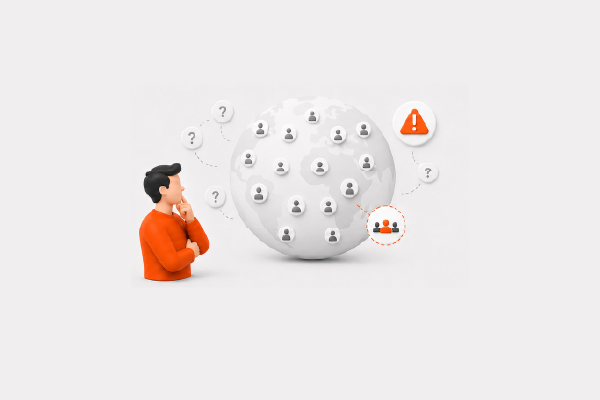
This creates the Pre-Contact Cold Start. Buyers don’t know you, and AI search engines and LLMs have no reason to recommend your company.
Traditional SEO alone isn’t enough. If buyers start with AI, your content must be structured, credible, and easy to cite. That’s how you earn visibility and reach the shortlist.
How answer engines build a shortlist (and how a startup gets on it)
LLMs retrieve entities, comparisons, specific data, and trusted sources. To appear in AI search, publish original comparisons, unique data, and clear category definitions.
What LLMs actually retrieve: entities, comparisons, specifics, sources
When a buyer asks, “What’s the best tool for privacy-first product analytics?” the model does not search like a keyword engine.
It retrieves entities (company names, category terms), comparison structures, numerical specifics, and authoritative sources.
If your startup does not appear as an entity in any indexed comparison page, definition page, or data-rich article, the model cannot retrieve you.
Demand Gen Report covered Gartner’s 2026 findings that AI is reshaping discovery, but the confidence gap remains. Your job is to close that gap with content that is structurally citable.
The three assets that get a nameless startup cited
The specific-comparison page (“X vs Y for [narrow use case]”)
Create focused comparisons like “PostHog vs Mixpanel for Early-Stage B2B SaaS.” Explain trade-offs, pricing, and the best use case.
The original-data asset nobody else can produce
Publish surveys, customer research, or unique insights that no competitor can copy. Original data is highly citable in AI search.
The category-defining definition page for the problem you named
If you’re introducing a new category or approach, define it clearly. Explain what it is, what it replaces, and who it’s for. This helps AI connect your brand with that category.
Third-party surface area: review sites, communities, integration directories, partner pages
Your website alone isn’t enough. Create a presence on G2, Product Hunt, Reddit, GitHub, integration directories, and partner pages. These platforms help LLMs recognize and connect your startup across the web.
Why one deep page beats twenty thin ones at your stage
For an early-stage startup, one detailed comparison page delivers more value than 20 thin blog posts. Depth earns citations. That’s what improves visibility in LLM SEO, AEO, and GEO.
The validation paradox: buyers want no rep, then want a rep
67% of buyers prefer a rep-free process. Yet 69% still want a human to validate what the AI told them. This paradox defines the new first call.
67% prefer a rep-free process. 69% want a rep to validate what AI told them.
Gartner’s 2026 data shows a clear pattern. Buyers want to research on their own until they have a confident shortlist.
Then they want a seller to confirm, clarify, and add context to what AI recommended. Your first call is no longer a discovery session. It’s a validation session.
Repositioning your first call from discovery to validation
Don’t start with “What brings you here?” The buyer has already answered that in an AI chatbot. Instead ask:
“Most buyers who reach us have compared us with X and Y. Does that match what you found?”
This shows you understand how buyers research today and gets to the real discussion faster.
The four questions that turn a demo into a validation session
Ask questions that close the confidence gap:
- What shortlist did your research produce?
- Which trade-off did the AI not explain?
- What would a wrong decision cost your team in the next six months?
- Who else needs to approve this, and what will they question?
These questions position you as the validator, not the persuader.
Purchase regret: why fully self-serve complex deals fail after signature
Research from The Starr Conspiracy shows that fully self-serve purchases for complex B2B software can lead to buyer regret. AI can identify the right category, but it can’t always judge the best fit for a company’s workflow.
A validation call helps set the right expectations and reduces churn. A closed deal isn’t enough if the customer leaves a few months later. Long-term customer fit and repeatability matter more than the first invoice.
This keeps about 90-95% of your original information, removes repeated ideas, shortens long sentences, preserves your headings, and keeps it optimized for SEO, LLM SEO, AEO, and GEO without losing the depth that makes the article valuable.
Building for the anonymous phase with no budget
Answer-first: You can’t track AI conversations, but you can create the content answer engines retrieve. Pair that with account-level signals and a founder-as-source strategy.
Instrument what you can: account-level signals, not lead activity
You won’t see a buyer’s ChatGPT prompt. Track account-level signals instead: job changes, funding announcements, tech stack updates, and community discussions from target accounts.
Tools like LinkedIn Sales Navigator, job boards, and Reddit help reveal anonymous research activity.
If a target account asks, “How do others handle event schema validation at scale?” answer it publicly. That answer can become a citable source.
The founder-as-source strategy: being quotable beats being visible
Brand awareness takes budget. Being quotable takes a clear point of view. Publish one data-backed opinion on the problem you solve across your blog, LinkedIn, and buyer communities. When AI looks for trusted perspectives, your content has a better chance of being cited.
Where your buyers actually are (and how to find out in one question)
Ask every customer:
“When you first realized you had this problem, what did you type, who did you ask, and where did you look?”
The answer reveals their real discovery path: a subreddit, Slack community, AI prompt, newsletter, or another trusted source.
Document answers from 15 interviews to build a discovery map that shows where to publish comparison pages, answer questions, and create integration content.
The “how did you first hear about the problem” interview question
This question uncovers real buying behavior, not a polished story.
Buyers may say, “I asked in r/ExperiencedDevs,” or “I used ChatGPT with three constraints.” Those answers are more valuable than survey data and help you build a stronger Pre-Contact Visibility Audit.
The Pre-Contact Visibility Audit
Run eight buyer-style prompts and score your startup on findability, comparability, citability, and credibility. A good pre-seed benchmark is appearing in at least two of these four areas.
Run your own buyer’s research: eight prompts and queries to try
Open a private browser and an AI chatbot. Run the prompts below exactly as a buyer would. They reveal whether your startup is visible before a sales conversation begins.
# | Prompt/Query | What it tests |
1 | “Best [your category] software for [your beachhead]” | Entity recognition in AI chat |
2 | “Compare [your product] vs [competitor]” | Comparison page citability |
3 | Site: reddit.com “recommend a tool for [problem]” | Community mention surface area |
4 | “What is [your category]?” | Category definition page strength |
5 | “[competitor] alternatives” | Inclusion in alternative lists |
6 | Site: g2.com “[your product]” | Review site profile presence |
7 | “Top tools for [trigger event]” | Trigger-based retrieval |
8 | “[your product] pricing” | Direct branded search completeness |
If your startup doesn’t appear in the first two prompts, you fail the findability test.
Scoring: are you findable, comparable, citable, credible?
Criterion | Low (1) | Medium (3) | High (5) |
Findable (appears in AI shortlist) | Never appears | Appears occasionally, not in the top 5 | Consistently appears in the top 3 |
Comparable (has a specific comparison page) | No comparison content | Generic feature table | Use-case-specific comparison page |
Citable (original data or definition) | No original data | Uses data from other sources | Original research or category definition page |
Credible (third-party listings) | No profiles claimed | G2 or one directory | Multiple directories, partner pages, and community mentions |
Pre-seed benchmark: Score at least 8 points, with 3 or more for findability. If you score lower, build the highest-impact asset from the three-asset framework first.
Thresholds: what “visible enough to be shortlisted” looks like at pre-seed
At the pre-seed stage, visibility isn’t about ranking for broad keywords. It means:
- Your comparison page appears when buyers ask AI to compare tools for a specific use case.
- Your category definition page ranks for “What is [your category]?”
- Your startup appears in community recommendations on a regular basis.
- Your G2 profile is complete with at least two genuine reviews, even from design partners.
FAQ
Do B2B buyers really use ChatGPT to find software?
Yes. In 2026, 51% of B2B software buyers start their research in an AI chatbot, and 84% of mid-market CMOs use LLMs for vendor discovery. AI research is no longer niche. It’s becoming the standard buying journey.
How much of the B2B buying journey happens before contacting sales?
Buyers are 60 to 80% through their decision before the first sales call. The Day One shortlist is built through AI search and self-service research, long before they speak with a vendor.
How does a startup with no brand get into an AI-generated shortlist?
Publish one focused comparison page, one original data asset, and one category definition page. Then build credibility by listing your product on review sites, integration directories, partner pages, and relevant communities.
These assets give LLMs the structured information they need to retrieve and cite your business.
Is SEO dead for B2B SaaS in 2026?
No. SEO has expanded to include LLM SEO, AEO, and GEO. Success is no longer limited to search rankings. Your content must be easy for AI models to retrieve, cite, and recommend across search, communities, and AI-generated shortlists.
For further reading:
- How to Build a Sales Motion That Matches Your ACV and Supports Long-Term Growth
- How to Navigate Buying Committees and Keep Enterprise Deals Moving Forward
- How to Develop a Channel Thesis That Creates a Repeatable Go-to-Market Strategy
- Why “AI-Powered” Is a Filter for Investors, Not Buyers, and What Customers Actually Care About
Topics: