
Most founders treat their ICP like a TAM slide. But a real ICP forces you to say no. If yours matches 50,000 companies, you don’t have an ICP, you have a prayer. Here’s the disqualification-list method that protects your roadmap.
Founders ask, “Help me define my ICP: busy professionals, founders, consultants, SMB owners.” That is not an ideal customer profile. It’s a wish.
A real ICP does not describe everyone who could buy. It defines the few you’ll focus on and the many you’ll intentionally ignore.
If your ICP has never made you walk away from a live deal, it’s a decoration, not a filter.
This post flips the common approach. The goal isn’t a persona document. It’s a Kill List.

The test that fails almost every early-stage ICP
Count how many accounts truly match your ICP. If the number is over 50,000, you’ve defined a market segment, not an ICP.
The strongest companies start with a 2,000 to 10,000 account beachhead (2026 ICP research).
If your ICP has never made you reject a ready-to-pay prospect, it’s not working.
The account-count test
Take your ICP criteria, such as industry, employee count, and tech stack, and estimate matching accounts using LinkedIn Sales Navigator or Apollo.
If you find more than 50,000 accounts, you’ve defined a market segment, not an ICP. An early-stage startup should focus on 2,000 to 10,000 accounts you can realistically reach within 12 to 18 months.
A bigger list may feel safer, but it weakens your messaging, expands your product roadmap, and reduces focus.
The rejection test: name the last deal your ICP told you to walk from
Ask your co-founders and sales lead: “When did our ICP last make us say no to a real prospect with budget?”
If no one can answer, your ICP isn’t guiding decisions. A strong ICP helps you pass on prospects who have the budget and the problem but don’t fit your beachhead profile.
If you can’t name the last deal you walked away from, you’re chasing revenue instead of customer fit. Revenue can come first, but repeatability won’t.
Why “busy professionals, founders, consultants, SMB owners” is a tagline, not an ICP
“Busy professionals, founders, consultants, SMB owners” describes almost every B2B buyer. It doesn’t help you rule anyone out.
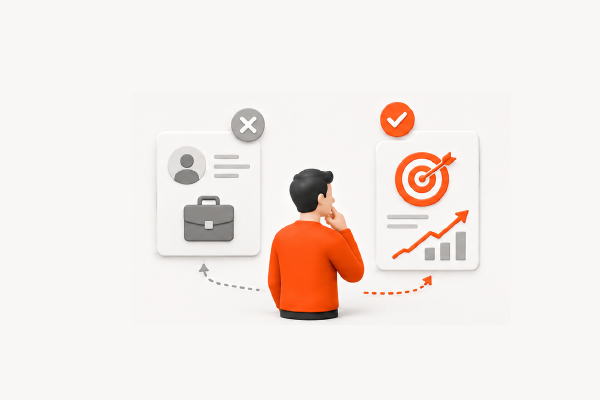
A real ICP is specific. For example: Series A B2B SaaS companies with 20 to 50 employees, using HubSpot, that hired a VP of Sales in the last 90 days.
The first attracts everyone. The second eliminates thousands and gives your business a clear focus.
Where fictional ICPs come from
The fairytale persona: written in a doc, sourced from nobody
Many teams build an ICP persona in Notion using LinkedIn job titles and blog post pain points. They never talk to real customers.
As MEST Africa’s 5 ICP Misconceptions explains, a persona without real customer behavior is just an assumption. Build your ICP from closed-won and closed-lost conversations, not imagination.
The FOMO trap, narrowing feels like shrinking the business
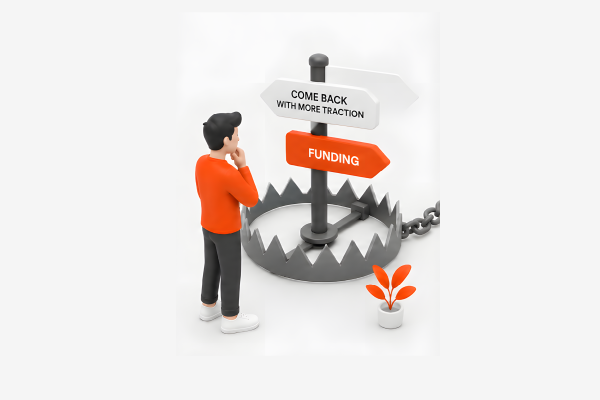
Many founders think saying no to a paying customer will limit growth. It won’t. The real risk is serving the wrong customers. Early revenue may look like traction, but it creates product roadmap debt and weakens your positioning. TK Kader’s ICP framework calls this the FOMO trap.
Why it’s far easier to widen a narrow ICP than to focus a broad one
A focused ICP helps you spot patterns. You learn what triggers a purchase, who makes the decision, and which messages convert. From there, you can expand with real data.
Start too broad, and every lead looks right. You lose focus, learn less, and narrowing later becomes slower and more expensive.
The investor-pressure ICP: reverse-engineered to fit a TAM slide
Some founders shape their ICP to fit a billion-dollar TAM slide instead of real customers. It looks fundable, but it isn’t practical.
Investors fund potential. Customers pay when you solve a specific problem. A funding round does not prove product-market fit.
If your ICP serves the pitch deck instead of the sales team, you’re building one story for investors and another for the market. Reality wins every time.
The investor-pressure ICP: reverse-engineered to fit a TAM slide
Treating your ICP as a one-time document guarantees it becomes outdated. Markets change, buying triggers evolve, and your best customers change as you grow.
A strong ICP should be reviewed every quarter using closed-won, churn, and customer data. If you don’t update it, you’re making decisions with outdated information.
Building an ICP from evidence you already have (even at six customers)
Start from closed-won and closed-lost, both are data
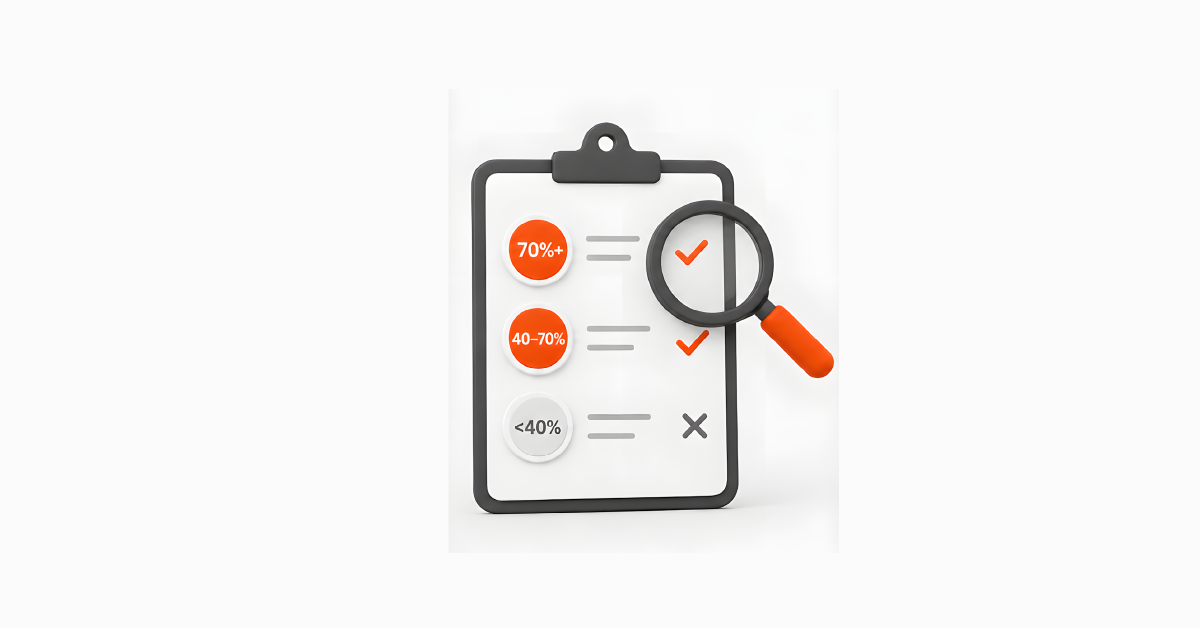
Your CRM holds more valuable data than any template. Review your last 10 closed-won and closed-lost deals. Note the company profile, trigger event, decision-maker, and why they bought or didn’t.
Your wins show who gets value fastest. Your losses show who doesn’t fit. Even with six customers, real customer behavior reveals patterns that assumptions never will.
The three layers: firmographic, trigger, and the one everyone skips
A strong ICP is built on three layers:
- Firmographics: Industry, employee count, revenue, and tech stack.
- Trigger events: The moment that creates urgency.
- Internal owner: The person responsible for solving the problem.
Trigger events: new hire, funding, tool migration, regulation, reorg
A job title isn’t enough. Urgency comes from a trigger event like a new executive hire, funding round, CRM migration, regulatory change, or company reorganization. Without a trigger, you’re selling to interest, not a real business problem.
The “who currently owns this problem internally” layer
Many ICP templates stop at company details. The real question is: Who owns this problem today? If no one is responsible for solving it, the deal is likely to stall, even if the company is a perfect fit.
The negative ICP: write down who you’re deliberately not for
A strong ICP isn’t just about who you target. It also defines who you won’t serve.
List the traits that disqualify a prospect, such as too few employees, the wrong budget, a use case that changes your product roadmap, or a region you don’t support.
This is your Kill List. Add it to your CRM, share it with your team, and use it before every outreach to keep your sales qualification consistent.
From ICP to a filterable list, if it can’t become a CRM filter, it isn’t real
A real ICP should become a CRM filter, not just a document. Convert every criterion into Salesforce or HubSpot properties, such as employee count, industry, trigger events, and disqualifiers.
If you can’t create a list of accounts that match your ICP, it isn’t ready to use.
A filterable ICP helps you prioritize outreach, measure account coverage, and make better product decisions. It also keeps your sales strategy aligned with the right customers.
The cost of the wrong customer (it isn’t the deal, it’s the roadmap)
The cost of the wrong customer (it isn’t the deal, it’s the roadmap)
Roadmap debt: features built for accounts that will churn
A wrong-fit customer asks for custom features that benefit only them. They may pay once, then leave. The feature stays, adds product debt, and slows future development. One bad-fit customer can consume months of engineering time.
Diluted messaging and the compounding cost of resonance loss
Serving too many customer types makes your messaging generic. Your ideal customer won’t see themselves in your copy, making it harder to connect and convert.
Premature scaling on the customer dimension
Many startups scale too early by targeting more customers before proving customer retention and repeatability. A focused ICP creates a strong foundation before you expand.
Why customer is the leading indicator of premature scaling
Customer fit shapes your product, messaging, and sales strategy. If your ICP isn’t clear, growing your team or increasing marketing only spreads the problem faster.
How to say no to revenue that will cost you more than it pays
Not every paying customer is the right customer. Consider the long-term cost: product changes, support, churn, and brand dilution. Sometimes saying no protects your business and keeps your ICP strong.
The ICP Kill List (build yours in 45 minutes)
Seven disqualifiers, ranked by damage
Rank | Disqualifier | Why It Kills You | Example |
1 | No active trigger event | No urgency; deal sits in pipeline forever | Company hasn’t hired the role that would champion you |
2 | Budget below minimum adoption threshold | High support cost, low retention | SMB with $200/mo. budget needing enterprise onboarding |
3 | Internal champion missing or too junior | Cannot build business case; deal stalls | Individual contributor without budget authority |
4 | Implementation cost exceeds first-year ACV | You lose money on the engagement | Custom integration required for a $12k deal |
5 | Zero reference value in beachhead | Won’t attract lookalike customers | Customer in a geography or vertical you’re not targeting |
6 | Use case pulls product away from core | Creates roadmap debt that hurts core users | Feature request that serves only one outlier segment |
7 | Regulatory or language mismatch | Legal friction and support complexity | A GDPR-heavy account when you serve only US-based startups |
Scoring: fit, urgency, budget authority, implementation cost, reference value
Criterion | Low (1) | Medium (3) | High (5) |
Firmographic fit | Outside profile | Partial match | Exact beachhead match |
Urgency (trigger present) | No trigger | Trigger older than 90 days | Trigger active in last 30 days |
Budget authority | No confirmed budget | Budget likely but unverified | Budget confirmed, decision-maker identified |
Implementation cost | Requires custom dev >30% ACV | Moderate configuration | Out-of-the-box setup |
Reference value | No relevance to beachhead | Adjacent segment | Anchor logo in beachhead |
Aim for a minimum score of 18 before committing significant sales resources. If an opportunity scores below 12, it belongs on the Kill List.
Review cadence: quarterly, against closed-won and churn
Every quarter, review your closed-won and churned customers against your ICP criteria. Update your negative ICP as new patterns appear to keep your customer filter accurate.
Use an ICP audit template to review your profile and a Kill List scorecard to refine your qualification process.
FAQ
What is an Ideal Customer Profile (ICP), and how is it different from a persona?
An ICP defines the company you sell to, including firmographics, trigger events, and the internal owner. A persona defines the individual buyer, their goals, challenges, and behavior. The ICP qualifies the account. The persona shapes the message.
How narrow should an early-stage ICP be?
Focus on a 2,000 to 10,000 account beachhead. This gives you enough data to build a repeatable sales process without losing focus. You can expand later once you identify clear patterns.
How do I define an ICP with fewer than 10 customers?
Review your closed-won and closed-lost deals. Look for shared trigger events, decision-makers, firmographics, onboarding success, and retention. Use churn and poor-fit customers to build your negative ICP.
Should I turn down customers who don’t fit my ICP?
Yes, if they pull your product roadmap, weaken your messaging, or require more resources than the deal is worth. A polite referral protects your focus and helps build a stronger, more repeatable business.
For further reading:
- How to Identify and Validate Your Beachhead Market Before You Scale
- How to Choose the Right Design Partners to Validate Your Product
- Aligning Your Sales Motion With ACV to Build a Scalable Go-to-Market Strategy
- How to Prevent Buying Committee Stalls and Keep Enterprise Deals Moving

Topics: