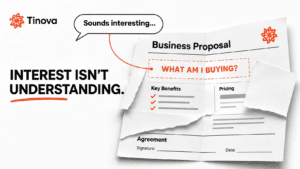
Learn how the coordination tax drains startup time and budget, and how one clear brand strategy helps freelancers work toward the same goal.
Hiring five freelancers can seem cheaper than hiring an agency. You get a designer, copywriter, developer, and marketing specialists without adding full-time salaries.
But who makes sure their work fits together?
When every freelancer makes independent decisions, your website, sales deck, ads, and LinkedIn content can tell different stories. You may save on individual invoices but spend more time correcting work and managing people.
That hidden cost is the coordination tax: the time, money, and effort spent getting separate specialists to work toward the same goal.
TL;DR: Freelancers are not the problem. The problem is hiring people to execute without giving them one clear strategy to follow. Define your audience, positioning, message, and brand standards before adding more specialists.
Key takeaways
- One documented strategy gives every freelancer the same direction.
- Poor coordination costs founder time and can weaken customer trust.
- One strategy owner can guide multiple specialists without doing all the work.
- Use the 10-point audit below to identify gaps before hiring again.
How to Recognise the Coordination Tax
1. Your Brand Looks and Sounds Different Across Channels
Show someone your LinkedIn profile, website, and sales deck. Ask:
“Do these feel like the same company, and can you explain what it offers?”
If the answer is unclear, check whether each freelancer received the same positioning, messaging, and visual guidelines.
A designer may create a polished logo, while a copywriter describes a different audience and an ads specialist promotes another benefit. Each deliverable can look good on its own and still fail to tell one clear story.
2. You Have Become the Unpaid Project Manager
With several freelancers, you may be responsible for briefing every person, answering repeated questions, resolving conflicting ideas, and checking deadlines.
That time has a cost. Every hour spent fixing avoidable communication problems is an hour you could have spent talking to customers or improving the business.
A Splash Creative guide to freelancers, studios, and agencies discusses this same challenge: separate specialists can require more coordination when nobody owns the overall creative direction.
3. You Pay for Work That Does Not Work Together
Consider this example:
- Your ads promise to save customers time.
- Your website focuses on technical features.
- Your sales deck leads with a different benefit.
A prospect encounters three messages but no clear reason to choose your company. You have paid for three deliverables without giving them one shared purpose.
The issue may not be the quality of the work. It may be the lack of a common strategy.
Visual 2 — Middle (The Inconsistent Brand Experience)

How to Reduce the Coordination Tax
Start With One Shared Brand Brief
Before hiring another freelancer, document three things:
- Audience: Who do you serve, and what problem matters to them?
- Positioning: What makes your offer a relevant choice?
- Message and standards: What should your brand communicate, and how should it look and sound?
A one-page brief is enough to start. Include your main promise, supporting proof, preferred tone, visual guidelines, and examples of good work.
If your audience is still unclear, begin with Tinova’s guide to positioning your startup to help define the customer you most need to serve.
Give Strategy One Owner
The founder, a marketing lead, or a hired strategist should own the overall direction. Freelancers then execute specific tasks against that direction.
The owner is responsible for:
- Positioning: Who the company serves and why its offer matters.
- Messaging: The main promise and supporting evidence.
- Brand standards: The visual and verbal rules used across channels.
- Review: Checking that each deliverable supports the agreed strategy.
This does not mean one person must create every asset. It means someone is accountable for making sure all the pieces fit.
Visual 3 — Middle (One Strategy, Multiple Specialists)

Tinova’s brand strategy service follows this principle by defining positioning, messaging, tone of voice, and communication guidelines before those choices are applied across brand materials.
Hire for a Specific Bottleneck
Once the strategy is clear, hire for the work you need.
| Model | Main advantage | Best fit |
| Multiple freelancers without a shared strategy | Flexible access to skills, but unclear ownership | A model to correct before adding more people |
| One strategy owner with specialist freelancers | Clear direction with flexible execution | Early-stage startups with defined priorities |
| Full-service agency | Multiple capabilities managed through one team | Businesses with the budget and scope to support it |
No model is right for every startup. The important question is whether someone owns the strategy and whether each person understands their role.
The 10-Point Coordination Audit
Give yourself one point for every statement that is true.
| # | Checklist item |
| 1 | One named person owns the complete brand story. |
| 2 | Our audience and positioning are documented. |
| 3 | Every freelancer receives the same core brief. |
| 4 | We have clear examples of our brand voice. |
| 5 | Our website, LinkedIn, and sales deck follow the same visual standards. |
| 6 | Our marketing and sales materials communicate the same promise. |
| 7 | Feedback is based on strategy, not personal taste alone. |
| 8 | Freelancers can explain the goal of their work without another full briefing. |
| 9 | We track the time spent coordinating external specialists. |
| 10 | We have recently reviewed our main brand touchpoints together. |
What Your Score Means
- 8 to 10: Your strategy and coordination process are in place. Focus on improving execution.
- 6 to 7: Document missing guidelines and clarify who approves the work.
- 0 to 5: Establish one shared strategy before adding more specialists.
This is a practical self-assessment, not a validated industry benchmark. Your score helps identify where to investigate, not whether your business is guaranteed to succeed.
FAQs
What is the coordination tax?
The coordination tax is the extra time, effort, and cost required to align people, tasks, and deliverables that are managed separately. For startups, it can include repeated briefings, revisions, inconsistent messaging, and founder time spent managing the work.
Is it better to hire freelancers or an agency?
Neither is automatically better. Freelancers can be cost-effective when the strategy and responsibilities are clear. An agency may reduce the management burden by coordinating several capabilities through one team, but it comes at a price that must fit your budget.
Who should own brand strategy at a startup?
The founder, marketing lead, or a dedicated strategist should be accountable for positioning, messaging, and brand standards. Specialists can contribute ideas, but one person should make sure the final work follows the agreed direction.
When should a startup hire another freelancer?
Hire when you can name the task, explain the expected result, and provide the strategy the specialist needs. If you are still working out who the customer is or why they should choose you, resolve those questions first.
Fix the Strategy Before Hiring Again
If your Coordination Audit score is six or lower, start by bringing your existing work together. Compare your website, sales deck, ads, and social profiles. Write down the differences, agree on one core message, and give every specialist the same brief.
You may not need to replace your freelancers. You may need to give them clearer direction.
If you need help identifying the gaps in your brand and growth process, explore Tinova’s services and free GAP Analysis.
Written by: Tinova Growth Team
Tinova is a marketing and growth agency for startups and owner-led businesses. Its current site reports 200 startups diagnosed, 77+ businesses scaled, 3 awards in 2026, and $10M+ in client funding pipeline built.
Updated: October 7, 2026
Disclosure: Tinova provides diagnostic and strategic marketing services. This article offers practical guidance and does not guarantee a particular business outcome.