Is your pitch deck getting ignored? Use this pre-deck checklist for investors to fix the four signals that matter before slide one.
Why Investors Ignore Your Pitch Deck
You redesigned the deck again. Better slides, cleaner charts, stronger copy. Still no replies.
That does not always mean the deck needs another redesign.
DocSend’s 2026 seed deck research found that investors spend an average of 3 minutes 44 seconds reviewing a seed deck, and only 58% of decks are viewed through the final slide.
So the better question is:
What makes an investor want to keep reading in the first place?
What Is a Pre-Deck Checklist?
A pre-deck checklist for investors is a set of checks you run before sending your pitch deck. It focuses on the signals that shape an investor’s first impression before slide one.
Before redesigning your deck, check these four signals:
Warm-intro path → Stage and thesis fit → Traction legibility → Founder footprint
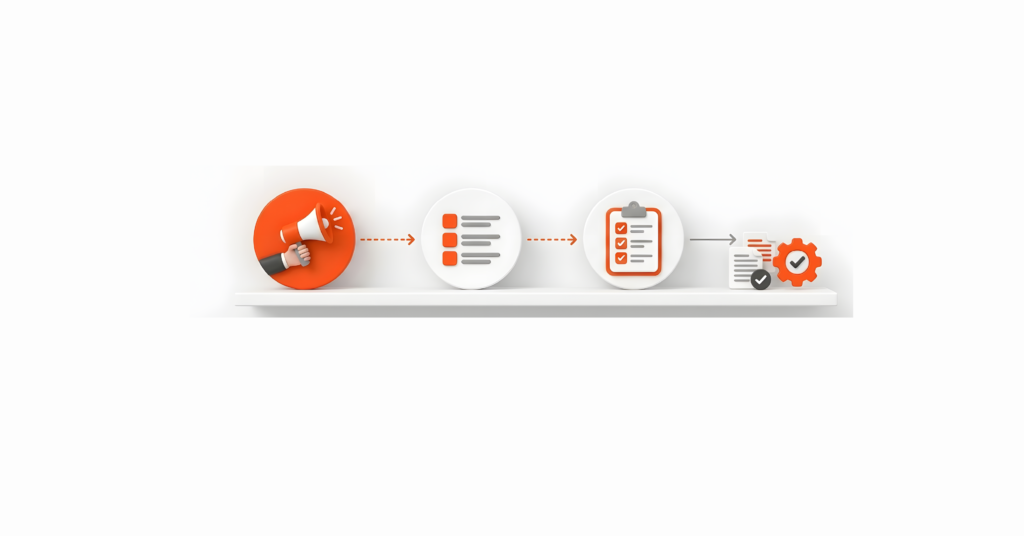
When those signals are weak, better slide design cannot solve the main problem.
The 4 Signals to Check Before Slide One
1. Warm-Intro Path
A warm introduction can transfer trust faster than a cold email. Cold outreach can still work, but the message has to establish relevance and credibility from scratch.
Check: Can someone credible introduce you to the investors you are targeting?
2. Stage and Thesis Fit
An investor can like your company and still pass because the stage, sector, geography, or check size does not fit their mandate.
Check: Does each investor on your list actually invest at your stage and in your category?
3. Traction Legibility
Your proof needs to be easy to understand. Revenue, pilots, LOIs, retention, customer interviews, or other demand signals should answer one question quickly:
What evidence shows people want this?
For founders still building traction, customer evidence can matter more than forcing a polished revenue story. Tinova makes the same distinction in its guide on [customer readiness before investor readiness] and its [startup traction guide]. Customer Readiness Comes Before Investor Readiness Startup Traction: What Investors Expect at Each Funding Stage
4. Founder Footprint
Investors can look beyond the deck to understand who is building the company. Your LinkedIn profile, work history, customer knowledge, and public thinking should tell a consistent story.
Check: Does your public profile support the problem, market, and expertise you describe in the deck?
What to Fix Before Redesigning the Deck
1. Make Your Why Now Repeatable
You should be able to explain the business in one sentence.
Template:
For [customer], [problem] creates [cost]. We solve it with [solution], and [why now] makes it urgent.
This connects directly to positioning. Tinova’s positioning work starts with identifying the specific customer most likely to need the product, rather than trying to speak to everyone.
How to Position Your Startup to Investors: Find Your HXC First
2. Build the Target List Before the Deck
Create a named list of 30 to 50 investors who match your stage, sector, geography, and expected check size.
YC’s seed fundraising guidance also recommends keeping the deck coherent and focused on the information investors need to evaluate the company.
The Pre-Deck Signal Audit
Give yourself 1 point only when the signal is clear to another person.
| # | Signal | A “Yes” looks like | Score |
| 1 | Warm intro | A warm path exists for key target investors | 0/1 |
| 2 | Stage fit | Investor writes checks at your stage | 0/1 |
| 3 | Thesis fit | Your market fits the firm’s focus | 0/1 |
| 4 | Traction | Your strongest proof is easy to understand | 0/1 |
| 5 | Founder footprint | Your public profile supports your story | 0/1 |
| 6 | Why now | You can explain urgency in one sentence | 0/1 |
| 7 | Target list | You have 30 to 50 named investors | 0/1 |
| 8 | Deck logic | Slides reinforce the core signals | 0/1 |
| 9 | Timing | You have enough proof for this raise | 0/1 |
| 10 | Next step | Your outreach has a clear second step | 0/1 |
Score it:
8 to 10: Your foundations are strong enough to send.
6 to 7: Fix the weakest signals before another redesign.
Below 6: You likely have an upstream problem, not a slide problem.

One Insight From Tinova’s Diagnosis Work
Tinova currently reports 200 startups diagnosed, 77+ businesses scaled, 3 awards in 2026, and $10M+ in client funding pipeline built. Its editorial system is also based on recurring problems found across those diagnosis calls.
One recurring pattern is worth remembering:
Founders can spend more time improving the deck than improving the evidence the deck is supposed to communicate.
That is why the pre-deck check comes first.
What to Do Next
Run the 10-point audit before changing another slide.
If your score is low, fix targeting, customer proof, positioning, or founder credibility first. Your deck should explain a strong business case, not compensate for a weak one.
When you are ready to diagnose the bigger gaps, Tinova’s free GAP Analysis is a 30-minute review focused on positioning, offer, website, pipeline, and the biggest growth leaks. Investor-Ready in 21 Days / Free GAP Analysis
FAQ
How long do investors spend on a pitch deck?
DocSend’s 2026 research reports an average review time of 3 minutes 44 seconds, with 58% of decks reaching the final slide.
Does pitch deck design matter?
Yes. Clear design helps investors understand the story faster, but it cannot fix poor targeting, weak proof, or unclear positioning.
Why is my pitch deck not getting responses?
Possible reasons include weak investor fit, unclear customer evidence, limited founder credibility, or positioning that is difficult to repeat.
What should I fix before redesigning my pitch deck?
Start with the four core signals: warm-intro path, stage and thesis fit, traction legibility, and founder footprint.
Further Reading:
- Why Investors Ghost Founders After a “Great” Meeting
- How to Position Your Startup to Investors
- Customer Readiness Comes Before Investor Readiness
Written by: Tinova Growth Team
Tinova is a marketing and growth agency for startups and owner-led businesses. Its official site reports 200 startups diagnosed, 77+ businesses scaled, 3 awards in 2026, and $10M+ in client funding pipeline built.
Updated: September 24, 2026
Review Focus: Repeatable revenue, retention, customer acquisition cost, business durability, product-market fit.